
In another fantastic example of my two birds, one stone philosophy, I'm blog-posting and collecting supporting evidence for a presentation my group is making on Thursday about ad agencies.
I'm reading this interesting book, Adland, all about the growth of the advertising industry. It's a summary account of major global agencies and their influential founders. The book gives equal credit to the importance of consumer insight (research), outstanding creativity (artistry), and compelling messaging (copywriting) as elements of successful agencies. Often the most noteworthy agencies were started as a partnership between a planner, an art director, and a copywriter (or a combination of).
Here are a few examples of successful advertising agencies and how they grew up:
Lord & Thomas, an old print ad agency at the turn of the 20th century into the thirties, led by Albert Lasker, known as the true father or modern advertising. Lasker created the form of the modern agency with a department of copywriters and a focus on sales, planning, and business development. He recruited famous copywriter Claude Hopkins, known for a rational sales-focused style honed through research and empirical results. As simple an obvious as it now sounds, the 'Hopkins Approach' to good ad development implies finding the unique factor for any product that sets it apart from its rivals. Groundbreaking stuff in 1907. The importance here is that even as early as 1907, there was a strong scientific basis to advertising and agencies that could deliver a more effective advertisement were more successful. Lord & Thomas is now DraftFCB, part of Interpublic.
JWT, founded in 1878 by J. Walter Thompson (who actually bought out the agency owned by Willian Carlton), one of the largest and most successful advertising agencies ever (now part of the WPP holding company). Grew significantly from 1920s to 1950s under Stanley Resor and his wife Helen Landsdowne who emphasized the need for credible research to back up claims of product superiority (think doctors, psychologists). JWT is now the largest US agency, fourth largest in the world.
Young & Rubicam, founded in 1923 by John Young and Raymond Rubicam, is now one of the largest advertising agencies in the world. It grew like other modern agencies but had a strong focus on backing up ideas with solid research. It may therefore be considered among the less risk-taking agencies because of its more dogmatic approach to campaign development. Y&R was known for its creativity in the 1950s, but Rubicam also wanted to instill a practical, reason-based foundation in the work. In 1932, Rubicam hired George Gallup (yes, that Gallup), a sociologist and researcher to head a consumer research departmnt of 400 people within the agency. The primary research collected by field researchers working for Y&R would lead to the development of better, more relevant campaigns. In 2000 Young and Rubicam Brands (including Wunderman and Young & Rubicam) was acquired by WPP.
DDB, founded by Ned Doyle, Maxwell Dane, and Bill Bernbach in 1949 as the antithesis to what was seen at the time as stodgy and conservative creative work by the major agencies (Greay, Y&M, O&M, JWT). This was the creative shop in the 1950s, the team responsible for the famous VW Lemon ads. DDB established itself and grew based on creative risk-taking and simply great ideas rather than a focus on consumer research (the Levy's Rye Bread ad, shown above, is a classic example from DDB). A defining quality at DDB was the deliberate collaboration between art directors and copywriters to spark great ideas, known as the creative revolution in advertising. DDB merged with BBDO and Needham in 1986 to create Omnicom, then the largest advertising company in the world. DDB is seriously successful, with many creative awards (to this day) the highest revenue ($12.69B in 2007) of any agency.
Chiat/Day, creative hotspot founded in Los Angeles in 1962, best known for the '1984' Apple Superbowl ad (shown below). Although Stanley Pollitt at BMP developed the practice of 'account planning' - placing researcher and account managers directly together on client teams to better facilitate consumer insights, it was the application of account planning at Chiat/Day that catalyzed the agency's meteoric rise. From the introduction of account planning organization in 1982 to 1992, the agency's client billings grew from $50MM to $700MM. Chiat/Day merged with the European collective TBWA in 1993 and was acquired by Omnicom.
Wieden + Kennedy, founded in 1982 by Dan Wieden and David Kennedy out of Portland Oregon. W+K is a big favourite of mine for producing amazing creative work, notably Coke's 'Coke Side of Life' and the Nike 'Just Do It' campaign. The shop was the first to challenge the advertising hegemony of Madison Avenue. It's now one of the largest independently owned agencies and still producing great work, like this fantastic spot for Nike (shown below) which premiered during the 2008 Olympics. I still get chills and cry. Seems to have grown as a result of strong TV capabilities.
M&C Saatchi, founded in 1996 by the same Saatchi brothers who were forced out of their original agency, their namesake Saatchi & Saatchi. M&C Saatchi is relatively small but global, highly creative, and highly strategic in their thinking. It uses the concept of 'Brutal Simplicity' to deconstruct brands and consumer strategies to their simplest elemental forms. One word thinking. It's meant to get to the heart of insight. (Note, I really want to work here when they finally open a Toronto office!)
180, an innovative shop founded in 1998, spun off by account managers from Wieden + Kennedy's Amsterdam office who committed the most grievous of sins, pitching for Adidas, the hated rival of Nike, W+K's primary client. 180 is a multicultural agency, strongly reflecting the diversity of its Amsterdam HQ. In 2007 they opened an Los Angeles office and are now 50% owned by Omnicom. 180 describes that they first "think of the big idea and then apply it to media channels. If it doesn't work in all channels, then it's not a big idea." Interesting example of an agency that relies on incredible talent as a driver of creativity.
StrawberryFrog, started in 1999 (also in Amsterdam) as a digital media agency, now is a specialist in creating cultural movements. An example of a shop that really gets the optimism and creative risk-taking (remember DDB in the 1950s?) that makes advertising exciting. The agency specializes in popular movements using a wide array of contact points with consumers, from outdoor advertising to web-based initiatives. They design brand environments, says cheif CD, Mark Chalmers. Cool, cool stuff. Check out their story of advertising.
What I think is cool - and a key linchpin of my 601 group's strategic recommendation for our site - is that successful agencies have grown by a deliberate recognition of the importance of strategic planning and consumer research. In the case of BMP, this function is highly integrated into campaign development in the form of the 'account planning' model. In the case of Young & Rubicam, it's the purposeful distancing of a research department to develop pure, unadulterated and meaningful consumer truths.
Agencies need strategy. It's a higher value adding service and something that can improve the quality and relevance of campaigns for consumers.
But in other examples, agencies became successful simply because of the way they did work. They were more cultural. Riskier and with fresher ideas. M&C Saatchi, DDB, StrawberryFrog, and 180 are examples.
So we're now left with an interesting industry - it's highly divided, with six massive players and their collection of agencies at one end (WPP, Omnicom, Havas, Publicis, Interpublic, and Dentsu) and small boutique standalone agencies at the other. In the middle are micro-networks of agencies with networks of regional offices or partnerships.
It's these mid-tier agencies which are the most interesting to look at because they defy convention. Sure, they're creative, but they're also executional experts at new media channels which they grew up using. StrawberryFrog is an example. Same for Razorfish/Avenue A. They're strategic creatives, talking big ideas as much as consumer marketing strategies. And they're winning business. Adidas is handled by Sid Lee out of Montreal and 180 from Amsterdam. Nike is handled by Wieden + Kennedy. Burger King is handled by Crispin Porter & Bogusky from Miami. The German boutique Heyer & Partners developed the McDonald's 'I'm Lovin' It' campaign.
So what happens when strategy is increasingly being determined by nimble shops that can produce a global impact but don't need global operations?
All accounts are up for grabs.
Tuesday, February 10, 2009
How advertising agencies grew up


Thursday, February 5, 2009
Max's mantras
Thanks to Nick for blogging in my absence - my 601 has been more work in the last week than I expected.
I wanted to put up a code of conduct for myself for my future in marketing, something which I can refer to throughout my career. It's a list of things I believe now and strive to follow. Periodically I look back on the blog and try to find nuggets of insights (amid a lot of the dreck!) which I still think are valuable. I'm also now reading a great book, Adland, and its quotes from Bernbach, Ogilvy, Wells, and Rubicam have got me really inspired. Years from now, I'd like to look back on this list and proudly say that these things mattered to be at a time when consumer marketing was experiencing an identity crisis.
ONE:
Marketing’s future will be defined by the ability for consumers to own an experience and the ability for marketers to correctly identify those consumers.
The consumer experience implies that owning a product is not as satisfying as using a product or experiencing the transformative benefits. Marketers must capture the experience, in situ, of the consumer and the brand.
TWO:
CRM must be at the centre of an integrated marketing solution.
Customer relationship management (or experience, conversation, or value management) imply a rational identitification of a marketer's customers and channels to create consistent marketing communications. Makes sense, right? What's different now is that CRM isn't tossed aside to act as a Skunkworks for future strategy. It's smack in the middle receiving input and guiding all channel strategies so that customers are spoken to in a unified way with measureable goals.
THREE:
Reject as false anything except that which can be learned from your customers.
Remember that there's a reason customers buy from you. It's not because they owe you or they are short of options. It's because of some unique value proposition they relate to. Customer insights matter and the insights from your customers should be the only immediate truths.
FOUR:
As a consumer, demand only the best from marketers.
Passive response from consumers is a marketer's nightmare. It means that nothing was relevant or interesting. Complacent marketers who don't deliver the best solutions should no longer be allowed access to the customer conversation.
FIVE:
As an agency, be perceived as risk-taking.
The key word here is 'perceived'. Don't take risks. Rather, take perceived risks. The ready, fire, aim strategy is amateurish and unsustainable. Agencies which take calculated risks manage their opportunities and image better than those that take risky risks.
SIX:
Love the fact that not everything can be measured in life.
Your customers are many things. But they are not simply an equation for value based on complex activity and demographic variables. They're people. Chaotic people. Much of marketing is scientific but there's a human element to creating a spark of action where previously there was none. This is more the product of art than analysis.
So these are just a few of my mantras. I'll add my others in the future. I hope this becomes like Oprah's Book List and I start seeing these phrases show up in assignments at school.
Friday, January 30, 2009
Crackberries Unite!
It would seem that everyone knows what a blackberry is. For those of you who have never seen another homosapien before, I don't mean this:

I mean the epitome of the cell phone:

I can already hear the bellows of the cell phone geeks out there: "thas not da newest bberry n00bzor!". Yes, there is a "new" Blackberry 8900 "Curve" phone that has just released. They all then clutch on to their vintage blackberry (or if you're an apple fan; your Newton) and text all their friends on how un-educated I am. Just to prove how crazy the fandom over the device truly is, a search of "blackberry" in google images leads to 6,190,000 of images; most not fruit related.
Anyways...
What has created such a social revolution of the device? When the blackberry was still a business-focused device, the rest of us were still aw-ing at colour screens and camera phones. Does anyone else remember when camera phones with 0.3 megapixel or even worse VGA cameras were released? Now camera phones are hitting 8 mega-pixels and look more like cameras with a phone built in:
Is anyone else tired of the constant integration of these devices? I purposely went with a regular LG phone and an iPod Touch rather than converging the two. Why? I like to keep my eggs in different baskets. Plus, data plans are a pain in the arse.
There are three main contributors to the Blackberry's previous and continuing success:
1. A rock-solid platform
Providing technology for large businesses is challenging. They have strict security, quality and software requirements that make them easy to roll out to employees, easy to fix, and easy to manage. Building up the software behind these blackberries has provided the integrated system that was so easy to roll out to a mass populous. Many phones, such as the newly toted Google Android phone operating system and the Windows Mobile iteration had their fair share of headaches when it came to development; allowing the experienced blackberry platform to take over. Blackberry kept this same formula constant, while slowly rolling out the latest in technology into the previous rock-solid interface and ergonomic control. This was actually the first RIM (Research in Motion; the company behind the Blackberry product) device:

See what I mean?
RIM got a harsh lesson of its own medicine when it tried to leave its successful phone model. Its Blackberry Storm, or "Touch Screen" phone was deemed one of the provider's worst products ever released. The touch screen blackberry was supposed to be a competitor to the huge success of the iPhone from Apple; another giant who knows how to focus on what they do well and leverage it to produce competitive products. In comparison, it failed miserably. It tried to be too much of what the iPhone was, and was almost destined to fail against the integration expertise of Apple, with hundreds of touch screen patents, a successful music interface, and an understanding on the operating experience needed for a successful multimedia phone.
Even with big PR "suspense" dollars behind it; it still failed:
But if the iPhone is so great; what makes the Blackberry so desirable?
2. Endorsements
Apple has never really needed to bring on endorsements. Their fan community and Apple die-hards have been all they needed to get a product from launch to multi-million dollar success.
Blackberry has also taken a hands-off approach; but being the producer of business' most trusted device is bound to come attached with a few "crackberries" (people who are addicted, like the drug, to Blackberries) willing to swear by the device for promotional purposes.
This (albeit older) "research" "done in collaboration" for RIM; seems like a 7 minute long commercial for the device:
More recently in print ads, the likes of Premal Shah (President of Kiva.org, NFP organization), Rob Vandermark, and Nina Garcia (Fashion Magazine Editor, Elle, Marie Claire) divulge of how they can't live without their Blackberry:


And another:
And every good commercial/product needs a good spoof thanks to Rick Mercer. This clip is dedicated to Max for its NSFW (not-safe-for-work) content and periods of brief male nudity. (Anyone who attended the SEO session knows what I mean.) If you don't watch or read anything else; check this out:
Does anyone else get the impression that Blackberry is (rightly) pompous enough to claim that your business cannot flourish without their services? Awesome. More brand integrity than free swag at a showing of Oprah.
There are also un-paid endorsements from just the media in general, who go gadget crazy whenever someone uncovers their iPod or phone:
From Obama who would not dare give it up:
To Oprah who gives them away on her favorite lists:
To the Editor of Forbes Magazine who was brought to tears when removed from technology for 7 days (he lasted 40 hours before the water works<-- another must watch):
Off topic: all this on the syndrome called "Blackberry Addiction":
And lastly:
3. Savy Horizontal Customer Expansion
This is arguably the strongest, and smartest move RIM has made to gain market attention. Watch this commercial to get the jist of the concept. It is by far one of my favorite commercials ever made:
"Connect to everything you love in life, with Blackberry"
If that's not a powerful slogan; I don't know what is.
The device since its "pearl" iteration started to be marketed to a younger, more media and internet-centric crowd. The blackberry quickly transformed from your grandfather's antique:

To the modern-day social tool idolized by pre-teens all around the world:

All it needed was a slimmer size, Facebook integration, a camera, and the best texting interface ever seen and boom - pop culture sensation. What's truly incredible is that the device isn't very glamorous, an important factor in most pop culture icons (such as an iPod). The preference of function over fashion has truly cut out other suppliers of "cutesy" phones from the market. This is just another iteration of taking the bullet-proof blackberry model and tweaking it slightly to gain instant and continuous success; a model that would be coveted by ANY electronics manufacturer.
The key here is that the same mantra that applies for brands applies for devices. "Fresh" not "New". The most successful and well-known companies attain this status for exactly that: spending the time to create a rock-solid foundation; then tweaking offerings slightly to meet new customer needs. This applies for Google, RIM, Apple, HP, etc. If you don't believe me, here's a very similar commercial concept for HP that has added incredible brand equity:
As long as RIM learns from the Storm it just unleashed (haha, pun, get it?), I don't see it falling out of place anytime soon.
/Rant Mode On: Walking down the halls of Schulich, it's astonishing to see how many people are touting blackberries; some usefully, others just to check facebook and feel important. My favorite are those (primarily first and second year, but upper years too) students that whip out their blackberry every two seconds to see if their Japanese merger deal went through without a hitch at above market value. Or to see if they got tagged in the pictures of themselves at the "So You Think You Can Dance?" marathon session everyone was gathered around last night. But if it makes you feel so important; then go for it. At least it'll help the RIM stock go up. /Rant Mode Off.
Until then; be a crackberry, or don't. But then you risk facing the hordes of fans who will rub their device in your face with great pride and wide smiles drawn across their faces. Jerks.
Wednesday, January 21, 2009
Hitting it home: Pepsi's Refresh campaign
I'm in class right now, time to blog!
Someone just made a comment in class about how Obama's election isn't anything new, it's just the representation of American political sentiment at this moment. I'd seriously care to disagree, and Justin emphasized that 2M people in Washington is hardly evidence of the fact that Obama is no different than other presidents.
This all speaks to a larger cultural movement that's churning and frothing but still largely intangible.
Pepsi has relaunched its brand in an effort to ride this new cultural zeitgeist. It's now a fresher, edgier, more movement-focused brand. And it's coincided with the inauguration!
Here's their old look:
Here's their new look:
Familiar, but different. It's fun.
The centrepiece of the brand relaunch is the Refresh Campaign.
Check out the microsite: RefreshEverything.com. It's a social media site to aggregate the opinions and voices of normal citizens and Eva Longoria (among other celebrities).
It's been created to allow anyone to upload their own user-generated content that expresses their feelings of hope and optimism with the new President.
Even my current fascination, Lady GaGa, has gotten in on the action!
The Refresh campaign doesn't prominently feature any Pepsi products. I like this campaign because it's not about driving sales, it's about driving engagement (again, how does one actually value this?...is it even fair to value engagement by the classical measures of consumer value??)
The microsite is simply meant as an online interactive destination for their offline commercials. It's tied to a YouTube channel with Pepsi's new commercials and other related videos. The microsite doesn't have any search or folksonomy tagging capabilities so it's not too important for site visitors to find exact information on what people are saying, rather, it's meant to act as a speaker's corner for average voices to be heard.
So what's the point?
Two things:
Think of the optics: Pepsi is showing that they are a brand associated with change and youth (again). The TV commercial, courtesy of TBWA Chiat Day, was shown during key primetime spots (I saw it on AC 360 at 10:15pm, January 20) and captured the momentousness of the day. Check out the commercial. It's fresh and friendly.
Think of the non-quantifiable brand development: Tacitly, Pepsi's Refresh campaign is effectively sponsoring the Obama administration! It's piggybacking on a wave of interest in society in individualism, plurality, and self-expression. Pepsi is demonstrating that it understands the strong needs by consumers/voters for these things.
Pepsi is allowing consumers to be heard at a time when the urge to speak up has never been stronger.
To be fair, Coke is launching a big wave of new ads too. Analysts think the Colas Wars are going to begin again!
Great work by Pepsi and their agencies on this one, this is definitely a campaign i'd have loved to be involved in.
Excellent example of getting it done, creating a transparent and highly understanding brand personality, and emphasizing that Pepsi is a brand that unites and empowers people.
Way. To. Go.
Saturday, January 10, 2009
Important marketing memes of 2009
And we're back!
Memes are important thought trends in contemporary culture. They are widely distributed, fresh, and organically generated concepts and ideas that emanate and circulate rapidly in a network of plugged-in people. At their worst, memes can propagate racism. At their best, memes can propagate lolcatz like Ceiling Cat!

So I should probably cover up.
Anyway, to start off the new year, it's relevant to think about memes that might matter in marketing in 2009. Let's talk about the concepts, trends, and practices of marketers that will become more commonplace and popular. Let's talk about the ideas that will quickly disseminate through agencies and client teams, mastered by the savvy group of consumers, and eventually expectorated back to the teeming masses of mainstream culture.
In other words, let's talk about what are relevant marketing trends for 2009:
THE 'EXPERIENCE IT' MEME
In the context of the rising tide of greater relevance in advertising, some lucky consumers will find themselves the subject of rare interactions with marketers that go deeper than the banal and shallow ad pitch. Without buying, a privileged few prospects will be invited to try a product, brand, or service. But what they're really trying is an experience.
Remember when you were invited to try Gmail when it was still in beta mode? (Remember how awesome that felt!?)
Testing experience with consumers firsthand is like playing in a sandbox. It's safe, controlled, and a great petri dish to catalyze learnings for experiential improvements. Furthermore, you want to actively segment an select prospects to participate in the experience who you know will then actively go out and spread word of mouth among their networks.
Seeding networks is nothing new, but in 2009 expect to see more seeding based on complete brand experiences rather than simple trial testing or free offers. It's the culmination of consumers' undeniable influence on social diffusion of brands and the demand by consumers for things which they can live, rather than things which they can simply wear, listen to, or eat.
THE COLLABORATION MEME
You know how individual consumers are encouraged to put their stamp of approval on something? They're able to personalize their brands either through participating in the product development and customization process, influence brand direction by vocalizing their needs in web forums and social media, and make the brand their own through non-traditional uses.
Now take the personalization to a broader scale. You and your network personalize your product. You and your friends personalize your brand experience.
Gen Ys are social creatures. We thrive on instant communications within our highly networked worlds (that's why we go mental when the DSL isn't working...). Digitally socializing is an intensive part of our lives and the impact of one's network on the things we associate with is immense.
So why would a marketer allow your network to collaborate with you when developing your personal brand relationship with them? Because it's a direct acknowledgment by the marketer of the things that matter to the consumer: their friends. It's an invitation by the marketer for you to show your network that they are influencers.
Look for this style of meme to pop up with everything from iPod playlists to fashion to media content.
THE INTEGRATED MARKETING MIX MEME
This one is big. Integrated marketing communications refers to the choreography among different ad channels, all targeting the prospects with related messages, calls-to-action, and incentives. It's not merely enough anymore to pair a TV spot with a website. It's insufficient to have a radio play in the same market as targeted magazine drops.
Integrated marketing is a mix of advertising channels that are optimal to distribute the message YET still convey relevance to the end consumer. This is critical. Furthermore, this does not underscore an increase in the overall number of message impressions received by the prospect consumer. Instead, it speaks to two things: 1) a curriculum style that gradually educated prospect consumers about a product/service/brand that they would respond to; 2) a coordinated effort by a marketer to demonstrate relevance to consumers across multiple platforms.
What is still unexplained is whether marketers will contract out their entire marcom budget to a single agency that is capable of doing all things (integrated), or whether marketers will act as directors and fragment their marcom budget out to a variety of specialized agencies.
It's hard for me to call this one a meme because I believe this is a sea change in marketing towards relevance-based integrated campaign development. Perhaps it's meme-like insofar that there will be rapid awareness in 2009 and some traditional marketers will make nascet inroads to developing a more balanced communications strategy.
BTW, when I was thinking about an element to include for the word 'choreography', the Indian version of 'Thriller immediately came to mind...!
Thursday, January 1, 2009
January's hot trends
The holidays are going so well, exactly the break from deadlines, stress, and responsibility that I was looking for.
Last night was CNN's New Year's Eve special with Anderson Cooper and Kathy Griffin. It's good that I watched after midnight because that's when thing started to get really blue...if it wasn't embarrassing enough for the two of them to natter on about the Real Housewives of Atlanta, Kathy Griffin lobbed this insult at a heckler in the crowd that made my jaw drop. Listen at 0:30.
Anyway, I think the collective sigh heard around the world in each time zone at midnight was the relief that such a turbulent and chaotic year is over. We began to see veins of a new consumer consciousness in the last few weeks of 2008 when consumers were buying significantly less than they had bought previously and spirits were generally low. While the average American is likely to still have an extremely low level of savings (or negative savings in some cases), expect to witness a changing mindset in what they buy, how often, and how it is rationalized as a 'good buy'.
Also expect some convergence in consumer segments. With niche-ification comes the ability to parse out consumers into discrete groups exhibiting similar characteristics. This has enabled marketers to speak to consumer groups in a relevant and meaningful way while keeping their overhead advertising costs down because of optimal message accuracy. But what about consumers themselves? We are all unique individuals, each with distinct consumer calculus, but broadly our behavior is gravitating toward two frames:
1. Mainstream
2. Indie
Don't think that you fall into one frame or another. We all exhibit qualities of both a mainstream and an indie consumer. Furthermore don't consider Indie consumers to be the arbiters of cool and the innovators who diffuse 'cool' to the Mainstream. Both frames create, consume, and destroy their own cultural ideals. So for January, for this new year of beginnings, freshness, and optimism, let's evaluate some trends according to these two frames:
WAYS OF BEING:
MAINSTREAM: Originality
Whether this is truly a movement or an unactionable want for change is still undetermined, but originality will become an important trend in the first month of 2009. This theme pervades fashion, music, food, interests, and lifestyle. It's how you act and how you represent yourself. Originality is something I think the parents of US college applicants have tried to engender in their high school-aged children for a while already, but it has been receiving greater social traction because of the fact that there are fewer 'big fads' today than there were ten years ago. The difference today is that more fads exist, but each is smaller and more intense. The fanbase of each is also relatively small. Despite the fact that this threatens to invalidate my whole Hot Trends lists, I expect a reduced concern among Mainstream consumers for 'what's hot' and 'what's in style'. Style will be one's own to define.
INDIE: Tongue-in-cheek self-deprication
Not taking oneself seriously will be a short-lived but important Indie trend. The popular election of Barack Obama proved to counter-culturalists everywhere that sometimes massive trends supported by a huge, diverse population really do get things right. Additionally, as much as individualism is a well-entrenched part of our culture, Indie consumers are among the first to adopt an understanding for greater social cohesion, we can all still be ourselves but also we all kinda need to get along and cooperate on this tiny planet. It's hard to qualify, but the tongue-in-cheek self-deprication speaks to the realization by Indie consumers that moral correctness or societal value isn't exclusive to them.
TELEVISION:
MAINSTREAM: SNL
It became popular again to like SNL over the last few months. Unfortunately the show can be hit-or-miss and the only consistently edgy material is delivered in Weekend Update (which is really the only clip I wait to watch). Interest in the show grew over the fall with Andy Samberg's videos, Amy Poehler's pregnancy and leaving the show, and Tina Fey's Sarah Palin. There's a great crop of talent to sustain this interest, including Fred Armisen and Bill Hader.
INDIE: We Can Be Heroes
Summer Heights High is done and we North American media vultures need more, more, MORE of Chris Lilley and his irreverent comedy and character-based improv. We Can Be Heroes was the Australian series that preceded Summer Heights High and the birthplace of Ja'mie King.
ISSUES:
MAINSTREAM: Cradle to Cradle consumer products
This issue pleases me as consumers are going to finally start demanding increased accountability on the part of companies to ensure the sustainability of the products they purchase. This refers both to the end use and recycling of goods when they're discarded by consumers and also to the efficient production of the goods before purchase by consumers. Electronics companies are already under scrutiny by consumers for how they will take ownership for old, outdated, or defective products. Expect an increased interest in consumer recycling and also in products which have longer guarantees of usage. It's not just for the assurance of quality that consumers purchase long-lived products - it's for the environment.
INDIE: Continued action to advance LGBT rights
The disgust over the passing of proposition 8 in California in November and the subsequent rallies and protests have seemed to die down. While this received a lot attention in mainstream press for the time, the issue has quietly receded and fears about the economy and foreign policy (particularly the Israel Gaza conflict) are taking hold. Perhaps it's because these are dangerous issues which threaten well-being, but perhaps it's also because the interest/indictment of LGBT issues seems to ebb and flow when there's no other more pressing matter to talk about. Expect Indie rabble-rousers to continue to demand greater gay equality and draw attention to Obama's choice of Rick Warren as the inauguration preacher.
FOOD:
MAINSTREAM: Ready-to-eat grocery store meals
With no money to dine out, order delivery, or get take-out, Mainstream consumers are seeking cheap and wholesome food at their grocery stores. Unfortunately we have no time to prepare food (or are too lazy), so prepared food is the obvious answer. And a lot of it is pretty good. Sobey's mac and cheese, Metro's Asian coleslaw, and Loblaw's line of fresh Italian pasta.
INDIE: Local
Local food means that you purchase in season and with an emphasis on local agriculture. It's a good habit because it minimizes the distance travelled of food (lower carbon emissions) and supports local farmers who may be more inclined to use natural or organic growing techniques. It's difficult to do religiously because so much of our food supply is internationally sourced and ingredients in packaged food cannot easily be tracked to their place of origin, however Indie consumers will generally be mindful of where their food is coming from to a greater degree than before.
TRAVEL:
MAINSTREAM: Not going anywhere
Mainstream consumers were hit really hard by the economic fallout of 2008. Incomes are unstable, jobs are uncertain, and people feel threatened to leave the country because of a now familiar sense of anti-Americanism. Staycations (God, what an awful word) and weekend getaways will be popular though as consumers stay closer to home. It's the culmination of general despair, fear, and reticence to spend money on perceived excessive or wasteful things.
INDIE: All-inclusive vacations
Enough pretending to enjoy camping. Enough cheap weekend trips to Montreal - it's become a cliche now anyway, hasn't it? Indie consumers will actually join the throngs of what their parents and mainstreamers have known for decades - the joy of cheap all-inclusive vacations to sunny Southern destinations. Why? Gas is cheap, there's high supply and low demand making the cost of an all-inclusive vacation plummet, and travel discounters are heavily advertising their deals.
NEW YEAR'S RESOLUTION:
MAINSTREAM: Diet and exercise (yet again)
Did I mention that 2009 is about new beginnings and optimism? How fitting that the hot resolution for January is diet and exercise among mainstreamers. I actually fall into this category - I can't wait to see how short-lived my current health kick is going to be. But expect the concepts of diet and exercise to be more holistic and inclusive (of people, body types, and physical ability). Strength training or flexibility training does a lot to improve how well your body functions. It's not about looking better, it's about feeling better.
INDIE: Learn to play an instrument or become more artistic
I'd love to be able to play guitar - it's a much sought-after Indie skill. With a greater focus on self-expression this year among all forms of consumers, art and music will be important forms of non-material identification for people. Whether or not theyre actually talented themselves is inconsequential, Indie consumers will be the first to extol the virtues of having well-developed artistic interests! A balance in life is important. Suddenly those piano, ballet, and illustration lessons their Mainstream parents forced them into as children didn't seem like such a dumb waste of time!
Thursday, December 4, 2008
Consumer trends in 2009
Trendwatching just released it's report on important consumer trends for 2009. The abbreviated version is a great summary and highlight a number of key issues which, as savvy marketers, we should all be aware of.
What's weird is that I really don't disagree with any of them. Let's take a look:
ONE
Nichetributes - "attributes, features, additions to existing products, making them more practical for specific user groups...a clear signal that the brand gets it...and pays tribute to consumer lifestyles"
I like this one. It's representative of a greater attentiveness on the part of brands to the unique and differentiated needs of their consumers. An examples is a mobile phone that syncs up with your Facebook contacts to provide you with a social network integrated address book.
 TWO
TWOLuxyoury - Consumer luxury is not what's precious, but what's scarce. Scarce experiences or rare opportunities for consumers to feel a part of something without the traditional act of consuming a rare product will now be perceived as luxurious. "Luxury in 2009 will comprise much, much more than ostentatiously flaunting wealth."
There's greater individual ownership of products and experiences all around. Brands have evolved from selling products which consumers demand, to selling experience which consumers demand because their product is the one being used.
Think about that!
THREE

Feedback 3.0 - my favourite trend on the list because it speaks to the social democratization of content. Thinking about the internet's use to provide consumers with a forum for voicing their opinions, Feedback 1.0 ca be understood as the time when "outraged individuals posted scathing reviews" and "brands were unaware or chose not to listen, dismissing these outbursts the way they'd dismissed any kind of customer dissatisfaction for decades."
Feedback 2.0 (our current state), is when consumers share and interact with each other, providing usage suggestions, improvements, and product-related tips. Consumers are having a conversation among themselves, and companies are listening but still not doing anything about it.
Feedback 3.0 occurs when an open dialogue is created online between brands and their consumers. It's when product demonstrations and testing results are used to show proof of effectiveness or directly engage irate commenters with things they've said about the brand. "Expect smart companies to be increasingly able to post their apologies and solutions, preferably directly alongside reviews from unhappy consumers."
 FOUR
FOUREconcierge - refers to the increased use of services to give consumers a chance to assess the environmental impact of their consumption habits and lifestyle. Think of it like a more sophisticated version of an energy efficiency contractor who comes to your house and seals the cracks in your windows that cause drafts.
An awesome example of this is a USB stick that plugs into the dashboard of new Fiat cars. It loads a program into the car's operating system to actively monitor and review your driving skills to improve gas mileage. You drive and the car actually gives you a carbon friendliness score.
FIVE

Mapmania - maybe it's because I always knew how to read maps and can navigate my way around pretty much anywhere with relative ease that I'm not blown away by the novelty of this fifth trend in 2009. As GPS and 3G mapping applications become more pervasive and integrated into handheld consumer devices (thus enabling geotagging)...consumers are flocking to mapping software to help them immediately find anything they need when they're not sitting in front of a laptop.
 SIX
SIXHappy ending - no, not that happy ending, you pervs!
"The most important side effect of these austere times is probably that consumers start questioning what truly makes them happy, which more often than not steers them towards the realization that happiness ain't just about traditional consumption." Gen Y loves being. A poor world economic climate can foster optimism about what potential solutions we as consumers can come up with to change things. Innovation is spurred when creative minds who are empowered to be themselves are able to find ways to democratically collaborate. "2009 will be an excellent years for businesses who show consumers that they really care."
Thursday, November 6, 2008
America's cultural zeitgeist

This maps shows electoral college districts that either voted more Democrat than from 2004 or more Republican than from 2004. It's from this great interactive feature in the NY Times showing voting shifts and an analysis of what significant voting changes occurred on Tuesday's historic election.
Consider this map. Look at the distribution of 'change'.
I won't try to hide my ebulience for the results of the election and I'm truly pie-eyed imagining the utopian possibilities for America that today seem just a little bit more attainable. They're more attainable not because Obama is President, but that America itself has seen what it is possible of achieving.
The new collective identity forged from Tuesday night is meaningful to consider. Things will be different. Things feel different. Let's look at this from a cultural/ethnographic point of view:
The hopefulness and change mantras united the country. This wasn't exclusive to Obama either as McCain picked up the change theme quickly after the RNC but ultimately unconvincingly.
The election meant so much to so many people. An Obama loss would have dealt a crushing sting to many people, particularly to Blacks, and would have meant that this group of Americans might have simply resigned themselves to a perceived lasting inequality - one that has been the source of deep national division and one that might have been perpetuated.
The belief that America is on a road, emphasized in Obama's acceptance speech, is
meaningful because it brings humility and a down-to-earth focused resolve to the moment. As ecstatic (or defeated) as Americans may feel now, there is still much work ahead.
A realization among everyone that we must accept domestic responsibility in addition to global responsibility - a philosophy of American exceptionalism that, through the Bush Doctrine, came to imply aggressiveness and a bully stance to presumably enforce democracy worldwide. Note that none of the insights I've mentioned above are Democrat or Republican, liberal or conservative. The relevance of Obama's message was one of inclusiveness and ubiquity - everyone was involved. He decisively won in states perceived to be GOP bastions and conservative holdouts contributing to the gravity of his Presidency not as one that is bi-coastal, but as one that is truly national.
It's become cliched for Presidents-elect to emphasize a 'healing process' and national reconciliation after a divisive and brutal campaign. So he's not doing it.
It's wrong to be congratulatory and self-aggrandising with a win and give the equivalent of highly publicized mass shoutouts to 'what we've accomplished'. So he hasn't done it.
The tone set by Obama on Wednesday at 12:01am was focused. There is work to be done. There is progress to be made. Things are not right in America, but they will be improved.
The fervor and pomp will die down and as time passes we'll all become a little more reflective on November 4th, 2008 and the significance of this election. We'll learn of scandals hidden throughout the campaign from both camps and we'll scrutinize the choices Obama makes in the first 100 days with the precision of a Leica lens. Optimism will fade.
But don't lose sight of what America has now proclaimed through their shared democracy.
It was never about Obama, it was about America. It was never about Bush, it was about a shared national change.
America's cultural zeitgeist has advanced and while our complex feelings and intangible perceptions about how life will be like are difficult to articulate, we can appreciate that nationally, Americans can deservedly feel proud of their country and the more realistic course it's now on. It's not necessarily softer, it's instead more sustainable. It's not humble, it's humanistic.
Those who deify Obama as a prophet for progress are misguided. He is a monumental man but is a reflection of a monumental nation.
Sunday, November 2, 2008
Zalaznick: Bravo's Postmodern Queen
Yesterday, the New York Times Magazine had a terrific lead story about Lauren Zalaznick, the head of Bravo Media, a network within the NBC Universal family.
This article is required reading for all B!G Associates. Think of it like a case article from your course kit, only this one you'll actually read!
It’s a comprehensive assessment of how marketers now focus on the ‘long tail’ of consumers and the maturation of postmodern content in our lives – we recognize it, and we recognize that we are being recognized for recognizing it (think it through, it makes sense!).
Zalaznick has monetized Bravo’s programming in unique ways and has created shows that appeal to the core viewer’s aspirational values. The core viewers are, as the article describes, ‘Will & Grace’. Hip professional urban women and gay men who, although not affluent themselves, are culturally influential and possess the kind of disposable income that higher-end marketers salivate over. Zalaznick describes them as ‘the Affluencers’.
Evaluating Bravo's programming,
“What has made the programming watchable, all along, is the same thing that might keep it relevant as the economy changes, which is a certain winking skepticism about buying and selling. It’s what’s ingenious, or insidious, depending on the perspective, about the complexity of the Bravo programming.”
The whole brand is conspicuous and self-referential, turning the spotlight on real people in real situations, but without the forced scenarios that can often debase other reality shows and commit the cardinal sin of television – breaking the fourth wall. Bravo’s success is based on the fact that they acknowledge the fourth wall and interact with the viewer in relevant ways. That’s the reality.
Saturday, November 1, 2008
Awesome things for November
We're a style agency as much as a marketing agency. We're purveyors of relevant and fascinating things pertaining to Gen Y. We're committed to showcasing meaningful trends and memes, not only for our traffic count, but to help foment our position as the arbitors of awesome!
Here's what's awesome for November, 2008:
BEING HINDU This one was voted on by the readers in a recent poll. With Diwali just passed, Hinduism is top of mind. Hip urban white people are already wise to being sensitive about world affairs and have actually done a lot to learn about Islam and deepen relationships with their Muslim friends. Now attention is being turned to their other Brown friends, Hindus, and enrich their understanding of this complex and storied religion. Culturally, India is contributing more and more to Western ideas and Americans are tired of hearing about how China has eclipsed the US.
The Bright Ideas Group is privileged to have students from many different ethnicities, nationalities, and religions. Diverse perspectives, such as those from Sid Wahi, greater a better holistic focus on the project output.
THE COLOUR PURPLE
Apparently purple (and orange) are Fall 2008's hot colours, and purple is popping up in everything from new Roots collections to fashionable cocktails.
GUNS
Perhaps it's a reaction to the possibility of over-extended US hegemony finally being curtailed with a new administration, but guns - yeah, actual guns, are really trendy. Case in point, GlamGuns top-selling Hello Kitty AK-47 (shown above, notice it's purple!) and Madonna's pistol heels by Chanel, for €2000.
THE FAIL MEME
It's not too new, but I couldn't resist. Fails are hilarious, here's a particularly great example:
BEING STUPID
This isn't something I'm too thrilled about, but it's never been cooler to have a complete unawareness about your surroundings, the news, and basic concepts. Despite a massive surge of interest in the US economy, the election, climate change, and the rise of China, it's still cool to be a dumbass about most things and feign a superficial understanding of large issues. For example, think of your friends. Now think about the dumb friends in your group (I'm sure you know who they are!). Are they marginally aware of Obama and McCain and the differences between the two? Can they base arguments and assertions on anything more than what erroneous facts they've heard and communicated through baffling hand gestures and facial contortions?
What really peeves me is that despite a interest in topical issues that matter, common sense and a pragmatic and rational ability to analyze those issues is still woefully lacking.
Read. The. News.
CONSUMPTION-CONSCIOUS LIVING
So Gen Y are in college, new careers, and starting to live on their own. This is group's limited resources and income is matched by a strong sense of stewardship for their consumption and mild recognition of their overall contribution to global warming. While I'm not too sure about the direct implications of the credit crunch and stagnating economy on Gen Y, these situations put a squeeze on everyone. Expect to see a greater focus on eeking out the most from things and making your dollar stretch. I stumbled upon this modern sink design which is meant to get consumers thinking about their total water use because it lacks a drain at the bottom.
IMMEDIATE GRATIFICATION
The worst part of the Nov 4th election night will be waiting for results to trickle in, be recounted, be contested, be deliberated, be recounted, be thrown out, and be decided upon by the Supreme Court. I sound like an old futurist when I say this, but everything today must be instant. Digital immediacy is what we've come to depends on in our lives so when things are unresponsive or unnecessarily sluggish it really makes Gen Ys go nuts. Need proof? Ask any 20-something about how frustrating it is when Facebook status updates and news feeds aren't being published in real time and sometimes the friends' stories you hear about are eight hours old.
I'm sure a lot of you have heard about this already, but computer manufacturers are working with software developers to reduce boot times. I think I'm currently at 40-50 seconds to my desktop screen, but probably 2 minutes to my email on my trusty little Dell Latitude D630 with Vista. It still kills me.
MALBEC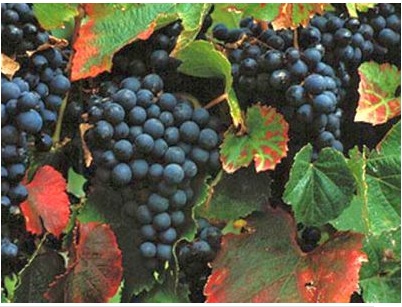
As average wine consumers here wise up and start expanding their scope of international wines, look for wines that offer tremendous fruit on the nose, ripeness, and a satisfying full-mouth feel to be popular. Malbec's already are popular, but expect their price points to go up - buoyed by the recent nod to Achaval-Ferre Finca Altamira Malbec 2006 by Wine Spectator with a rating of 96. The bottle is $116. It's the philosophy that a rising tide raises all boats. Yeah, but is it really worth it?
ACTUALLY WATCHING 30 ROCK
Everyone loves 30 Rock and has nothing but great things to say about it. But who watches it?? I'm determined now - from my heightened respect for Tina Fey and the show's Emmy sweeps - to start paying more attention and watch the episodes on Surf The Channel. Same goes for Mad Men. Expect a wave of interest in November for 30 Rock because of the election and the fact that Oprah and Jennifer Aniston will appear on the show.
SEXY LIPS
Enough lipgloss. Lips are sexy and should be cherished and flaunted in exaggerated ways. Deep red and intense gothic black hues are in, although Dita von Teese always seemed to know.
NISSAN VERSA
The 2009 Nissan Versa is now the cheapest car in the States, priced at $9,990. This subcompact is obviously fuel efficient, and I'm sure it's a functional car, but I can't seem to think that the 1.8L, 122 horsepower engine is powerful enough. It does come loaded with interesting optional features though, including a CVT, six-cd changer, and bluetooth.
