Journalism can sometimes sound really terrifying and kinda miss the point. It's like so many Republican spin masters and commentators being interviewed on AC 360 recently who are making these pronouncements like the US Congress needs a thorough evaluation, constituent by constituent to determine who is pro-American and who is anti-American.
Really....?...REALLY.......? This matters now?
Now, I like CityNews. I think it's a good local news platform and the broadcast is definitely exciting, entertaining, and hopefully relatively unbiased and informative. It's always had sensationalist news stories, 'Find out which foods you're eating right now are killing you...after the break!' or 'Is the TTC killing you?' or 'Why Ontario's education system wants to kill your kids!' - I just made these up, but are they really too far-fetched? lol.
However, a recent piece on the website by Michael Talbot, 'Have advertisers gone too far?', makes it clear to me now that their online platform has wholly mirrored their television broadcast for devoting attention to eye-catching but paper-thin news stories.
Citing examples of obnoxious, out-of-home, experiential advertising (including Boston's video box scandal and SMS campaigns coinciding with the launch of Dexter's new season), Talbot asserts that advertisers (no Michael, they're marketers who dreamed these up...) have "delved into shady realms" and are engaging in sinister tactics to "pry your hard earned money away."
Um...what?
So I'm in this profession because I like to sell people things they don't need and I want to impoverish them?
Of course what's not being emphasized is the considerable new value that consumers are realizing in marcoms that are relevant and meaningful to them - value derived from new technology that can touch the consumer on a one-to-one basis. And consumers are responding! There's a reason why viral, P2P, guerrilla, and SMS are done - it's because (if done well) they are effective platforms for creating buzz and awareness. The interactive forms are also strong mediums to enhance consumer relationships with brands. So why is this so scary?
Evaluate the news a little more critically - that goes for you too Michael Talbot.
(i just think this is a funny picture!)
It's been a while since I've written another Bad Ad Rodeo, an analysis of awful ads that fail to inspire - but this one is juicy!
It’s called bumvertising, an offensive and ridiculous new invention by marketers (Zig Interactive here in Toronto) as a way to be tongue-in-cheek and promote a client’s socially critical message using socially distasteful means. Homeless people in Toronto have been paid $250 per day to sit with signs for CFRB talk radio and act as human billboards. We’ll talk about whether this is good marketing or not later, but it’s so transparently lacking in basic values that I’m inclined to say no matter how effective a campaign this was, it has really done our business and the client a disservice because of the general tone and reception of the campaign.
Click the image to read larger.
There really wasn’t a better way to get the message across while still keeping your chins up? Are the CDs at Zig actually proud of the social discourse that they’ve catalyzed in Toronto about the homeless? How about whether they’re proud to call themselves marketers? I can certainly appreciate why observers might now have a bitter taste about our profession when this schlock can now act as a focal point for all the negative perceptions people have about ad men.
‘They are immoral’
‘They sell me things I don’t need’
‘They don’t care where the message is as long as someone sees it’
Bumvertising and Zig Interactive have done nothing to advance the state of marketing in Canada. There’s no differentiation or evolution of ideas from good to great. This isn’t great marketing…it’s just a sleazy shill for a client.
…and that’s another thing. If this was a campaign actioned at the client’s request, didn’t someone at Zig have enough of a spine to take a stand and express their dissatisfaction with how the agency might be selling its soul for CFRB?
But I guess the campaign might have actually been effective. Think about it. High-traffic locations, unique context, appropriate message, “should panhandling be illegal?” It’s hit the checklist of effective out-of-home campaigns, and it seems to have created a good buzz. You’d be hard pressed to find someone who does not have an opinion on this campaign or doesn’t show some sort of emotion when learning about it. It was likely also cost effective – I’m guessing $30K, including creative development and street execution?
But is that what the homeless are now in our downtown streets? Marketing campaign executioners?
I’m really disappointed in Zig and CFRB. Someone should have had the common sense to stand up amidst the back-slapping, hand-shaking, and self-congratulatory praise for developing such an “innovative, thought-provoking, and socially stimulating campaign” to say that while it may have been all of those things, it falls down on basic marketing morals and human decency.
Grade: F
Interactive media is where it’s at these days in terms of delivering excitement and experience to consumers. Often though, the message is gets lost in the punchiness of the medium. The channel distributor has done a great job selling ad space and gross consumer impressions to unsuspecting, wide-eyed brand managers that the issue of whether or not the marketing is effective or not is never raised.
Such might have been the case for an interactive billboard I experienced a few weekends ago at the Harbourfront Hot and Spicy Food Festival. Watch the video, it’s a 6 x 8 foot led screen which is touch-sensitive. As people step and tap on it, colourful led balls go flying around the screen. It’s wild. My friend Olga took the video as we played around.
…but what was it advertising again? What brand was there?
I’m not saying that this was an ineffective vehicle – far from it. We stood there giggling and jumping around on this led mat for probably ten minutes. People around us joined in. So the audience is tuned in and captive, they’re rapt by what they’re seeing and the fact that they have control over the ad itself is a big plus. As mentioned before in this blog, participation is a critical factor in modern marketing, especially in an ad targeted to Gen Ys. It afford a modicum of individualization and personal spin on the marketing, making the consumer feel like they have accountability over the marketing. This, in turn, makes the consumer feel that the ad has greater relevance to them (because they created it or had a part in it).
Adverblog talks about some of the better interactive online marketing campaigns. It’s interesting in all of these to see how prominently the brand and product are featured. It’s never unclear what is being explained.
So as for that wild led screen, perhaps its use is better for promotional settings where you can physically interact with the brand. Imagine Nike setting up two of these in stores and allowing consumers to try out the shoes as if they were a soccer goalie or seeing how high they can jump in the shoes. Imagine these displays in high-traffic locations like the PATH system and each step displays the kinetic energy created – a potential ad for Bullfrog or Bruce Power looking to promote their clean energy options to consumers.
Anyway, some food for thought. The new series of 90210 just started, featuring AnnaLynne McCord:
…and yes, bad television counts as legitimate research into consumer culture.
As evidenced by my latest Facebook albums, this weekend was one exhausting booze-filled event after another. While my liver and wallet may have been slightly compromised, the 2008 Festival of Beer (Saturday) and a day spent touring the wineries of Niagara Country (Sunday) did provide me with a lot of material to work with for an exploration into experiential marketing. Keith Richards can kindly offered his assistance in this topic since, as we all remember, he is the Stone incarnate of experiential marketing.
Keith: Hey Max...
Here a roundup of the seven deadly sins of experiential marketing, critical mistakes that will surely kill your product when launched and sampled in an open consumer setting.
ONE DIRECTIONAL - Deadly Sin #1
As a marketer, consider the enviable opportunity to look your consumers directly in the eye as they experience your product. If you’re a winemaker, watch them taste, swirl, smell, an analyze the wine. Look at their facial expressions. Listen to them. If you’re sampling at the Beer Festival, have they come back for more? Have they told their friends?
Think about experiential marketing as not only your opportunity to get your brand visibility and product noticed, but for you to receive valuable on the spot feedback. This is especially critical for marketers that hire freelance mobile promotion teams who do not work directly for the client. Get them to actively solicit feedback from customers as the product is being experienced.
Keith: Always have your eyes open and your ears to the ground when engaging consumers one-on-one.
UN-DEMONSTRATIVE - Deadly Sin #2
Demonstrate the characteristics of your product that set it apart from your competitors. This is key to establish a position of competitive advantage in the consumer’s mind. Does your amber ale has subtle nuances which you can demonstrate to me are the result of a special brewing process that only your brewery has perfected? Is this Meritage the result of a blend of different vintages resulting in a completely different balance to the wine? As a consumer, it’s important that you tell me this. Explain it to me and let me learn.
Keith: Always be explaining the key features, differences, and benefits of the product.
GENERAL - Deadly Sin #3
The worst reception that a brand could get is indifference. If consumers feel nothing about a product, how likely are they to tell others about it? Worse, if consumers feel nothing about a product, how likely are they to tell its marketers how they feel so that the product can be improved to get a warmer reception on a second go-round.
Make your experience unique. Set it apart from your multitude of derivative competitors by heightening the original qualities of the product. If this is the only bottling of Nebbiolo in Ontario, cool – run with it! If you’re the only brewer to use hops actually grown in Ontario, great – let that be a key component of your message.
Keith: Always focus on the unique, not the mundane or ordinary.
SPOKEN, NOT FELT - Deadly Sin #4
What would a Beer Festival be without dozens of free miniature beer samples? How fun would it be to visit a winery and see the grapes growing in the fields, see the musts fermenting in the tanks, and see the wine aging in the oak casks…but not actually have the opportunity to try the wine that you’ve just learned so much about. Product sampling is a key reason why consumers can engage with a brand on a higher sensory level than just what is seen and heard.
Sampling is really the key reason why experiential marketing is often performed, but marketers shoudn’t dismiss the importance of this function for its apparent simplicity and straight-forwardness. Analyze sampling from the consumer’s perspective. They are looking to try as many variations on the theme as you can offer (e.g. different shades of beer, different years of wine vintage).
Keith: Always allow the customer to experience the brand with multiple senses and understand their objectives for analyzing the brand.
NON-ASSOCIATIVE - Deadly Sin #5
Experiential marketing is a holistic branding moment, meant to envelope the consumer in the whole realm of the brand. This is a positive thing. It forges critical associations between the product and its perceived lifestyle in the consumer’s mind. At the Beer Festival, individual brewers like Budweiser, Cameron’s, or Wellington could create the perfect setting for visitors to sample their beers. For example, the Corona station was in a sandbox with fake palm trees and Muskoka chairs.
Keith: Always create positive associations between the brand and the immediate experience since memories are formed by imprints of related experiences.
UN-PARTICIPATIVE - Deadly Sin #6
Your brand story is too self-congratulatory and doesn’t do enough to include the consumer in the legend. It’s hard to relate to and offers nothing that the consumer can really remember or redeem. So then what’s the point of creating an experience for the consumer if it’s really your experience, not theirs?
Brand stories must involve the consumer to create a point of relevance in the consumer’s mind. Think of it like a foothold on the side of a sheer mountain face. Consumers develop deeper and richer experiences of a brand when they are involved in its evolution. This speaks more like a broader ideal than a proscriptive instruction, but it’s important that a message of inclusiveness permeate any interaction marketers have with their prospects.
Keith: Always engage at a ‘we’ level, never distance at a ‘you and me’ level.
AMBIGUOUS CONTEXT - Deadly Sin #7
Go show off your product. Better yet, just leave your product out for people to sample themselves. What’s wrong with this scenario? Consumers are given no expectations about the brand and are left totally uninformed going into the branding experience.
Think of it as if you’re a complete wine neophyte and have no idea what you’re tasting when the vintner hands you a glass to sample. If the flavours, aromas, and textures aren’t first established to contextualize your experience, then it’s likely that your interaction with that brand will be less enriching, relevant, and fulfilling than that of someone who is given those benchmarks beforehand.
Keith: The brand is yours. It’s ok to set expectations for the consumer from their experience with your brand.
So remember these seven deadly sins when consumers approach your brand experience. They write experiential marketing into their personal brand storyline.
Thanks Keith!
AHHHHHHHHH!!!!!
Imagine, your Outlook calendar reminder pops up and announces the status update with your boss in 15 minutes. It also announces that “this meeting is sponsored by Fanta. Don’t you want a Fanta Fanta…” It’s a very real possibility that marketing will break through one of the final bastions of consumer invisibility, the office. Marketing in the office will not be subtle like before and you’ll be forced to confront brand logos, taglines, and jingles in company emails, in the lunchroom, and at corporate events.Freakiness factor: 7
Likelihood to happen: 1
Total: 8
Freakiness factor: 6
Likelihood to happen: 3
Total: 9
‘My address? It’s 60 Starbucks Street East, Suite 500.’Freakiness factor: 9
Likelihood to happen: 3
Total: 12
The year: 2020. The place: Toronto’s gritty downtown core.Freakiness factor: 9
Likelihood to happen: 4
Total: 13
Imagine all those Google searches you do for disgusting key terms. Imagine all those emails you wrote. Imagine all those addresses you looked up. All gone, or worse, sold to some third party. Google apparently does a very good job of maintaining data security and their mantra ‘don’t be evil’ is something quite tangible in the organization. But just think how much trust we’ve put into Google with our personal details over the years…Freakiness factor: 105. Tiered payment model for online content
Likelihood to happen: 4
Total: 14
Rogers and Bell Sympatico have decimated the other players in the broadband internet access market and it’s a literal oligopoly. They now implement a tiered payment model in which consumers must pay more to engage in perceived ‘high-value’ online activities such as streaming, music downloading, or....gasp, blogging! Content can be payment-based too as the ISPs are able to actually see what sites you visit.Freakiness factor: 6
Likelihood to happen: 9
Total: 15
The last page is turned, the last word is read. The last commercial is watched, the last remote control button is pressed.Freakiness factor: 7
Likelihood to happen: 9
Total: 16
So music players are getting considerably less expensive because of smaller and faster processors and greater memory capacity. But suddenly you find that the reason you only paid $50 for your new 200GB iPod is because before you can watch the Sopranos episode you transferred over, you are forced to watch a sponsored ad from HBO. Before you listen to Hilary Duff's 'Wake up', you are forced to listen to a 10 second promo for downloadable ringtunes from Rogers Wireless.Freakiness factor: 10
Likelihood to happen: 7
Total: 17
The mobile phone companies have finally figured out how to give you free and unlimited phone service. All you do is buy the phone you want and you’re set. Unfortunately, it means that your phone becomes a vibrating advertising tool from Hell. You’re subjected to radio commercials while you wait for someone to answer the line and you’re stuck listening to ad spots while calling your voicemail.Freakiness factor: 9
Likelihood to happen: 9
Total: 18
This one is actually well on its way to full scale market rollout in some places in Europe and certainly in Japan. Your cellphone becomes a transponder and broadcasts a signal to the network letting service providers and marketers know where you are and what billboards you’re close to. As you walk by a digital panel on the street, proximity sensors activate and display an ad that is deemed to be relevant to you. You’re watched and marketed to wherever you go.Freakiness factor: 10
Likelihood to happen: 9
Total: 19
This is a post I've been writing for the last few days and it's taken some thought and reflection to get this right...I hope! I've been wanting to talk more about different marketing channels and begin to develop a holistic interpretation of how each marketing medium operates in a comprehensive portfolio of communication options.
But then I got really into the Stones again. Every time 'Wild Horses' or 'Sweet Virginia' comes on my iPod I crank up the volume and wail along with Mick.So let's mash things up (e.g. Kelly Clarkson vs. The Eagles). Ask yourselves, 'if each of the main members of the Rolling Stones was a marketing channel, what would they be?'
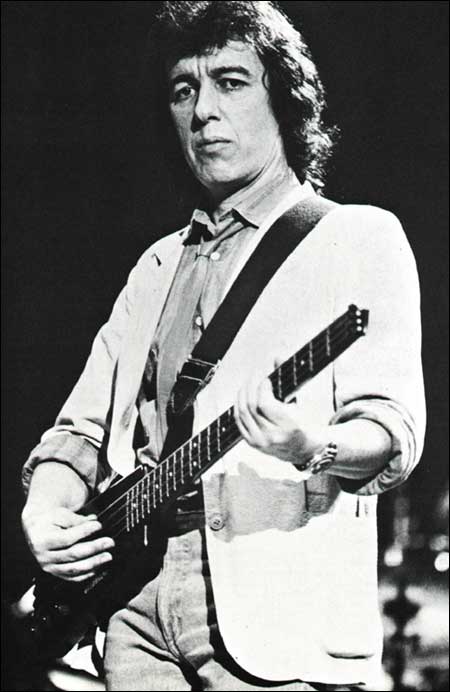
Bill Wyman - lead bassist, 1962 - 1993
I initially forgot Bill Wyman in this post, but was reminded that he should be included. Well, Wyman is not exactly top of mind among the Stones. Maybe it's his comparatively tame persona and characteristic level-headedness for the period during which he played with the band.
So i'm thinking that Bill Wyman should represent out-of-home advertising. Billboards, transit displays, and other forms of outdoor signage. Like Bill, out-of-home marketing is the oldest form of marketing. Although impactful, it's significance has waned in years as other, more tangible and interactive communication channels have captured a greater share of the consumer's attention.
While out-of-home ads can sometimes blend into the visual white noise of an urban landscape, highly eye-catching displays, usually in unconventional places, maintain the effectiveness of this communications channel at increasing brand awareness and driving customers. Think about urinal ads (NewAd) and the viewer's capivity. Or think about tunnel advertising in subways. Simple medium, with an innovative application.
Bill Wyman's contribution to the Stones was not overly perceptible, but his presence throughout the seminal years of their career gave a gravity and depth to the band's music. Like Bill Wyman, out-of-home advertising is always there, just sometimes you don't know it.
Keith Richards – lead guitarist, 1962 – present
Keith Richards is experiential marketing.
This is also known as P2P (person to person) marketing because of its demonstrative and interactive potential. It's meant to establish a deep and tangible connection between a consumer and a brand. It's useful to communicate product launches where testing and usage is important as well as to refresh consumers with the brand.
Keith Richards is experiential marketing because without him, the Stones – the brand – would likely not have the appeal to fans that they do. His charisma and drug-addled charm is undeniable and fables about his character, including snorting his father's ashes cut with coke, only serve to deepen the relationship between you and the brand!
A highly visible frontman for highly tactile marketing. Keith rocks.
Charlie Watts – drummer, 1962 – present
Poor Charlie Watts. Sometimes he looks like death warmed up. Other times he looks quite stately and refined. He's got a real stoicism though which makes Charlie Watts like print marketing.
Print. The printed word.
There's a timelessness to it that Charlie kinda embodies. It's tried and tested, dependable, and a good converter of consumers. Additionally, if your message cannot be easily explained on paper, then how can you explain it in a video commercial?
So what does this mean for Charlie Watts? Print, like the drummer who keeps the beat for the band, acts as the basic foundation of any campaign. The message is not embodied in the medium or the market. The message is the written values, the DNA of the ad.
Brian Jones – guitarist, 1962 – 1967
Brian Jones was influential and not without controversy. So it's only appropriate that he's guerrilla marketing, the black sheep of the marketing family.
Brian Jones actually started the band with pianist Ian Stewart in 1962 and brought in Jagger and Richards. He strongly influenced the Stones early years and played on songs including Paint It Black, Under my Thumb, and Street Fighting Man. With Keith Richards, Jones developed the technique of guitar weaving with both guitarists playing simultaneous lead and rhythm roles. He was identifiable and outspoken, with a Carnaby Street style that so closely tied the Stones to the 60's British Invasion. But Jones burned himself out and died before his time, becoming a founding member of the 27 Club. In addition to Jones, this macabre tragedy has so far claimed Jimi Hendrix, Janis Joplin, Jim Morrison, and Kurt Cobain, among others. I'm guessing Amy is next.
Jones was sloppy and innovative and experimented with different musical instruments and styles. It's appropriate to compare him to guerrilla marketing because despite the depth that he added to the Stones' sound, Jones wasn't essential. Guerrilla marketing is thought-provoking and highly visible, but it is also contentious and a somewhat unsustainable marketing medium.
The core of the Stones was the Jagger-Richards duocracy. Other members merely orbited this binary star.
Mick Taylor – guitarist, 1969 – 1974
Mick Taylor was a guitarist from 69-74, regarded as the Stones' most destructive and creative years. Great albums like Let it Bleed, Sticky Fingers, and Exile on Main St. attest to the musical juice running through the band at this time. Taylor was a highly skilled guitarist and brought a unique melodic sound to the Stones, influenced by his blues, latin, and jazz based musical schooling.
So reflecting on his short years with the band, radio advertising seems to be an appropriate marketing medium to describe Taylor.
Like Taylor's role in the band, radio is often cast as a second-rate communications tool in favour of flashier, more high impact mediums. But radio is great for a local market, it's affordable, and it continues to be a competitive marketing medium even with the rise of newer technologies and alternative information sources.
Ronnie Wood – guitarist, 1975 – present
So, go with me on this one….Ronnie Wood is online marketing (web and email).
Online. It's taken a while for online marketing to come into its own and shed its initial hype. Today, online represents a highly effective medium to target the right customers. Online ads are now standardized and have the opportunity to be more relevant to the consumer, while email has found a niche within the repertoire of other marketing mediums as a 'must–do' of any CRM program worth it's salt.
Ronnie Wood joined the Stones in 1975 from the Faces. He's grown considerably since and is now an integral member of the band. So like Ron Wood, let online marketing represent the timbre of good marketing meant to develop deeper relationships with consumers. The bass sets the tone of the song and online sets the tone for marketing with a brand's best consumers.
Mick Jagger – lead vocals, 1962 – present
What else could Mick Jagger possibly be aside from television marketing?
Like tv, Mick is big, loud, and expensive. Like Mick, tv is mass, screaming, and ubiquitous. Just look at him, he's certainly not got an attractive face, but maybe it's the caricature of Mick that's so appealing. He really was made for television.
His on stage persona is obnoxious yet captivating and he's got tremendous energy for a sexagenarian (old guy). Superbowl commercials are a lot like Mick Jagger because they've got sizzle and are clever and get everyone talking.
For the perfect orgasm of Mick Jagger + Television, watch the Stones perform during the 2006 Superbowl Halftime Show. Go ahead and try not getting into it, it's impossible!
BTW, happy birthday Mick!
WebUrbanist is doing a six part piece on guerrilla marketing right now. I like the idea that it's "not educational or preachy" and makes the viewer feel like "they're in on a secret".
I really don't think I'll ever get tired of guerrilla marketing campaigns. They stir the imagination and ignite the soul!
Of course, sometimes the most well-intentioned guerrilla campaigns can have disasterous results!
As fascinating as this out-of-home marketing is, I wonder how effective it really is at driving anything more than buzz and discussion. For example, does chalk graffiti actually create website visits? Do gimmicks and stunts actually lead to repeat purchases or greater customer satisfaction with the product? Therefore, a lot of credit must still be given to the tried and true relationship building marketing tactics of the past.
As mobile marketing becomes more ubiquitous, it will be interesting to see how guerrilla and interactive marketing are merged to create highly effective personal marketing conversations with consumers on the street.
There's a limit to how much marketing can be learned in the classroom!