
Thanks to Nick for blogging in my absence - my 601 has been more work in the last week than I expected.
I wanted to put up a code of conduct for myself for my future in marketing, something which I can refer to throughout my career. It's a list of things I believe now and strive to follow. Periodically I look back on the blog and try to find nuggets of insights (amid a lot of the dreck!) which I still think are valuable. I'm also now reading a great book, Adland, and its quotes from Bernbach, Ogilvy, Wells, and Rubicam have got me really inspired. Years from now, I'd like to look back on this list and proudly say that these things mattered to be at a time when consumer marketing was experiencing an identity crisis.
ONE:
Marketing’s future will be defined by the ability for consumers to own an experience and the ability for marketers to correctly identify those consumers.
The consumer experience implies that owning a product is not as satisfying as using a product or experiencing the transformative benefits. Marketers must capture the experience, in situ, of the consumer and the brand.
TWO:
CRM must be at the centre of an integrated marketing solution.
Customer relationship management (or experience, conversation, or value management) imply a rational identitification of a marketer's customers and channels to create consistent marketing communications. Makes sense, right? What's different now is that CRM isn't tossed aside to act as a Skunkworks for future strategy. It's smack in the middle receiving input and guiding all channel strategies so that customers are spoken to in a unified way with measureable goals.
THREE:
Reject as false anything except that which can be learned from your customers.
Remember that there's a reason customers buy from you. It's not because they owe you or they are short of options. It's because of some unique value proposition they relate to. Customer insights matter and the insights from your customers should be the only immediate truths.
FOUR:
As a consumer, demand only the best from marketers.
Passive response from consumers is a marketer's nightmare. It means that nothing was relevant or interesting. Complacent marketers who don't deliver the best solutions should no longer be allowed access to the customer conversation.
FIVE:
As an agency, be perceived as risk-taking.
The key word here is 'perceived'. Don't take risks. Rather, take perceived risks. The ready, fire, aim strategy is amateurish and unsustainable. Agencies which take calculated risks manage their opportunities and image better than those that take risky risks.
SIX:
Love the fact that not everything can be measured in life.
Your customers are many things. But they are not simply an equation for value based on complex activity and demographic variables. They're people. Chaotic people. Much of marketing is scientific but there's a human element to creating a spark of action where previously there was none. This is more the product of art than analysis.
So these are just a few of my mantras. I'll add my others in the future. I hope this becomes like Oprah's Book List and I start seeing these phrases show up in assignments at school.
Thursday, February 5, 2009
Max's mantras


Thursday, January 15, 2009
Bad Ad Rodeo: Countrywide's marketing is just puffery
Trickery fascinates me. When I first read about Countrywide's new stance on marketing, it made me think of David Blaine, a really awesome street magician, but a bit of a douche when his stunts lack any substance (remember the hanging upside down stunt?)
(BTW, it's not his tricks I like the most, it's the reaction of the participants!)
Countrywide, the massive subprime mortgage lender in the States, is being sued in New Hampshire for alleged breach of good faith, fraud, negligence, and misrepresentation. The firm's advertising and marketing communications are being used as evidence to support this lawsuit because those ads claimed that Countrywide would make good on promises to mortgage holders to modify their loans if needed.
In effect, Countrywide is being held to the standards that it communicated through its advertising.
Now, as a tactic to mitigate their responsibility from having to modify bad loans, attorneys from Countrywide are claiming that its promotions were "mere commercial puffery" - therefore nothing to get too worked up about because, hey, you really don't need truth in advertising.
Whooooa....
Here are a few of Countrywide's claims:
Talk about a fast way to squander your brand. I can understand that their using this defence to preserve what little financial equity the firm still has, since brand equity is beyond the salvage point. But it's pretty epochal - a company admitting that their marketing is really only words without any resolute commitment to make true on its customer obligations. Truth in advertising has always been under scrutiny and it's usually the responsibility of the end customer to determine whether the messages satisfactorily describe the product, features, experience, or service their purchased.
By saying themselvs that their ads mean nothing, at least Countrywide has relieved its customers of one obligation!
Monday, December 22, 2008
PR can be a shady biz
So I'm a marketer, not a publicist. I can't relate to the popularity culture that PR agencies base their credibility on and don't truly understand the black arts by which they can create or eliminate buzz.
But anyway, TechCrunch, a Seattle-based entrepreneurial blog recently wrote about some PR maven who made their shit list. It's really illuminating to a world we rarely see but have some pretty strong perceptions about nonetheless.
Lois Whitman is apparently the poster child for everything that's wrong with PR, sez TechCrunch, and uses spam tactics like a crying child to convince people to give in to her demands until she gets what she wants.
Now, I'm fenced up on this one. On the one hand, I am a fervent advocate for relevance-based marketing that makes marketers work creatively to gain people's attention, but on the other hand reading her vicious words really made me smile:
"CES publishes a list of press. You are one of a few thousand. Everyone has access to that list for all kinds of reasons. It is publicly published. As a PR agency we use that list so we can solicit press for booth appts. I hope you can appreciate that. If you don’t, let me introduce you to the “delete” button. Or in the future do not sign up as a press person for CES. Furthermore, do not make any threats to my company. I don’t need you to tell me what is right or what is wrong. I have been in the CE business for 42 years. I have seen nasty people like you melt away faster than a snowball going up hill in the rain. I am waiting for an apology. Maybe we can meet at CES for a hug or a slug. P.S. I just visited your web site. I would hardly call your blog a publication, However, you do have very interesting content and we have lots of client you would like to know more about to help you in your endeavors. Call me."
Decide for yourself.
If she's such a PR maven, it'll be interesting how she manages to quell this blogosphere revulsion against her.
Thursday, December 11, 2008
Admit it Gen Y, you love Atlas Shrugged
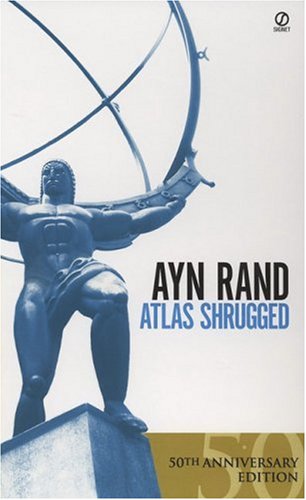
In between trips to the sensory deprivation tank and group meetings for 601 that I’ll have during the few short weeks this holiday season, I’d like to get back into regular reading.
During school semesters, I find myself mostly reading blogs, online news, the Economist, and a few random magazines like AdBusters, Vanity Fair, Wine Spectator, and Travel & Leisure. I love reading, but can’t really find time to devote to sitting down, turning off the laptop, and reading a book. But that’s one of the great things about the holidays – you finally have no excuse for procrastination.
I’m going to finish reading ‘Atlas Shrugged’, Ayn Rand’s seminal tome of objectivism and free-market capitalism. And it’s a bizarre time to be reading about laissez-faire economics given the economic crisis that somehow necessitates government nationalization of key industries, bailouts, and a general rejection of the idea that individuals acting in their own self-interest will create an optimal economic outcome.
I’m at page 593 of Atlas Shrugged. The book is 1063 pages and has a font size of 8. It’s ridiculous. But still I persevere. The story is interesting, if not a bit pithy and needlessly arcing.
But what really makes me keep flipping the page is the survivalist philosophy espoused by the protagonists. Ideas like fairness is irrelevant in an argument (because who is to say what’s really fair?) or that individuals have no obligation but to themselves. As a book it is a testament to self-interest and competition. It wholly defends rationality and discredits the concept of intrinsic value or subjective interpretation. This is known as objectivism.
For example, an apple is an apple. Reality is exactly what things are, not some perceptual cloak that society has elaborately created to shape our understanding of the world.
Things are what they are, therefore what grounds do we have to question reality? If all we know of reality is what we can see, sense, and experience, then there is no rational basis upon which we can claim that it's manufactured or false.
The plot of Atlas Shrugged is set in the context of a decaying industrialist society whose government and leaders believe that nothing is absolute and refuse to believe that labour productivity actually contributes to personal well-being. Citizens become pessimistic and willfully commit themselves to a collectivist mentality, believing that society’s best interests supercede their own.
In a utopia (or Marxist state) this philosophy might work, however with no one accepting individual responsibility, the world collapses. Trains stop running, electricity shuts off, people go hungry.
Now I’m hardly suggesting that this will happen with an Obama administration – but it’s interesting to study Atlas Shrugged as an analogy to what’s happening now. The same sense of free-market individualism that Ayn Rand supports can be thought to have catalyzed the overleverage that crashed our economy.
I think for Gen Ys, Atlas Shrugged really is the perfect literary guilty pleasure. We’re not willing to accept Rand’s hard-as-nails rationality about charity or welfare, but we’re salivating over the affirmation that individuals must have personal ownership and accountability to contribute to a healthy and functioning society.
The film adaptation is scheduled for a 2009 release, and if you needed another reason to hate Angelina Jolie (although I actually love her) she’s apparently going to be the lead.
Wednesday, December 10, 2008
Keanu Reeves gives great client presentations
The world is abuzz with excitement over Keanu Reeves’ upcoming performance as Klaatu in “The Day the Earth Stood Still”. Although he’s busy on the movie’s media circuit, Keanu agreed to sit down with me and talk about his reflections on how to do a good client presentation.
MAX: So Keanu, this Friday B!G will be going to our client for a final presentation of the results from our marketing analysis. It’s mostly industry stuff and some technical details, but the gist of the presentations insights are focused on how the recommending short, medium, and long term opportunities for a sustainable marketing solution. How do you think we should present this?
KEANU: Well, what’s the client like? I mean, Max, you invite me to sit down with you and then you ask a really vague question that’s full of a lot of bullshit marketing terminology.
MAX: Ok, Ok…no need to be defensive. Our client is friendly and we have a good rapport with them. This is our second engagement with them and they have been receptive to our objective analysis in the past. A positive relationship overall.
KEANU: So they’re not defensive themselves?
MAX: No way.
KEANU: So then ask yourselves what information they’d like to see and make sure that its communicated through words, pictures, graphs, and graphics that they’ll understand. You said they’re friendly, right?
MAX: Yep.
KEANU: Ok, so make it a conversation. This way everyone is comfortable and B!G won’t be stressing out about the need to convince the client of the insights validity. Like, lay your cards on the table to start, and enjoy the time together. It should be natural.
MAX: Natural? How so?
KEANU: Well, I always found doing screen tests and auditions that if you’re going into it assuming that your audience will not be receptive to what you have to say then you inevitably screw up. But instead if you go into the performance believing in the truth and integrity of your message, you deliver it honestly and compellingly, and you make sure to connect with your audience as real people, not an immovable object, then you’ll generally succeed and get the part.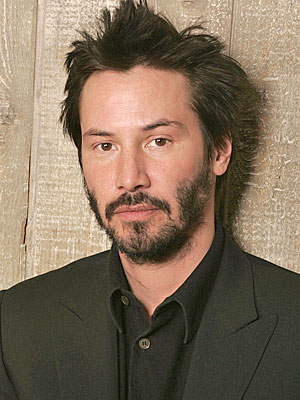
MAX: That’s great advice! So then we’ve got our message, we know our audience, but how are we going to deliver it in a compelling way?
KEANU: Tell a story. What’s the project about?
MAX: Wind energy in Canada.
KEANU: Gnarly. Ok, so explain the market, the key insights, the potential business plays, and the potential business strategy. But remember to link it together with some unifying theme….something like ‘growth’, or ‘innovation’, or ‘threats’. A common thread is a good thing to have in a presentation so the audience can link things together in their minds.
MAX: Cue cards?
KEANU: No way. It shows that you’re unprepared. How many months have you been doing this project?
MAX: Three months.
KEANU: Yeah, so there’s no reason why you and your groups’ members can’t just walk up and speak to the points on the slides. Remember, it’s not an announcement of information, it’s a conversation of information. Oh, and you should bring any supporting evidence or analysis along with you, but try to only cover the major points in the presentation. People get bored pretty quickly in these things so keep it simple.
MAX: What presentation style is best?
KEANU: Well everyone differs, right? I’m a method actor and I take my craft very seriously. Have you seen my oeuvre of work?
MAX: Your oeuvre?
KEANU: Yeah, my films. The Lake House, Sweet November, Dracula, and Johnny Mnemonic.
MAX: I think I’ve seen Dracula or Johnny Mnemonic, but The Matrix or Speed were my favourite films of yours.
KEANU: I hated those films. There was no room for my character to blossom and self-actualize.
MAX: I see….so then what type of presentation style is best?
KEANU: Again, everyone is different, but the big qualities are honest, comfort, and knowledgeability. If you can also be animated that’s good too. When you’re enthusiastic about the material, sometimes it helps to engage your audience so they are more receptive to the messages you’re speaking. The one piece of advice I really have for your group on Friday is to never appear like you yourself are not in support of what you’re saying. Always remember that you’re the expert on the presentation – you developed it, you did the research. If you can’t convince yourself of what you’re saying, then you’ll never convince the client.
MAX: Tubular advice Keanu, thanks for shooting the breeze and giving such awesome tips. The Day the Earth Stood Still opens December 12 and looks pretty cool. Check out the trailer.
Friday, November 14, 2008
How to be a keener: for clients and classrooms
Nice vacation huh? It’s been eight days since last publishing to the blog and I feel recharged. The TAs at York are on strike so in the spirit of everyone else who’s taking a vacation – enjoy Cuba, Sid and Olga! – I took one too and finished up on a bunch of work. We’ve been active with new clients too in the last week, doing a lot of pitches and signing clients for Winter projects. I’m really enthusiastic about the opportunities we have and the potential to get active on projects that loop in more Associates within B!G. We'll have more full-service accounts this next semester and will get back to our roots with an e-marketing strategy/Web 2.0 project.
(Clients, I know you’re reading this!)
Which brings me to tonight’s topic: how to be a keener but not a sycophant. Why is this important? Well, number one, the world loves keeners.
Number two, our grades in school are highly influenced by participation marks, beyond the percentage (usually 10%) that’s listed on the course outline. Don’t you think that the assignments of good class contributors are read extra thoroughly and receive relatively more mindshare?
Being a sycophant is a really sleazy situation. You’re reviled by the class and hated by the teacher. Your contributions are banal and brainless and typically involve nothing more than saying how brilliant you though the professor’s point was and how much it personally resonated with you. It’s the equivalent of a company being overly thankful for your business but not really knowing who you are or what makes you unique. I hate direct marketing that’s not relevant! So in other words, your words don’t stick and you’re wasting precious oxygen that better minds could have fed on.
But being a keener? Well, that’s a joy!
You’re not called on in class because you contribute more than the average student. You’re able to make the points you want that are most meaningful to you and your research interests. And you’re able to demonstrate to your slovenly peers what an amazing student you are – your rabid participation pays off when peers look to you as a person they want to group with. Group projects depend on being able to get your pick of the best students in the class, and like Angelina Jolie and Brad Pitt, ‘like’ gravitates to ‘like’.
So how can you elevate your participation from mediocre to keener-tastic?
ONE
Preface your comments by emphasizing things that other people in the class have said. Never attack the person, attack the message. Duh.
TWO
Do the readings, or at least read the first and last paragraphs fully and the first sentences of all the paragraphs in between. This way you can get the gist of what the readings were about without really actually doing them.
THREE
Listen more. Don’t make a comment that you really want to say if it has nothing to do with the current topic or string of other comments.
FOUR
Bring in aspects of theory in everything you say. Package your comment like this: 1) Issue, 2) Theory, 3) Explanation. It’s like a observation sandwich.
FIVE
Never ever say how insightful you found something or how amazing you think something is. Why? Because everyone has things that they also think are interesting, so why is your take on it any more valuable than theirs? Like seriously, what new knowledge or relevant thought have you contributed by saying that you “thought that the Porter’s Five Forces model is amazing”…huh?
Now, client interactions are not meant to be superficial, they’re meant to be substantive. Applying a keener model to pitches and presentations means having a deep and thorough knowledge of the client and what matters to them. Say it honestly. Don’t try and schmaltz your words or qualify their business with superlatives. You’ll regret it in the end when you can’t get leverage or wiggle-room in the account (when the project turns to shit!) because you weren’t honest in the first place.
And to my professors, I highly recommend you read this article on how to deal with me. I like the suggestions to use hugs as reinforcement and to perform a criminal background check.
Thursday, November 6, 2008
America's cultural zeitgeist

This maps shows electoral college districts that either voted more Democrat than from 2004 or more Republican than from 2004. It's from this great interactive feature in the NY Times showing voting shifts and an analysis of what significant voting changes occurred on Tuesday's historic election.
Consider this map. Look at the distribution of 'change'.
I won't try to hide my ebulience for the results of the election and I'm truly pie-eyed imagining the utopian possibilities for America that today seem just a little bit more attainable. They're more attainable not because Obama is President, but that America itself has seen what it is possible of achieving.
The new collective identity forged from Tuesday night is meaningful to consider. Things will be different. Things feel different. Let's look at this from a cultural/ethnographic point of view:
The hopefulness and change mantras united the country. This wasn't exclusive to Obama either as McCain picked up the change theme quickly after the RNC but ultimately unconvincingly.
The election meant so much to so many people. An Obama loss would have dealt a crushing sting to many people, particularly to Blacks, and would have meant that this group of Americans might have simply resigned themselves to a perceived lasting inequality - one that has been the source of deep national division and one that might have been perpetuated.
The belief that America is on a road, emphasized in Obama's acceptance speech, is
meaningful because it brings humility and a down-to-earth focused resolve to the moment. As ecstatic (or defeated) as Americans may feel now, there is still much work ahead.
A realization among everyone that we must accept domestic responsibility in addition to global responsibility - a philosophy of American exceptionalism that, through the Bush Doctrine, came to imply aggressiveness and a bully stance to presumably enforce democracy worldwide. Note that none of the insights I've mentioned above are Democrat or Republican, liberal or conservative. The relevance of Obama's message was one of inclusiveness and ubiquity - everyone was involved. He decisively won in states perceived to be GOP bastions and conservative holdouts contributing to the gravity of his Presidency not as one that is bi-coastal, but as one that is truly national.
It's become cliched for Presidents-elect to emphasize a 'healing process' and national reconciliation after a divisive and brutal campaign. So he's not doing it.
It's wrong to be congratulatory and self-aggrandising with a win and give the equivalent of highly publicized mass shoutouts to 'what we've accomplished'. So he hasn't done it.
The tone set by Obama on Wednesday at 12:01am was focused. There is work to be done. There is progress to be made. Things are not right in America, but they will be improved.
The fervor and pomp will die down and as time passes we'll all become a little more reflective on November 4th, 2008 and the significance of this election. We'll learn of scandals hidden throughout the campaign from both camps and we'll scrutinize the choices Obama makes in the first 100 days with the precision of a Leica lens. Optimism will fade.
But don't lose sight of what America has now proclaimed through their shared democracy.
It was never about Obama, it was about America. It was never about Bush, it was about a shared national change.
America's cultural zeitgeist has advanced and while our complex feelings and intangible perceptions about how life will be like are difficult to articulate, we can appreciate that nationally, Americans can deservedly feel proud of their country and the more realistic course it's now on. It's not necessarily softer, it's instead more sustainable. It's not humble, it's humanistic.
Those who deify Obama as a prophet for progress are misguided. He is a monumental man but is a reflection of a monumental nation.
Sunday, November 2, 2008
Zalaznick: Bravo's Postmodern Queen
Yesterday, the New York Times Magazine had a terrific lead story about Lauren Zalaznick, the head of Bravo Media, a network within the NBC Universal family.
This article is required reading for all B!G Associates. Think of it like a case article from your course kit, only this one you'll actually read!
It’s a comprehensive assessment of how marketers now focus on the ‘long tail’ of consumers and the maturation of postmodern content in our lives – we recognize it, and we recognize that we are being recognized for recognizing it (think it through, it makes sense!).
Zalaznick has monetized Bravo’s programming in unique ways and has created shows that appeal to the core viewer’s aspirational values. The core viewers are, as the article describes, ‘Will & Grace’. Hip professional urban women and gay men who, although not affluent themselves, are culturally influential and possess the kind of disposable income that higher-end marketers salivate over. Zalaznick describes them as ‘the Affluencers’.
Evaluating Bravo's programming,
“What has made the programming watchable, all along, is the same thing that might keep it relevant as the economy changes, which is a certain winking skepticism about buying and selling. It’s what’s ingenious, or insidious, depending on the perspective, about the complexity of the Bravo programming.”
The whole brand is conspicuous and self-referential, turning the spotlight on real people in real situations, but without the forced scenarios that can often debase other reality shows and commit the cardinal sin of television – breaking the fourth wall. Bravo’s success is based on the fact that they acknowledge the fourth wall and interact with the viewer in relevant ways. That’s the reality.
Wednesday, October 29, 2008
Liveblogging Obama's primetime infomercial
I haven’t done liveblogging since this blog’s inception back in May 2008 when I wrote about American Idol as it was happening. Remind me again who won? Oh yeah, that big headed guy…damn, what’s his name again?
So tonight is President Obama’s – premature, I know but appropriate nonetheless – infomercial of his candidacy. Earlier this week he presented his ‘closing arguments’ and is ending the race with a strong focus on positive positioning. The issues have been discussed, the challenges have been faced. It’s now an appeal to very guttural, atavistic beliefs in voters that a) something is wrong with the current situation, and that b) he is the best person to fix it. I’m really looking forward to this 30-min tv spot because it’s a package of branding wrapped up nicely with a big bow. It’s also got huge visibility and I’m curious to know Obama is using this unique (and crazy expensive) form of PR to his advantage.
If this was an infomercial, we’d probably see this running across the bottom of our tv screens:
"HOPE! for only $29.99. Act now and we'll also throw in CHANGE YOU'VE BEEN LOOKING FOR!"
(Thanks Peter!)
So on with the show:
8:01pm: Waving seas of wheat pan to clapping children. Nice portrayal of Americana! Obama's voiceover sounds scary - almost like Morgan Freeman talking as President at the closing credits of Deep Impact. 'Need to keep faith', and 'real and lasting change' are good lines!
8:04pm: Obama is going to share stories of real Americans. The first story is a woman from North Kansas Missouri - God, everything sounds awful about this woman's life! She's probably hardcore Obama at heart, why else would she decided to participate in this masturbatory session of political branding?
8:05pm: I really love the soothing fadeouts between clips and scenes. He's doing a great job tying these 'stories' (really more like sad YouTube clips...) to his issues and platform positions.
8:07pm: the acoustic guitar is putting me to sleep. Candid (scripted) interviews with prominent politicians are helping to build him up and position him as safe, experienced, and credible.
8:08pm: Doesn't this guy playing slide guitar remind you of the guy in those arthritis commercials?
8:10pm: Obama is back. Looking me right in the eye. That's good. He's connecting.
8:11pm: I really want Sarah Palin to do something like this, imagine the winking and finger-shooting...she's a maverick you know.
8:13pm: Wow, Eric Schmidt (Google CEO) just gave a clear endorsement. The focus of this chunk of clips is apparently on energy and the economy.
8:14pm: Juliana's son, Adam, looks like Napoleon Dynamite. The music is real lethargic and sad, this is a heartstrong story.
8:15pm: the music is uplifting, shots of children - children are the future! Oh wait, the music is slower now, Barack is talking about his deadbeat absentee dad. HAHA - photos of young Obama!
8:16pm: Ok, the tone is really shifting now, it's positive. Enough with the sad stuff. He's smiling and the future looks bright. I wonder who directed this...?
8:20pm: Clips of "the road", clips of his mom. How do I feel now? Well, I support Obama anyway but the brand is really taking on a human tone. There isn't the elevation and deification typical of other politicians. This infomercial is showing him as being really down to earth.
8:21pm: Biden is introduced. Great images and old stock footage, "Biden has never forgotten where he came from"
8:23pm: Average Joe is introduced who lost his manufacturing job. I actually have a major beef with this. Workers have lost jobs and those jobs are never coming back. Those jobs are in China now and despite all the promises Obama (and McCain) are making to bring back real manufacturing jobs, it's just not going to happen. The best option is developing new industry. Clean energy maybe?
8:24pm: Obama's grandmother defeated fascism? Wow, really?
8:26pm: The military will apparently be rebuilt and increased. Is this new or was I just not paying attention before? Photos montage of Americans (notice they're all White...) suggest that Blacks and Hispanics are already voting for him.
8:27pm: things are wrapping up. Clip of him giving a speech that sounds like he's basically laying himself bare as a real guy, who offers a promise of a better future.
8:28pm: Whoa, he's live now!
8:29pm: this crowd is going nuts. Wow, what a great speaker.
8:30pm: it's finally over! I can stop liveblogging!
Ok my thoughts:
- This was perfect for primetime. It was highly produced, easily digestible, and very focused.
- He positioned himself, his brand, as human and real
- The affiliation with both real people and politicians was effective, but I'd like to have seen more showcasing of individuals from diverse background. I suspect however that the choice of 'stories' was highly politically influenced to appeal to independent or swing voters, e.g. the white mom in the Midwest.
- Overall, this was an innovative spot which I think ultimately might have been unnecessary, but gave American voters a better perception of him, not only as a person, but as an ideas-driven brand.
Saturday, October 25, 2008
Brand identity analysis with Wal-Mart

I love Wal-Mart, I think it’s a great retailer and a terrific example of good, old fashioned marketing. Great brand too and I love the direction it’s now being taken into sustainability and environmental stewardship. Seriously, stop laughing!
It’s also a good case study to analyze brand values (core values, extended values, and the brand essence). It also helps to have written about Wal-Mart for an assignment in my brand management class and getting the class’s top grade on the assignment! So let’s dissect their identity:
CORE BRAND VALUES
Now their core values are easy to pin down, Start thinking about what they stand for, their lasting, permanent qualities of the brand that it stands for and cannot live without.
What are Wal-Mart’s core values?
- Customer empowerment. Wal-Mart helps their customers lead better lives. The always low price guarantee is a statement of the brand’s ‘you first’ belief.
- Customer satisfaction. Superior value for customers with satisfaction guaranteed. Wal-Mart stands behind their products to a degree that I’m not sure many other retailers their size can approach. As clichéd as it may seem, when you buy an item at Wal-Mart, you’re really buying a guarantee of satisfaction.
- Price leadership. Strong differentiation from competitor brands based on low prices. Wal-Mart’s brand is truly inseparable from its price.
Core values are things that every company employee would be able to tell you about the brand without missing a beat. You ask them, ‘what does your brand stand for?’, ‘what kind of person is your brand?’ Another useful question is the Mars Approach, which posits ‘if you were to take employees from the company and have them open a store on Mars, what are the qualities you want them to take there?’
EXTENDED BRAND VALUES
The extended identity is not quite core, not quite ephemeral. The identity is broader, still relevant, but flexible. Here is where new values come into the brand sphere and are adopted through legitimate and sincere actions taken by the company.
What are Wal-Mart’s extended values?
- Community responsibility. Wal-Mart acts responsibly in its customers’ communities. Forget about claims that Wal-Mart shuts our local merchants and kills Main St. (however true this may be!). Stores are active focal points in the community and the company takes a responsible approach to integrating themselves into the community-lives of their customers.
- Personality. Employees personify Wal-Mart’s friendly, helpful, and approachable brand. As often as we’ve all had confused and distant responses from Wal-Mart employees to ordinary questions such as ‘where are the lightbulbs?’, brand personality is a quality Wal-Mart strives to emphasize
- Environmental sustainability. Wal-Mart utilizes green and energy-efficient practices. This is an important new concept for them, especially with the opening of new greenfield Supercenters and renovations to existing stores.
BRAND ESSENCE
So, Ok. There’s the values. But what gives these values gravity and context? Is there anything arming Wal-Mart holistically to create a strong and supportable unique value proposition? That is to say, what does Wal-Mart really mean?
This rhetorical question is key to understanding the brand essence.
Wal-Mart’s brand essence is ‘value for life’, a phrase that captures the soul of the brand: value in the price and quality of goods sold and the comprehensive selection offered at Wal-Mart stores.
Ultimately, the brand bullseye supports a relationship a brand develops with its customers founded on a unique value proposition. Wal-Mart’s relationship with customers is that they are family and the company strives to treat them with respect and give them an honest shopping experience with satisfaction guaranteed. Wal-Mart succeeds because through these key brand values and the brand essence, Wal-Mart customers understand the price, convenience, and empowerment benefits that the brand gives them. Shopping smart gives customers personal satisfaction knowing that they are getting good value for themselves and their family.
This post has likely caused a lot of eye-rolling and skepticism from readers but doing a brand value analysis is not about ripping into a company’s operations, their corporate strategy, or performance. I’m a marketer and I’m good at understanding consumer behavior, not supply-chain logistics. Brand value analysis is about image and trying to pin down what exactly makes them successful with customers. I’m not even a Wal-Mart customer but for this company, its brand values are crystal clear.
Wednesday, September 24, 2008
Consumerfying 90s music
In a mashup of Juliette Lewis, schizophrenic proportions, here’s how seminal rock albums of the 90s compare to modern consumer culture – keep with me on this!
Blog traffic is way up from that Sarah Palin article I posted from Rolling Stone. My concerns now are how to sustain it and how to keep things interesting!
This is an article I’ve been thinking about writing for a while. The 90s meant a lot to me cause I think that’s when the last good rock music died. Bands like Nirvana, Smashing Pumpkins, Metallica, Foo Fighters, were high on this wave of emotion from 20-something Gen Xers who were the first generation taught that that it was ok to feel apathetic about life. Although I was years younger and only beginning to understand my own teenage angst, the music left an impression.
Here are awesome 1990s rock bands and the consumers they now represent:
Ten (1991) - Pearl Jam
If this album was a consumer: the thrifty Value Village shopper
Why: anti-establishment and messy, slapdash and not neatly folded or colour-coordinated. It’s recycled, thrown together, and somehow still makes a unique outfit.
Best tracks: ‘Black’, ‘Porch’, ‘Release’
Blood Sugar Sex Magik (1991) – Red Hot Chili Peppers
If this album was a consumer: the douchy Holli-Crombie-Fitch collegiate
Why: Big chunky beats and tremendous drug-enhanced guitar work from John Frusciante, this album screams mainstream with an extroverted, sexual edge.
Best tracks: ‘I Could Have Lied’, ‘Under The Bridge’, ‘Give It Away’
To be seen soon at Hollister: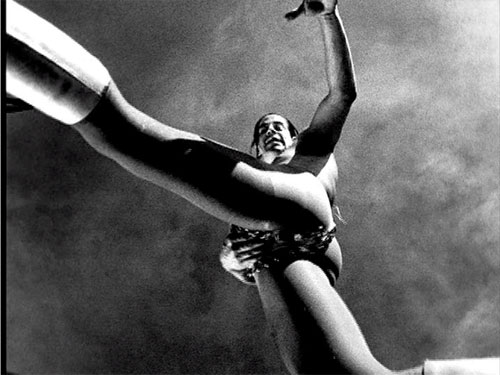
Tragic Kingdom (1995) – No Doubt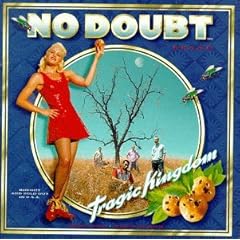
If this album was a consumer: the Tween
Why: this is such an unapologetically saccharine, feel-good album. Loud, fun, funky sound that was new and that one could chew on for the entire summer. It’s a tween because everyone had it, everyone wanted it, and everyone either wanted or wanted to identify with Gwen Stefani.
Best tracks: ‘Don’t Speak’, ‘Sunday Morning’
Ritual de lo Habitual (1990) - Jane’s Addiction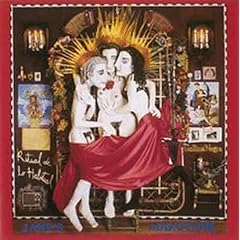
If this album was a consumer: the spiritual skeptic
Why: cause this is a WEIRD album…weird messages and strange that make me feel like I’ve been transported to MDMA-fueled midnight beach rave in Goa. It’s difficult to understand, but really rich with mysticism and imagination.
Best tracks: ‘Three Days’, ‘Stop’
Garbage (1995) - Garbage
If this album was a consumer: the conforming non-conformist
Why: Butch Vig says that the name ‘garbage’ comes from the band’s approach to making music – taking the sonic remnants and piecing them together again. Garbage and goth will always be intertwined in my mind because of the gorgeous, sad, creepiness of the band and their caricatured adoption into fledgling emo subsculture.
Best tracks: ‘Milk’, ‘Stupid Girl’, ‘Only Happy When It Rains’
Jagged Little Pill (1995) – Alanis Morissette
If this album was a consumer: the mid-life crisis married male
Why: this consumer is awash with disposable income and looking to shock and awe. Sure female aggression was nothing new (Patti Smith, 4 Non Blondes, Courtney Love), but this edgy yet still radio-friendly album made feeling bitter and uncaring kinda cool.
Best tracks: ‘Ironic’, ‘All I Really Want’, ‘You Learn’
Siamese Dream (1993) – The Smashing Pumpkins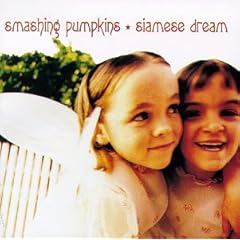
If this album was a consumer: the middle-class working mom
Why: It’s uplifting, peaceful, and incredibly aspirational. Powerful chord structure punctuated by soaring Billy Corgan guitarwork sets a singular positive foundation of the album with compassionate lyrics that suggest a consumer who is conscientious, caring, and affectionate.
Best tracks: ‘Rocket’, Today’, ‘Mayonnaise’, ‘Geek USA’
The Bends (1995) - Radiohead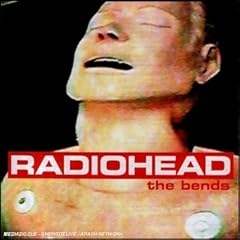
If this album was a consumer: the savvy agoraphobe
Why: it’s not stupid music, it’s just misunderstood. The Bends still captured the experimentalism Radiohead was known for and brought the band’s music to a larger audience. The awkwardness and insecurity of the album’s tone resonates with outcasts who'd rather correct my speling than go play ultimate frisbee.
Best tracks: ‘Just’, ‘Fake Plastic Trees’
Purple (1994) – Stone Temple Pilots
If this album was a consumer: the workaholic microbrew-tippler
Why: 'Purple' is a pounding, ethereal album that set a hazy foundation for dreamers, druggies, and early dotcom-ers. In a bizarre smoothie of the three you get a yuppie urbanite of the three who’s introspective with a love for cultural idiosyncracies and pushing their limits.
Best tracks: ‘Interstate Love Song’, ‘Big Empty’, ‘Lounge Fly’
Dookie (1994) – Green Day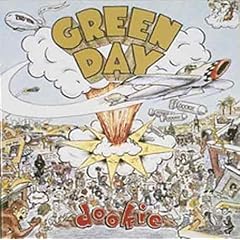
If this album was a consumer: the weekend mallrat
Why: The weekend mallrat loves brands, loves celebrities, loves their friends, and loves killing time. They rarely buy things but when they do they make rewarding purchases based as much on peer pressure as information and specs. Dookie made it ok to feel lazy and fucked up.
Best tracks: ‘When I Come Around’, ‘Longview’
The Battle of Los Angeles (1999) – Rage Against the Machine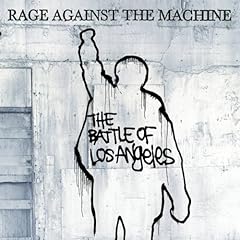
If this album was a consumer: the urban Green
Why: Despite the anti-consumerist, anarchistic tone of the band, fans of the band were hardly as socially conscious as they’d like to believe. Having grown up and started earning incomes, they choose sustainable products but don’t know what it means to offset their carbon when they take business trips to Chicago.
Best tracks: ‘Sleep Now in the Fire’, ‘Testify’, ‘Guerrilla Radio’
Odelay (1996) – Beck
If this album was a consumer: the informed and cultured Wal-Mart shopper
Why: they’re rare but balk the trend by living a suburban life of leisure while still reading the newspaper, participating in online communities, and going to concerts. Odelay’s carefree, scratchy-mixed, major-keyed, melodic tone personified this attitude.
Best tracks: ‘The New Pollution’, ‘High 5’
"Which way to the paper towels?"
The Downward Spiral (1994) – Nine Inch Nails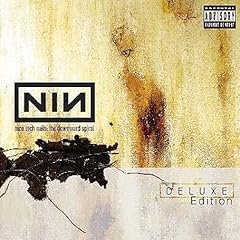
If this album was a consumer: the pseudo-nihilist, suburban emo teen
Why: the album was commercial as much as it was some gothic expression through sonic electronic disfigurement. The album felt bad for itself and felt heavy throughout. It wasn’t black so much as completely lacking in any colour. As a consumer, its emo because despite the pity, sickness, and smut it wanted to be recognized and treated like an outlet for society’s abuse. It’s industrial to its core.
Best tracks: ‘Piggy’, ‘Hurt’, ‘Closer’
Use Your Illusion I & II (1991) – Guns n’ Roses
If this album was a consumer: the jingoistic slob
Why: Cause the album is like a sloppy drunk who has soiled themselves. Guns N’ Roses was that uncompromisingly American rock band that elevated the final notes of loud metal rock to elegant heights before finally imploding.
Best tracks: ‘Don’t Cry’, ‘Estranged’, ‘Yesterday’, ‘Knockin on Heaven’s Door’, ‘November Rain’
Totally:
Weezer (1994) – Weezer
If this album was a consumer: the nullified boyfriend
Why: Weezer rocks, but the album was a follower and although it set a precedent for whiny frat rock, it didn’t challenge musical paradigms or come across as being too offensive. Perfect for that pallid tag-along boyfriend who’d shops where his girlfriend tells him to.
Best tracks: ‘No One Else’, 'Say It Ain’t So’, ‘Undone – the Sweater Song’
Antichrist Superstar (1996) – Marilyn Manson
If this album was a consumer: the moneyed, educated professional woman who people misperceive to be a real bitch
Why: it’s a pretty smart album with an intriguing story arc that allows listeners to draw their own conclusions. On first glance it’s scary and obscene, for the same reasons as Nirvana’s ‘Nevermind’ album, but those who take time to get into it and put aside preconceptions will be rewarded by what they find.
Best tracks: ‘Antichrist Superstar’, ‘The Beautiful People’, ‘Little Horn’
(What’s the story?) Morning Glory (1995) – Oasis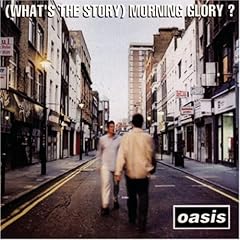
If this album was a consumer: the foreign tourist
Why: it came on the scene kinda unannounced and made a massive impression, paving the way for other sparkly, chewy Brit pop acts. Oasis really didn’t offend anyone but they were really noticeable. Thematically, the album seems like it’s an indulgent shopper on vacation who isn’t worried about the credit card bill when they return from holiday.
Best tracks: ‘Some Might Say’, ‘Don’t Look Back In Anger’, ‘Morning Glory’
"More sunglasses please"
Nevermind (1991) – Nirvana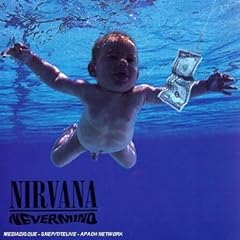
If this album was a consumer: the conspicuous spender
Why: the album failed Nirvana’s grunge roots through its flashy, dirty excessiveness. It’s loud and obscene and over the top. If this was a consumer it would be the guy riding top-down through the financial district in his Lambo. (BTW, don’t get me wrong, I loved this album)
Best tracks: ‘Lithium’, ‘Breed’, ‘Come As You Are’, ‘Smells Like Teen Spirit’
In the world of blogging, content is good, content is God!
Monday, September 22, 2008
Max to the Media: Grow a pair already
This is a marketing/advertising/cultural blog, not a political one. Opinions fly fast and furious here but it’s usually constrained to bashing Rogers Wireless, hating on Microsoft, or extolling our own organizational virtues.
However, there’s something irking me about the US Presidential campaign and passivity of the media to issues that actually matter.
On the economy
The financial market muckup is making me nervous for my career prospects when I graduate. It’s hardly like I’ll be going into investment banking, but the instability poses a massive risk for the confidence of investors to undertake perceived non-revenue generating expenditures – ad and marketing campaigns! With such a dazzling presidential campaign filled with such charismatic people, we’ve all become a little myopic to this economic disaster. Greater focus must be given to this situation and all candidates in the presidential campaign must be questioned about what specifically they would do to strengthen investor confidence, enforce regulation and standards where appropriate, and raise the productivity of the US economy. Low-skilled jobs have gone to China. They are not coming back. But that doesn’t mean that America has no basis for international economic competition.
The US spends more than it earns. Despite the $3 trillion foreign debt carried by the US government in the form of treasury bills sold to foreign banks – international investors still have confidence in the ability of the US economy to chug along and continue consuming. In a bizarre twist of economics, it’s become a self-sustaining debt cycle supported by twin fiscal and trade deficits. If China cashed in their t-bills tomorrow, they’d be as hurt as the US by the complete collapse of the economy. No one is ready for that. So it’s a Sword of Damacles that neither McCain nor Obama have really been able to address. Palin certainly doesn’t have the answer. I haven’t seen a strong acknowledgement of the severity of this problem from either side. Most worrying however, is that no one is pressed by the media to solve it.
What about the recently announced $700 billion infusion of cash to take the risk from unsecured mortgages – essentially a loan from American taxpayers. How will the next president ensure that this is repaid by the major banks and that accountabilities are set? Bush has actually bankrupted the country – what do the candidates feel about this?
Through the cunning entanglement of bundles of financial securities by risky investors who were poorly monitored, investment banks are now unable to separate good loans from bad loans. Does Obama have a plan to fix this? What is McCain’s strategy for regaining investor confidence in the financial system?
On their backgrounds  Here’s another bother: why are we no longer seeing Maverick McCain? He was a rabble-rouser in Washington with a reputation for action and doing the right thing. Why has he lost this? Why isn’t he being asked to explain why he lost this?
Why is Obama not being asked to explain why he chose Joe Biden over Hilary Clinton if McCain picked Palin as an apparent come hither pander to female voters? What does he really think of John McCain and Sarah Palin?
What does he think of the fact that many Americans will likely not vote for him because he’s black, despite what they tell pollsters.
But what offends me most – no surprise here – is the kid glove treatment Sarah Palin is receiving by the media…except for Barbara Walters and Joy Behar. Watch:
…yes, exactly WHAT reform is Palin known for?? And thank God for Matt Damon…
Why hasn’t anyone in the media asked her more of these questions? Sarah Palin IS absurd. Matt’s right, she IS terrifying. If she’s going to be in a senior position of government, I want to her to answer for her hypocrisy of promoting abstinence in sex-ed while her daughter gets pregnant right under her nose. This is not unreasonable to ask. I want her to answer for why she thinks that after having governed a town of only 8,000 people with no sizable economy to speak of, she’s now capable of crafting economic policy that will impact the world.
What’s terrifying is that whenever she is asked tough questions like this, the McCain camp puts their defensive blinders up and attacks the media for being too unilateral. They thought Tina Fey's portrayal of Palin on SNL was sexist. Let the journalists do their job. Let's comedians do theirs. It just goes to show how little substance she has that the McCain campaign is unwilling to let her answer their questions.
News media is being far too soft on everyone in this campaign.
They’re complicit when Republicans mewl and whine when questions stray too far away from lipstick and too close to energy policy and creationism, and they’re complicit when Democrats make utopian claims for the future while offering no substantive facts about how they’ll implement it.
I'm astounded by how political figures attempt to point the finger of blame at the media for asking too many sensitive questions and how tacitly the media accepted this as a natural part of journalism! Start demanding that politicians answer difficult questions.
This really is the scariest election ever because no one seems to be taking it seriously.
