
I'm in class right now, time to blog!
Someone just made a comment in class about how Obama's election isn't anything new, it's just the representation of American political sentiment at this moment. I'd seriously care to disagree, and Justin emphasized that 2M people in Washington is hardly evidence of the fact that Obama is no different than other presidents.
This all speaks to a larger cultural movement that's churning and frothing but still largely intangible.
Pepsi has relaunched its brand in an effort to ride this new cultural zeitgeist. It's now a fresher, edgier, more movement-focused brand. And it's coincided with the inauguration!
Here's their old look:
Here's their new look:
Familiar, but different. It's fun.
The centrepiece of the brand relaunch is the Refresh Campaign.
Check out the microsite: RefreshEverything.com. It's a social media site to aggregate the opinions and voices of normal citizens and Eva Longoria (among other celebrities).
It's been created to allow anyone to upload their own user-generated content that expresses their feelings of hope and optimism with the new President.
Even my current fascination, Lady GaGa, has gotten in on the action!
The Refresh campaign doesn't prominently feature any Pepsi products. I like this campaign because it's not about driving sales, it's about driving engagement (again, how does one actually value this?...is it even fair to value engagement by the classical measures of consumer value??)
The microsite is simply meant as an online interactive destination for their offline commercials. It's tied to a YouTube channel with Pepsi's new commercials and other related videos. The microsite doesn't have any search or folksonomy tagging capabilities so it's not too important for site visitors to find exact information on what people are saying, rather, it's meant to act as a speaker's corner for average voices to be heard.
So what's the point?
Two things:
Think of the optics: Pepsi is showing that they are a brand associated with change and youth (again). The TV commercial, courtesy of TBWA Chiat Day, was shown during key primetime spots (I saw it on AC 360 at 10:15pm, January 20) and captured the momentousness of the day. Check out the commercial. It's fresh and friendly.
Think of the non-quantifiable brand development: Tacitly, Pepsi's Refresh campaign is effectively sponsoring the Obama administration! It's piggybacking on a wave of interest in society in individualism, plurality, and self-expression. Pepsi is demonstrating that it understands the strong needs by consumers/voters for these things.
Pepsi is allowing consumers to be heard at a time when the urge to speak up has never been stronger.
To be fair, Coke is launching a big wave of new ads too. Analysts think the Colas Wars are going to begin again!
Great work by Pepsi and their agencies on this one, this is definitely a campaign i'd have loved to be involved in.
Excellent example of getting it done, creating a transparent and highly understanding brand personality, and emphasizing that Pepsi is a brand that unites and empowers people.
Way. To. Go.
Wednesday, January 21, 2009
Hitting it home: Pepsi's Refresh campaign


Thursday, November 20, 2008
Integrated marcom and your ignorant friends
You know those people who say they hate marketers and never pay attention to ads? The ones who extol their imperviousness to calls-to-action and freedom when it comes to making their own decisions as consumers?
Imagine how much it stirs an anger deep inside you to just shake them and scream "it's not about selling you on something you don't need, it's about engaging with you in a relevant way that articulates the value proposition!"
Well, imagine how nice it would feel to hear that same person who pooh-poohed marketing talk about what a cool new P2P marketing strategy they interacted with. The same person who selfishly says that they're uninfluenced by marketing messages is now oblivious to the fact that an experiential campaign has made a real mark on them.
In Sydney, Australia, a social networking campaign has been launched to increase tourism to Alberta. It uses online social networking forums and street-based 'experiences'
A number of these unique mammals have been exported to Sydney, Australia, where they will be displayed in cages at Sydney’s Darling Harbour Nov. 20-22. On display will be: Western Party Animal—also known as Extremeous Winterous Dudeous Maximus—the Elusive Skier/Snowboarder Dude, and the Great Outdoors Lover. Every hour a “zookeeper” will bring one of the “animals” out of its cage to answer questions and interact with the crowd.
That's really cool.
It's also a terrific example of a integrated marketing campaign. Alan Middleton argues that with an increasing number of marketing campaigns utilizing different distribution channels, it's more important than ever to "integrate communication systems across this ever-increasing rane of target groups, distribution outlets, and media." Furthermore, "while the creative message will be strategically and conceptually similar, each medium will have create developed to optimize the message, and the role of the medium, and its contribution to the target's buying system."
BTW, how funny is it that Rogers is one of Canada's top marketers, as written in this week's Marketing Mag - a Rogers Media publication!
Shameless!
Tuesday, November 18, 2008
New Star Trek movie trailer
The trailer for the new Star Trek movie is out and it looks like a really fun movie. Not necessarily profound or cinematically deep, but just really fun.
Pajiba says it's gay, and maybe the prolongued looks between teenage Spock and teenage Kirk are a little drawn out and excessive. See for yourself:
But regardless of how good this movie is, we all know that Captain Picard is, and always will be, the finest officer in Starfleet...
Thursday, November 6, 2008
America's cultural zeitgeist

This maps shows electoral college districts that either voted more Democrat than from 2004 or more Republican than from 2004. It's from this great interactive feature in the NY Times showing voting shifts and an analysis of what significant voting changes occurred on Tuesday's historic election.
Consider this map. Look at the distribution of 'change'.
I won't try to hide my ebulience for the results of the election and I'm truly pie-eyed imagining the utopian possibilities for America that today seem just a little bit more attainable. They're more attainable not because Obama is President, but that America itself has seen what it is possible of achieving.
The new collective identity forged from Tuesday night is meaningful to consider. Things will be different. Things feel different. Let's look at this from a cultural/ethnographic point of view:
The hopefulness and change mantras united the country. This wasn't exclusive to Obama either as McCain picked up the change theme quickly after the RNC but ultimately unconvincingly.
The election meant so much to so many people. An Obama loss would have dealt a crushing sting to many people, particularly to Blacks, and would have meant that this group of Americans might have simply resigned themselves to a perceived lasting inequality - one that has been the source of deep national division and one that might have been perpetuated.
The belief that America is on a road, emphasized in Obama's acceptance speech, is
meaningful because it brings humility and a down-to-earth focused resolve to the moment. As ecstatic (or defeated) as Americans may feel now, there is still much work ahead.
A realization among everyone that we must accept domestic responsibility in addition to global responsibility - a philosophy of American exceptionalism that, through the Bush Doctrine, came to imply aggressiveness and a bully stance to presumably enforce democracy worldwide. Note that none of the insights I've mentioned above are Democrat or Republican, liberal or conservative. The relevance of Obama's message was one of inclusiveness and ubiquity - everyone was involved. He decisively won in states perceived to be GOP bastions and conservative holdouts contributing to the gravity of his Presidency not as one that is bi-coastal, but as one that is truly national.
It's become cliched for Presidents-elect to emphasize a 'healing process' and national reconciliation after a divisive and brutal campaign. So he's not doing it.
It's wrong to be congratulatory and self-aggrandising with a win and give the equivalent of highly publicized mass shoutouts to 'what we've accomplished'. So he hasn't done it.
The tone set by Obama on Wednesday at 12:01am was focused. There is work to be done. There is progress to be made. Things are not right in America, but they will be improved.
The fervor and pomp will die down and as time passes we'll all become a little more reflective on November 4th, 2008 and the significance of this election. We'll learn of scandals hidden throughout the campaign from both camps and we'll scrutinize the choices Obama makes in the first 100 days with the precision of a Leica lens. Optimism will fade.
But don't lose sight of what America has now proclaimed through their shared democracy.
It was never about Obama, it was about America. It was never about Bush, it was about a shared national change.
America's cultural zeitgeist has advanced and while our complex feelings and intangible perceptions about how life will be like are difficult to articulate, we can appreciate that nationally, Americans can deservedly feel proud of their country and the more realistic course it's now on. It's not necessarily softer, it's instead more sustainable. It's not humble, it's humanistic.
Those who deify Obama as a prophet for progress are misguided. He is a monumental man but is a reflection of a monumental nation.
Sunday, November 2, 2008
Zalaznick: Bravo's Postmodern Queen
Yesterday, the New York Times Magazine had a terrific lead story about Lauren Zalaznick, the head of Bravo Media, a network within the NBC Universal family.
This article is required reading for all B!G Associates. Think of it like a case article from your course kit, only this one you'll actually read!
It’s a comprehensive assessment of how marketers now focus on the ‘long tail’ of consumers and the maturation of postmodern content in our lives – we recognize it, and we recognize that we are being recognized for recognizing it (think it through, it makes sense!).
Zalaznick has monetized Bravo’s programming in unique ways and has created shows that appeal to the core viewer’s aspirational values. The core viewers are, as the article describes, ‘Will & Grace’. Hip professional urban women and gay men who, although not affluent themselves, are culturally influential and possess the kind of disposable income that higher-end marketers salivate over. Zalaznick describes them as ‘the Affluencers’.
Evaluating Bravo's programming,
“What has made the programming watchable, all along, is the same thing that might keep it relevant as the economy changes, which is a certain winking skepticism about buying and selling. It’s what’s ingenious, or insidious, depending on the perspective, about the complexity of the Bravo programming.”
The whole brand is conspicuous and self-referential, turning the spotlight on real people in real situations, but without the forced scenarios that can often debase other reality shows and commit the cardinal sin of television – breaking the fourth wall. Bravo’s success is based on the fact that they acknowledge the fourth wall and interact with the viewer in relevant ways. That’s the reality.
Tuesday, October 14, 2008
I vote for Jessica Alba
I’m torn when I reflect on the drive to encourage Gen Ys to vote and contribute to the democratic process. Don’t get me wrong, I really like democracy, I like what it stands for and I like the egalitarian ideals that are the foundation of the US constitution….it’s just the seedy and irrelevant way it’s being packaged to youth.
Take DeclareYourself.com, a “nonprofit campaign to empower and encourage every eligible 18-year-old in America to register and vote in the presidential primaries and 2008 presidential election.” As much as I’d like to try to be controversial and brand this as campaign as frothy, feel-good clusterf*ck of Gomorrahian proportions, I really respect the integrated marcom aspect of the whole project. DeclareYourself has strategic partnerships with key media, retail, and tech companies and the campaign is ubiquitous in online Gen Y social spaces. Check out some of the partners:
- Cricket Wireless
- Yahoo
- MySpace
- ComedyCentral
- ClearChannel
- Starbucks
- American Eagle
- Van’s Warped Tour
- Seventeen Magazine
- The WB Network
Ok, but here’s where it goes off the rails for me…it’s overdosing on celebrity endorsements and the frame of reference is moving out of focus. Voting is about people. The site is about young people voting. It’s about you and me and exerting our democratic freedom to elect political officials. It might be about the issues, it might be about the candidates. Either way, DeclareYourself.com wants you to vote.
So why is there so much interest and vocalization of the whole platform by celebrities? It’s sickening to see the commercialization and packaging the presidential election as if Nov 4th doesn’t correspond to the general election, but rather to a movie opening. It’s not fair that the main character in the movie isn’t the newly-minted 18 year old who can vote for the first time in their life, but Jessica Alba.


It’s a movie and all the stars are invited to the premiere!
And the movie certainly has great commercials:
In fact, nearly all the video clips sponsored by DeclareYourself feature celebrities.
Really, it doesn’t matter what celebs say and frankly a lot of Gen Y – especially the ones smart enough to actually vote! – would tell you that they’re 0% influenced by what celebs do, say, or advocate.
Jessica Alba has nothing to do with me voting, so why is she the star of the movie?
And DeclareYourself isn’t along in superficial endorsements. Here’s Adrian Grenier showing his chops for RockTheVote.
Doesn’t that seem a little self-indulgent?
Contemporary marketing is about measurability and effectiveness. Fortunately for DeclareYourself, these celebs have likely offered their endorsements for free since they have nothing else to do all day. They’re working pro bono to assure themselves that they’re performing a valuable service to society and are atoning for generally being brainless pillheads. But how is anyone sure whether their endorsements and appearances at events and in videos are serving any purpose?
Again, the democratic process is beautiful. It’s a wonderful thing that DeclareYourself is so committed to getting a new generation familiar with their rights and proud of the electoral system the US has in place. It’s marketing platforms are strong through the use of integrated media and online channel promotion direct to Gen Y. I’m just skeptical about how tarnished the message can become when it’s no longer about young people, it’s about Jessica Alba.
Tuesday, October 7, 2008
Meme is the word: social marketing for Gen Y trends
Inspired by Sunday night’s Family Guy episode – after which everyone started proclaiming that ‘bird is the word’ on their Facebook status updates – this post is about modern marketing memes.
Memes are “ideas or behaviors that can pass from one person to another by learning or imitation. Examples include thoughts, ideas, theories, gestures, practices, fashions, habits, songs, and dances. Memes propagate themselves and can move through the cultural sociosphere in a manner similar to the contagious behavior of a virus.” (Wikipedia)
Right now I’m sitting in class and thinking about all the behaviors that we’ve individually learned from each other. It’s a weird dynamic here at Schulich because with so many diverse backgrounds and experiences, it’s hard to not take best practices, ideas, or perspectives from others and co-opt them as your own.
We’ve all seen examples of a meme in our classes. Look at the one student in the class who seems to know what they’re doing when it comes to writing a case or an assignment. Doesn’t everyone go to that person and ask them questions about how they completed it so that you can mirror their work? In this vein it’s social Darwinism at work: rapid social adoption of the ‘best herd practice’, or at least the practice seen to be most popular by the other members of the herd.
So memes are odd – it’s not always the best practice, not always the most popular idea. Instead, it’s an idea that has catalytic value and is able to be communicated and adopted easily by others. Consider these modern marketing memes:
- "Oh my god, my business needs a website because everyone else has one!"
- "It’s about relevance, not volume"
- "Brands are dying, consumers are only loyal to themselves now"
As a card-carrying Gen Y, I love memes. Why? Cause like most Gen Ys, I’m social but independent, extroverted and networked yet individualistic, and brought up by parents who encouraged free and creative thinking. Sharing and contributing to social discourse is therefore only part of the game. Consider these Gen Y memes:
- Talking politics when you enter college– especially if you go to an arts school, not a business school!
- Wholesome pop (the packaged reaction to the late 90s trollop pop), including the Jonas Brothers, High School Musical, Tokio Hotel, Hannah Montana
- No-barriers sharing. One’s whole life, friends, pictures, secrets, ideas, and interests are on your Facebook page
- Lolcatz, pwns, fails, YTMND
I don’t pretend to be a social anthropologist or expert semioticist, but I can analyze content and culture. It pays to keep your ear to the ground and understand memes for their power to influence people and, in turn, be shaped by people. Memes are particularly germane to contemporary marketing because of their importance in the lives of Gen Y consumers. Creating value with young consumers is a two-way street and necessitates an honest and fun approach to relationship building.
In theory, memes could act as jetpacks for brands or people to attach themselves to to quickly reach key influencers and adopters. Ok good, but how about being a meme yourself? Why mimic when you can lead?
Wednesday, September 24, 2008
Consumerfying 90s music
In a mashup of Juliette Lewis, schizophrenic proportions, here’s how seminal rock albums of the 90s compare to modern consumer culture – keep with me on this!
Blog traffic is way up from that Sarah Palin article I posted from Rolling Stone. My concerns now are how to sustain it and how to keep things interesting!
This is an article I’ve been thinking about writing for a while. The 90s meant a lot to me cause I think that’s when the last good rock music died. Bands like Nirvana, Smashing Pumpkins, Metallica, Foo Fighters, were high on this wave of emotion from 20-something Gen Xers who were the first generation taught that that it was ok to feel apathetic about life. Although I was years younger and only beginning to understand my own teenage angst, the music left an impression.
Here are awesome 1990s rock bands and the consumers they now represent:
Ten (1991) - Pearl Jam
If this album was a consumer: the thrifty Value Village shopper
Why: anti-establishment and messy, slapdash and not neatly folded or colour-coordinated. It’s recycled, thrown together, and somehow still makes a unique outfit.
Best tracks: ‘Black’, ‘Porch’, ‘Release’
Blood Sugar Sex Magik (1991) – Red Hot Chili Peppers
If this album was a consumer: the douchy Holli-Crombie-Fitch collegiate
Why: Big chunky beats and tremendous drug-enhanced guitar work from John Frusciante, this album screams mainstream with an extroverted, sexual edge.
Best tracks: ‘I Could Have Lied’, ‘Under The Bridge’, ‘Give It Away’
To be seen soon at Hollister:
Tragic Kingdom (1995) – No Doubt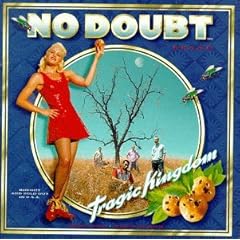
If this album was a consumer: the Tween
Why: this is such an unapologetically saccharine, feel-good album. Loud, fun, funky sound that was new and that one could chew on for the entire summer. It’s a tween because everyone had it, everyone wanted it, and everyone either wanted or wanted to identify with Gwen Stefani.
Best tracks: ‘Don’t Speak’, ‘Sunday Morning’
Ritual de lo Habitual (1990) - Jane’s Addiction
If this album was a consumer: the spiritual skeptic
Why: cause this is a WEIRD album…weird messages and strange that make me feel like I’ve been transported to MDMA-fueled midnight beach rave in Goa. It’s difficult to understand, but really rich with mysticism and imagination.
Best tracks: ‘Three Days’, ‘Stop’
Garbage (1995) - Garbage
If this album was a consumer: the conforming non-conformist
Why: Butch Vig says that the name ‘garbage’ comes from the band’s approach to making music – taking the sonic remnants and piecing them together again. Garbage and goth will always be intertwined in my mind because of the gorgeous, sad, creepiness of the band and their caricatured adoption into fledgling emo subsculture.
Best tracks: ‘Milk’, ‘Stupid Girl’, ‘Only Happy When It Rains’
Jagged Little Pill (1995) – Alanis Morissette
If this album was a consumer: the mid-life crisis married male
Why: this consumer is awash with disposable income and looking to shock and awe. Sure female aggression was nothing new (Patti Smith, 4 Non Blondes, Courtney Love), but this edgy yet still radio-friendly album made feeling bitter and uncaring kinda cool.
Best tracks: ‘Ironic’, ‘All I Really Want’, ‘You Learn’
Siamese Dream (1993) – The Smashing Pumpkins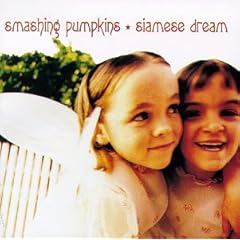
If this album was a consumer: the middle-class working mom
Why: It’s uplifting, peaceful, and incredibly aspirational. Powerful chord structure punctuated by soaring Billy Corgan guitarwork sets a singular positive foundation of the album with compassionate lyrics that suggest a consumer who is conscientious, caring, and affectionate.
Best tracks: ‘Rocket’, Today’, ‘Mayonnaise’, ‘Geek USA’
The Bends (1995) - Radiohead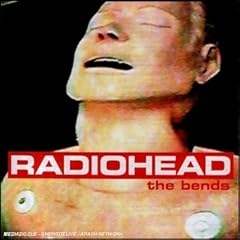
If this album was a consumer: the savvy agoraphobe
Why: it’s not stupid music, it’s just misunderstood. The Bends still captured the experimentalism Radiohead was known for and brought the band’s music to a larger audience. The awkwardness and insecurity of the album’s tone resonates with outcasts who'd rather correct my speling than go play ultimate frisbee.
Best tracks: ‘Just’, ‘Fake Plastic Trees’
Purple (1994) – Stone Temple Pilots
If this album was a consumer: the workaholic microbrew-tippler
Why: 'Purple' is a pounding, ethereal album that set a hazy foundation for dreamers, druggies, and early dotcom-ers. In a bizarre smoothie of the three you get a yuppie urbanite of the three who’s introspective with a love for cultural idiosyncracies and pushing their limits.
Best tracks: ‘Interstate Love Song’, ‘Big Empty’, ‘Lounge Fly’
Dookie (1994) – Green Day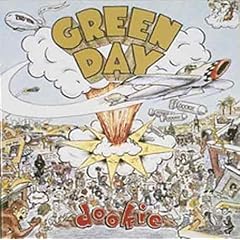
If this album was a consumer: the weekend mallrat
Why: The weekend mallrat loves brands, loves celebrities, loves their friends, and loves killing time. They rarely buy things but when they do they make rewarding purchases based as much on peer pressure as information and specs. Dookie made it ok to feel lazy and fucked up.
Best tracks: ‘When I Come Around’, ‘Longview’
The Battle of Los Angeles (1999) – Rage Against the Machine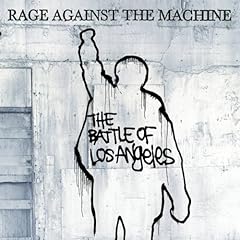
If this album was a consumer: the urban Green
Why: Despite the anti-consumerist, anarchistic tone of the band, fans of the band were hardly as socially conscious as they’d like to believe. Having grown up and started earning incomes, they choose sustainable products but don’t know what it means to offset their carbon when they take business trips to Chicago.
Best tracks: ‘Sleep Now in the Fire’, ‘Testify’, ‘Guerrilla Radio’
Odelay (1996) – Beck
If this album was a consumer: the informed and cultured Wal-Mart shopper
Why: they’re rare but balk the trend by living a suburban life of leisure while still reading the newspaper, participating in online communities, and going to concerts. Odelay’s carefree, scratchy-mixed, major-keyed, melodic tone personified this attitude.
Best tracks: ‘The New Pollution’, ‘High 5’
"Which way to the paper towels?"
The Downward Spiral (1994) – Nine Inch Nails
If this album was a consumer: the pseudo-nihilist, suburban emo teen
Why: the album was commercial as much as it was some gothic expression through sonic electronic disfigurement. The album felt bad for itself and felt heavy throughout. It wasn’t black so much as completely lacking in any colour. As a consumer, its emo because despite the pity, sickness, and smut it wanted to be recognized and treated like an outlet for society’s abuse. It’s industrial to its core.
Best tracks: ‘Piggy’, ‘Hurt’, ‘Closer’
Use Your Illusion I & II (1991) – Guns n’ Roses
If this album was a consumer: the jingoistic slob
Why: Cause the album is like a sloppy drunk who has soiled themselves. Guns N’ Roses was that uncompromisingly American rock band that elevated the final notes of loud metal rock to elegant heights before finally imploding.
Best tracks: ‘Don’t Cry’, ‘Estranged’, ‘Yesterday’, ‘Knockin on Heaven’s Door’, ‘November Rain’
Totally:
Weezer (1994) – Weezer
If this album was a consumer: the nullified boyfriend
Why: Weezer rocks, but the album was a follower and although it set a precedent for whiny frat rock, it didn’t challenge musical paradigms or come across as being too offensive. Perfect for that pallid tag-along boyfriend who’d shops where his girlfriend tells him to.
Best tracks: ‘No One Else’, 'Say It Ain’t So’, ‘Undone – the Sweater Song’
Antichrist Superstar (1996) – Marilyn Manson
If this album was a consumer: the moneyed, educated professional woman who people misperceive to be a real bitch
Why: it’s a pretty smart album with an intriguing story arc that allows listeners to draw their own conclusions. On first glance it’s scary and obscene, for the same reasons as Nirvana’s ‘Nevermind’ album, but those who take time to get into it and put aside preconceptions will be rewarded by what they find.
Best tracks: ‘Antichrist Superstar’, ‘The Beautiful People’, ‘Little Horn’
(What’s the story?) Morning Glory (1995) – Oasis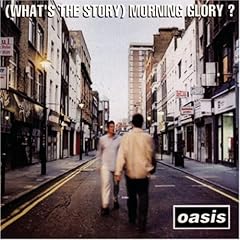
If this album was a consumer: the foreign tourist
Why: it came on the scene kinda unannounced and made a massive impression, paving the way for other sparkly, chewy Brit pop acts. Oasis really didn’t offend anyone but they were really noticeable. Thematically, the album seems like it’s an indulgent shopper on vacation who isn’t worried about the credit card bill when they return from holiday.
Best tracks: ‘Some Might Say’, ‘Don’t Look Back In Anger’, ‘Morning Glory’
"More sunglasses please"
Nevermind (1991) – Nirvana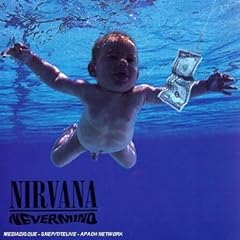
If this album was a consumer: the conspicuous spender
Why: the album failed Nirvana’s grunge roots through its flashy, dirty excessiveness. It’s loud and obscene and over the top. If this was a consumer it would be the guy riding top-down through the financial district in his Lambo. (BTW, don’t get me wrong, I loved this album)
Best tracks: ‘Lithium’, ‘Breed’, ‘Come As You Are’, ‘Smells Like Teen Spirit’
In the world of blogging, content is good, content is God!
Tuesday, September 23, 2008
What we learned at Club Week
B!G had the privilege of meeting Schulich’s undergraduates last week at the student club fair. Ye Olde Student Club Faire.
It was a lot more fun than anyone thought it would be, despite our bitch-like position at the back of the basement squashed in beside rows of lockers and despite the fact that we really don’t need to do any recruitment. The club week did provide an interesting opportunity for me and the other B!G execs to practice our sales pitch. By the end of the week we were spilling lines like “we’re a student marketing agency and we deliver real solutions to real clients” like nobody’s business. Here are a few of my favorite pitch lines:
“Unlike a lot of the other organizations here, our members actually stay active”
“Networking and info sessions can only get you so far. In marketing, it doesn’t matter who know you, it matters what you know”
“Read the blog! Today’s post is about pubic hair marketing!”
The last line was perhaps the most effective and generated some of the highest blog traffic we’ve ever seen. I guess fiffi trimming is a big selling point for the undergraduate students here at Schulich.
In addition to refining our pitch, the club fair had a few lasting impressions on us. Here’s what we learned:
1. FEAR!
There’s a lot of trepidation and uncertainty among the undergrad population, especially the first years. However, this anxiety seems to mutate into an untested, ballsy arrogance in second, third, and fourth years!
2. Self-assuredness should never be confused with rudeness
Walking up to the B!G table and demanding that we “tell [you] about our club” will is not a good tactic to win us over with your confidence and drive. It will be met with a cocked eyebrow from me and a suggestion that you go apply to another student organization that can deal with your sickening ego.
3. Experience should not be confused with skills
We really liked a lot of the people who came and talked to us who had no substantial work experience but effectively demonstrated that they had the relevant team and analysis skills necessary for a position in B!G. Similarly, plenty of students gave windy pitches and droned on about irrelevant experience without really showcasing their unique skills. Let’s make no mistake here: in B!G, we want your skills. Your experience matters, but it’s not the only attribute you can sell yourself on.
4. The other clubs have no clue how to market themselves
Awful logos, awful sales pitches, awful collateral being handed out. To you student organizations which are feeling ‘not so fresh’ or perhaps are not effectively leveraging your unique value proposition, we’d like to talk to you!
5. Schulich has some seriously clever students
It’s obvious to me now that Schulich is an undergrad school with a stronger focus on the BBA students than the MBAs. The undergrad students here are unlike any other breed I’ve seen before and they’re hard to describe objectively without inferring value-laden descriptions. The BBAs are smart and very knowledgeable, but lacking in important work-with, team skills. There is a strong culture of ‘me first’ and I cannot easily remember an example a BBA has provided to me about when they motivated others and put other people’s best interests first. They can vociferously defend an idea and integrate all their classroom theory, but they fall down on important social skills, especially when they join the workforce and realize that not everyone is as smart or fast as them. Remember in grade three when the teacher brought in chicken’s eggs and, as a class, we incubated them under a high-intensity lightbulb and in a nest of newspaper shredding? Those eggs hatched and all the students got to see the chicks grow and become fluffy, chirping, adorable poop machines.
That’s how I imagine the experience is at Schulich for BBAs. It’s an incubator for their ideas, preparing them for their careers but not providing a lot of social context to mute or soften their uncooperative Gen Y attitude.
Monday, September 22, 2008
Max to the Media: Grow a pair already
This is a marketing/advertising/cultural blog, not a political one. Opinions fly fast and furious here but it’s usually constrained to bashing Rogers Wireless, hating on Microsoft, or extolling our own organizational virtues.
However, there’s something irking me about the US Presidential campaign and passivity of the media to issues that actually matter.
On the economy
The financial market muckup is making me nervous for my career prospects when I graduate. It’s hardly like I’ll be going into investment banking, but the instability poses a massive risk for the confidence of investors to undertake perceived non-revenue generating expenditures – ad and marketing campaigns! With such a dazzling presidential campaign filled with such charismatic people, we’ve all become a little myopic to this economic disaster. Greater focus must be given to this situation and all candidates in the presidential campaign must be questioned about what specifically they would do to strengthen investor confidence, enforce regulation and standards where appropriate, and raise the productivity of the US economy. Low-skilled jobs have gone to China. They are not coming back. But that doesn’t mean that America has no basis for international economic competition.
The US spends more than it earns. Despite the $3 trillion foreign debt carried by the US government in the form of treasury bills sold to foreign banks – international investors still have confidence in the ability of the US economy to chug along and continue consuming. In a bizarre twist of economics, it’s become a self-sustaining debt cycle supported by twin fiscal and trade deficits. If China cashed in their t-bills tomorrow, they’d be as hurt as the US by the complete collapse of the economy. No one is ready for that. So it’s a Sword of Damacles that neither McCain nor Obama have really been able to address. Palin certainly doesn’t have the answer. I haven’t seen a strong acknowledgement of the severity of this problem from either side. Most worrying however, is that no one is pressed by the media to solve it.
What about the recently announced $700 billion infusion of cash to take the risk from unsecured mortgages – essentially a loan from American taxpayers. How will the next president ensure that this is repaid by the major banks and that accountabilities are set? Bush has actually bankrupted the country – what do the candidates feel about this?
Through the cunning entanglement of bundles of financial securities by risky investors who were poorly monitored, investment banks are now unable to separate good loans from bad loans. Does Obama have a plan to fix this? What is McCain’s strategy for regaining investor confidence in the financial system?
On their backgrounds  Here’s another bother: why are we no longer seeing Maverick McCain? He was a rabble-rouser in Washington with a reputation for action and doing the right thing. Why has he lost this? Why isn’t he being asked to explain why he lost this?
Why is Obama not being asked to explain why he chose Joe Biden over Hilary Clinton if McCain picked Palin as an apparent come hither pander to female voters? What does he really think of John McCain and Sarah Palin?
What does he think of the fact that many Americans will likely not vote for him because he’s black, despite what they tell pollsters.
But what offends me most – no surprise here – is the kid glove treatment Sarah Palin is receiving by the media…except for Barbara Walters and Joy Behar. Watch:
…yes, exactly WHAT reform is Palin known for?? And thank God for Matt Damon…
Why hasn’t anyone in the media asked her more of these questions? Sarah Palin IS absurd. Matt’s right, she IS terrifying. If she’s going to be in a senior position of government, I want to her to answer for her hypocrisy of promoting abstinence in sex-ed while her daughter gets pregnant right under her nose. This is not unreasonable to ask. I want her to answer for why she thinks that after having governed a town of only 8,000 people with no sizable economy to speak of, she’s now capable of crafting economic policy that will impact the world.
What’s terrifying is that whenever she is asked tough questions like this, the McCain camp puts their defensive blinders up and attacks the media for being too unilateral. They thought Tina Fey's portrayal of Palin on SNL was sexist. Let the journalists do their job. Let's comedians do theirs. It just goes to show how little substance she has that the McCain campaign is unwilling to let her answer their questions.
News media is being far too soft on everyone in this campaign.
They’re complicit when Republicans mewl and whine when questions stray too far away from lipstick and too close to energy policy and creationism, and they’re complicit when Democrats make utopian claims for the future while offering no substantive facts about how they’ll implement it.
I'm astounded by how political figures attempt to point the finger of blame at the media for asking too many sensitive questions and how tacitly the media accepted this as a natural part of journalism! Start demanding that politicians answer difficult questions.
This really is the scariest election ever because no one seems to be taking it seriously.
Friday, August 29, 2008
Marketing to youth: Part 5: UNIQUENESS
It goes without saying that effective marketing to youth is both unique and impactful. In fact, youth are perhaps the audience who demands uniqueness the most in their advertising because of the competing sources for their attention, their dynamic multiuse of media, and their relative low tolerance for pithy, info-focused messages. Hit them hard and hit them fast. As my co-blogger and fellow B!G Executive, Olga, wrote in her previous post, if you can also make them laugh, then awesome!
As I’ve introduced in previous posts in this series on marketing to youth, uniqueness is rooted in Gen Y’s strong sense of individuality. Bland or generic brands simply have no place in the spectrum of bold designs and transparent, authentic company values. This was the problem, among others, faced by The Gap at the end of the 90s when customers began to fall out of favour with the unoffensive blue and white style that the store was so well known for. Gap became dull and quickly lost touch with changing consumer trends. There was nothing to make its brand voice unique and identifiable among the din raised by all other casual apparel retailers.
In comparison to the other youth marketing best practices which we’ve analyzed here – transparency, participation, and relevance – uniqueness stands out as being perhaps the most uncontrollable and challenging to master. How do you inform a brand manager how to come up with a witty zinger subject line in the email? How do you suggest a standout call to action in an experiential marketing campaign when it has never been attempted by the brand before and there’s no basis for determining whether it will prove to be a success.
Uniqueness is a gamble.
It’s a risk that brands must take to show that they can be unconventional and hip, while also retaining the legacy aspects of the brands values that appeal to the demographic. Condom manufacturers (from Europe) have always seemed to excel at this:
A real standout though - and I seriously wish I could find an embeddable clip to show - is FearU.ca, a microsite created specifically for a HP laptop contest. MacLaren Momentum, a Canadian promo agency created it and integrated the online campaign with some pretty scary tv spots that are currently running on Much and MTV Canada. Great ads that immediately capture one’s attention and pique interest. Why? Because they’re unique and unlike other sales ads for electronics and back to school shopping.
Although not specifically targeted to youth, another famous commercial from HP stands out and perfectly conveys the simplicity of the ‘click and print’ message:
Also clever is this from Guinness, too bad it didn’t show here:
But uniqueness from the Gen Y perspective implies originality as much as any twist, pun, and memorable tagline. Sure, your spot is quirky or obscene…but has it been done before and been overplayed too much? Marketers’ zeal to have a commercial or campaign out the door with a zippy message can sometimes do more harm than good if that message has been diluted and worn out in the consumer’s mind. Enough already with the Telus animals and the Rogers Wireless teenagers on summer vacation. Go home, Abercrombie, with your intimidating abdominals and idealized WASPy lifestyle. No one lives like that!


…I wish my high school experience was like that…so full of beauty and boredom. Suddenly I feel like I’m not wearing enough pointless dogtag chains. And stop trying to pay homage to the semi-nude B&W style of photography of Herb Ritts:
Being derivative and unoriginal can only get a brand so far with a young audience. Gen Ys crave creativity and novelty. New content, media, or ideas all resonate with the ring of a tuning fork to young consumers’ ears. Repetitive messages and different plays of the same game really are unsustainable brand strategies that do nothing to push the brand forward in new directions and build itself a new avid base of customers.
Being unique is a great quality. You stand apart and can assuredly state that your values and message is your own. For marketers that’s a golden ideal in brand building and it’s a moral that youth consumers live by.
So there it is, the best practices for youth marketing. It has to be transparent, participative, relevant, and unique. Hit all these, with a little bit of luck, and some magic pixie dust, and you'll have an effective campaign that stands out and still builds the brand.
Saturday, August 23, 2008
Back to school marketing: High School Conformity: the Musical!!!
The back to school retail crush is the second largest moneymaker for retail stores after Christmas. It’s when teen and kids apparel manufacturers roll out the latest styles and new clothes are bought for the next school year.
From a marketing perspective, back to school advertising fascinates me because of not only the sleazy shillery used to position the retail brand as the ‘arbiter of cool’ but also because the message must appeal to both kids and their parents.
The extent of my back to school shopping will be confined to gasoline and overpriced textbooks. For this, I’m thankful because I don’t have to endure the mania and feelings of inadequacy commonly experienced by kids half my age going back to school or entering high school for the first time. I remember the trepidation and anxiety of that first day. It was like a heady brew of excitement, untested confidence, and seriously laughable preppy thug bravado.
Kids going to school have enough to worry about, so why does it seem that retail marketers are now making them worry about whether they have the right clothes? I’m also sensing that the implicit message of these ads – conformity creates credibility – has become distastefully more palatable in recent years. It’s a common truism that having cool back to school clothes is important, but the difference with these ads is that you must now have the right back to school clothes. Like the retail big-box contagion spreading commercial infection across the suburban landscape, youth personal style and individualism is being nullified in favour of The Standard.
Who is The Standard? They’re the star of the back to school ad. They’re Nietzsche’s Ubermench, only in high school. The Standard is guided as much by rationality and reason as the desire to confirm. They’re identifiable by prominent logos and popstars brandished on neutral and unoffensively coloured clothing. They take a leading but never standout role. This is the person (notice that I didn’t say individual…) who all students strive to be.
How is The Standard advertised? Pay close attention in back to school ads for any of the following portrayals of The Standard:
- 25-year olds playing high school freshman performing highly acrobatic choreography in school hallways
- Token black hip-hop dancers shown immediately adjacent to The Standard (notice that The Standard is invariably white)
- Lip syncing lame lyrics, for example “I’m going back to school, and it’s so cool”
- And finally, The Standard is always shown as fitting in among the other Standards. This is critical.
So with that short preface, let’s evaluate some of the worst offenders in back to school marketing:
SEARS: Don’t just go back, Arrive
This spot amazes me. So Vanessa Hudgens, The Standard of High School Musical has been paid to lip sync and pulsate to an over-synthesized song about going back to school. If you can’t stomach the commercial enough to watch (and I can’t say I blame you), her dilemma is that she can’t decide whether to be The Preppy, The Rocker, or The Glam on her first day back. In the final act of the commercial, these three styles merge together to create some trashy-looking excuse for an outfit.
The tagline, "Don’t just go back, arrive" is intriguing and memorable. It’s stance is almost threatening and bullish to teenagers who are asked to rise to the challenge and go back to school as an indomitable fashion force.
Effective? I’m not sure… How easily will kids remember that this message is associated to Sears? Overall, this ad really doesn’t offend me because the message still resonates with the attitude that it’s ok to have a personal style. They’re also not hocking actual articles of clothing, more like an assemblage of awkward, juxtaposed pieces.
Listen closely to the lyrics though. My biggest criticism of this ad is the lyric “Be smart, look sharp, if you’re gonna survive”…um, what???
JC PENNEY: Get the look – The Breakfast Club
At first blush, this is a pretty lame excuse for a commercial. The director has reproduced and dehydrated the original John Hughes movie down to a highly clip-focused one minute homage. They even cast kids to look like Ali Sheedy, Emilio Estevez, Judd Nelson, Molly Ringwald, and Anthony Michael Hall. The cover version of Simple Minds’ ‘Don’t you forget about me’ kinda blows, but alright…that’s what kids listen to today.
With the exception of the campaign tagline “Get the look” which whiffs of conformity, there’s nothing really offensive about this ad. But it’s stupid right? I mean, the people for whom The Breakfast Club was a relevant movie are now in their late 30s and early 40s. Why would they care about back to school shopping..............?
Wait, so you mean this ad is really targeted at the parents and not the kids? Smart.
TARGET: The Jonas Brothers
I’m really sorry for posting this, but we’re a youth marketing agency and the Jonas Brothers are a highly influential brand to our target demographic. Nothing offensive here, other than perhaps the Jonas Brothers themselves. It’s your standard celebrity endorsement ad, not a whole lot of conformity, other than perhaps subtle message to shop at Target because that’s where the Jonas Brothers were advertised.
Effective? Maybe for teenage girls. It depends on how well they can convince their moms that celebrity endorsements are more powerful than cost-savings, so therefore they should choose to shop at Target.
WAL-MART
A bunch of ads here, all of which are uncompromising in their sleazy salesmanship and unabashed lack of morals.
#1: The Kiss
What an appeal to terrified moms fretful over how their children will be accepted and well-prepared for school. Wal-Mart’s value proposition is, of course, its cost-savings over competitors. This message is prominently made clear in the voiceover at the end. I also think that the actress playing the mom needs to lay off the Dramamine. She sounds like she’s lucid dreaming when uttering the line “that’s why I go to Wal-Mart”….no, that’s why you’re hypnotized into going to Wal-Mart!
#2: Hannah Montana
Wow…why is that 12 year old little girl dressing like she’s 23?
This is only a half-spot, 15-second commercial so it packs a small punch. The difference between this and a longer spot is that the focus is on the articles of clothing rather than the overall style (this would have required a story arc). And do kids entering school need to ‘bring it on’? Bring what on?
#3: “I can’t go with her…”
“I like your top” – there, 10 seconds in and the audience has already been informed that the reason why this new girl is allowed to sit at the lunch table with the other girls is because they think her style fits in with theirs.
And that’s really what back to school advertising is all about. Yes, I’ve left the worst commercial to the end because I think Wal-Mart really made no qualms about the message it wanted to convey in this spot. How about the line “she needs to feel good about herself without breaking my budget”? This assertion only reinforces the insecurity of many young girls to feel included and popular by having the right clothes. Obviously ‘feeling good’ comes from only having the right clothes for back to school, and not from a more intrinsic, self-derived confidence with oneself.
Wow Wal-Mart, what a stinker.
But the question that I just want answered is why is this older woman talking to herself in the middle of a busy high school hallway….?
