
Our solar system has one star, four rock-based inner planets, an asteroid belt, and four gas giant outer planets. Sorry Pluto.
The solar system is a beautiful apparatus. It's movements are predictable and constant and its unique characteristics can be compared against other solar systems we see in our galaxy.
However the structure of our solar system is not unique. It's a pattern that is found in other parts of the galaxy too:
- Rocky planets close to the star
- Gas planets far away from the star
It's believed that as celestial bodies formed from pressure and gas, their gravitational fields expanded and pulled particulae in. Heavier particulae (metals such as iron) eventually gathered to form rocky planets. Since these elements had a heavier atomic weight, they were drawn in closer to the star. Lighter elements stayed further away from the star and formed gas giants, like Saturn, pictured below.
(BTW, another theory is that planets formed based on the distance from the sun and the temperature of where the properties of basic elements could remain stable).
Obviously I don't know my physics too well. It's one of the high school science subjects I really wished I had taken.
But consider how mechanical this all seems. The solar system is beautiful. It's a complex architectural masterpiece crafted at the atomic level. Our understanding of this masterpiece is based on what we can observe. We know that iron is heavier than helium. We know that plutonium is more unstable than gold.
Our foundation of modern physics is based on indusputable atomic properties. Truths.
So what is our foundation of modern marketing based on? What are the unshakable marketing truths which we formulate our campaign hypotheses and customer segmentations on?
1. Consumers look for enhanced well-being through the tangible or intangible value derived from consumption of a product or service. RIGHT.
2. Complete information is impossible. Consumers will never know all the product specifications, possible prices, and availabilities. It is also impossible to perfectly rationalize the information from other consumers of the product or service. RIGHT.
Are those the only ones?
I really think so. Consider the classical marketing assumptions are being broken down and invalidated:
1. Consumers trust the messages they read in marketing communications. WRONG.
2. Consumers can easily be convinced to purchase on price and emotional benefits alone. WRONG.
3. Marketing is meant to be one way: consumers receive information, consumers receive the product. WRONG.
You know the assumption being challenged that really makes life scary for marketers?
That consumers need to consume.
Our economy is based on production and consumption. For a while, it was a lot like the solar system. It was an architectural masterpiece in perfect orbital symmetry and cosmic balance.
Consumers behaved.
But consumers aren't behaving anymore.
The death of our solar system is predicted to occur in 6 billion years. The sun will burn out and become a white dwarf, losing mass and energy. Planets, including Earth, will no longer feel the gravitational pull to the sun and might be ripped out of orbit by the pull of stronger, larger astronomical bodies.
Sound familiar, marketers? It's hardly a Nostradamian prediction, we can already see our consumers walking away. Forget about consumers not listening, consider the impacts of consumers not buying.
(All pictures were taken from the Hubble space telescope. Check out the full album here)
Thursday, February 19, 2009
Orbital symmetry and marketing truths


Wednesday, January 21, 2009
Hitting it home: Pepsi's Refresh campaign
I'm in class right now, time to blog!
Someone just made a comment in class about how Obama's election isn't anything new, it's just the representation of American political sentiment at this moment. I'd seriously care to disagree, and Justin emphasized that 2M people in Washington is hardly evidence of the fact that Obama is no different than other presidents.
This all speaks to a larger cultural movement that's churning and frothing but still largely intangible.
Pepsi has relaunched its brand in an effort to ride this new cultural zeitgeist. It's now a fresher, edgier, more movement-focused brand. And it's coincided with the inauguration!
Here's their old look:
Here's their new look:
Familiar, but different. It's fun.
The centrepiece of the brand relaunch is the Refresh Campaign.
Check out the microsite: RefreshEverything.com. It's a social media site to aggregate the opinions and voices of normal citizens and Eva Longoria (among other celebrities).
It's been created to allow anyone to upload their own user-generated content that expresses their feelings of hope and optimism with the new President.
Even my current fascination, Lady GaGa, has gotten in on the action!
The Refresh campaign doesn't prominently feature any Pepsi products. I like this campaign because it's not about driving sales, it's about driving engagement (again, how does one actually value this?...is it even fair to value engagement by the classical measures of consumer value??)
The microsite is simply meant as an online interactive destination for their offline commercials. It's tied to a YouTube channel with Pepsi's new commercials and other related videos. The microsite doesn't have any search or folksonomy tagging capabilities so it's not too important for site visitors to find exact information on what people are saying, rather, it's meant to act as a speaker's corner for average voices to be heard.
So what's the point?
Two things:
Think of the optics: Pepsi is showing that they are a brand associated with change and youth (again). The TV commercial, courtesy of TBWA Chiat Day, was shown during key primetime spots (I saw it on AC 360 at 10:15pm, January 20) and captured the momentousness of the day. Check out the commercial. It's fresh and friendly.
Think of the non-quantifiable brand development: Tacitly, Pepsi's Refresh campaign is effectively sponsoring the Obama administration! It's piggybacking on a wave of interest in society in individualism, plurality, and self-expression. Pepsi is demonstrating that it understands the strong needs by consumers/voters for these things.
Pepsi is allowing consumers to be heard at a time when the urge to speak up has never been stronger.
To be fair, Coke is launching a big wave of new ads too. Analysts think the Colas Wars are going to begin again!
Great work by Pepsi and their agencies on this one, this is definitely a campaign i'd have loved to be involved in.
Excellent example of getting it done, creating a transparent and highly understanding brand personality, and emphasizing that Pepsi is a brand that unites and empowers people.
Way. To. Go.
Monday, January 12, 2009
Loblaws eliminating plastic bags
About time!!!
Loblaws is charging customers for a plastic bag.
They're charging 5 cents for a plastic bag and encouraging customers to bring their own bags, or use reusable canvas bags or plastic bins.
Impressions? Yeah, it's about time, and considering how destructive a plastic bag is on the environment, both in the time it takes to degrade and the precious petroleum resources used in its manufacture, it makes sense that Loblaws is having customers pay for bags. Payment is an efficient way to internalize a negative externality. It's no different in theory from a carbon tax, a California emission standards fee, or a fee for excess household garbage produced (although these are now managed as part of a really idiodic tag based program by the City of Toronto.
It'll be ineresting to see how shoppers react to this. Ecologically it makes sense. Economically it makes sense. But will Loblaws customers - particularly baby boomers - endorse this action as a responsible step taken to better environmental stewardship? Will they choose reusable bags or will they simply pay the extra 5 cents for the convenience?
Customers aren't going to abandon the convenience, selection, or quality of their local Loblaws all for the sake of having to pay for a plastic bag - at least I don't think this will be a significant wave of attrition, but it'll certainly change their concept of the Loblaws brand.
On the one hand you'll have customers who appreciate the retailer's action on this issue. On the other you could have customers who bitch and moan for no apparent reason. These people aren't exactly inconvenienced, but it's just a hassle for them to add anything new into their lives. Seriously, it's about time.
Loblaws PR will claim that this ia a progressive step forward that represents the organization's commitment to sustainability. But I'd be interested to know if the canvas bags they're selling instead have a greater carbon footprint than the plastic bags themselves. Oh, and I assume that a portion of the 5 cents for each plastic bag will go to an environmental cleanup organization?
Hmm, more input needed on this one...
Saturday, January 10, 2009
Important marketing memes of 2009
And we're back!
Memes are important thought trends in contemporary culture. They are widely distributed, fresh, and organically generated concepts and ideas that emanate and circulate rapidly in a network of plugged-in people. At their worst, memes can propagate racism. At their best, memes can propagate lolcatz like Ceiling Cat!

So I should probably cover up.
Anyway, to start off the new year, it's relevant to think about memes that might matter in marketing in 2009. Let's talk about the concepts, trends, and practices of marketers that will become more commonplace and popular. Let's talk about the ideas that will quickly disseminate through agencies and client teams, mastered by the savvy group of consumers, and eventually expectorated back to the teeming masses of mainstream culture.
In other words, let's talk about what are relevant marketing trends for 2009:
THE 'EXPERIENCE IT' MEME
In the context of the rising tide of greater relevance in advertising, some lucky consumers will find themselves the subject of rare interactions with marketers that go deeper than the banal and shallow ad pitch. Without buying, a privileged few prospects will be invited to try a product, brand, or service. But what they're really trying is an experience.
Remember when you were invited to try Gmail when it was still in beta mode? (Remember how awesome that felt!?)
Testing experience with consumers firsthand is like playing in a sandbox. It's safe, controlled, and a great petri dish to catalyze learnings for experiential improvements. Furthermore, you want to actively segment an select prospects to participate in the experience who you know will then actively go out and spread word of mouth among their networks.
Seeding networks is nothing new, but in 2009 expect to see more seeding based on complete brand experiences rather than simple trial testing or free offers. It's the culmination of consumers' undeniable influence on social diffusion of brands and the demand by consumers for things which they can live, rather than things which they can simply wear, listen to, or eat.
THE COLLABORATION MEME
You know how individual consumers are encouraged to put their stamp of approval on something? They're able to personalize their brands either through participating in the product development and customization process, influence brand direction by vocalizing their needs in web forums and social media, and make the brand their own through non-traditional uses.
Now take the personalization to a broader scale. You and your network personalize your product. You and your friends personalize your brand experience.
Gen Ys are social creatures. We thrive on instant communications within our highly networked worlds (that's why we go mental when the DSL isn't working...). Digitally socializing is an intensive part of our lives and the impact of one's network on the things we associate with is immense.
So why would a marketer allow your network to collaborate with you when developing your personal brand relationship with them? Because it's a direct acknowledgment by the marketer of the things that matter to the consumer: their friends. It's an invitation by the marketer for you to show your network that they are influencers.
Look for this style of meme to pop up with everything from iPod playlists to fashion to media content.
THE INTEGRATED MARKETING MIX MEME
This one is big. Integrated marketing communications refers to the choreography among different ad channels, all targeting the prospects with related messages, calls-to-action, and incentives. It's not merely enough anymore to pair a TV spot with a website. It's insufficient to have a radio play in the same market as targeted magazine drops.
Integrated marketing is a mix of advertising channels that are optimal to distribute the message YET still convey relevance to the end consumer. This is critical. Furthermore, this does not underscore an increase in the overall number of message impressions received by the prospect consumer. Instead, it speaks to two things: 1) a curriculum style that gradually educated prospect consumers about a product/service/brand that they would respond to; 2) a coordinated effort by a marketer to demonstrate relevance to consumers across multiple platforms.
What is still unexplained is whether marketers will contract out their entire marcom budget to a single agency that is capable of doing all things (integrated), or whether marketers will act as directors and fragment their marcom budget out to a variety of specialized agencies.
It's hard for me to call this one a meme because I believe this is a sea change in marketing towards relevance-based integrated campaign development. Perhaps it's meme-like insofar that there will be rapid awareness in 2009 and some traditional marketers will make nascet inroads to developing a more balanced communications strategy.
BTW, when I was thinking about an element to include for the word 'choreography', the Indian version of 'Thriller immediately came to mind...!
Saturday, December 20, 2008
Marketing best practices
Killing two birds with one stone is great isn't it?
I'm writing an appendix about advertising channel marketing strategy right now for a report as part of my 601 project and I thought about posting the analysis up to the blog!
I love original content!!!
It's really abbreviated, but it's a quick comparison of old and new best practices of various online and offline advertising channels. I've tried to be comprehensive and unbiased here (although I personally think that untargeted advertising can go to Hell....) but it's a good synopsis of the different benefits and recommendations for effectiveness for each channel.
You'll see that throughout this chart I'm really in support of integrated campaigns. That means marketing communications that simultaneously leverage the other active channels. It's the newspaper ad that tells you to go online and try virtually test drive the new model car, it's the radio spot that tells you to look for Count Chocula sampling this Saturday at Metro stores in the GTA.
God, how I wish there was a product sampling of Count Chocula....but I digress.
Oh, and BBAs, plagiarize away! Just don't expect to develop unoriginal, uncited analysis and hand it to me to give to one of our clients.
| Advertising channel | Channel description | Old best practices | New best practices |
| Website development | Includes website design, management, analysis, promotional microsite development. Important channel for speaking directly to tech-savvy, younger consumers. | Clear site navigation and shallow site structure with few deep levels. Integrate web metrics tracking for site optimization and online marketing. Promotion in offline marketing communications as a source of extra information about a brand. | Site users have the opportunity to create content and interact bilaterally with the site. Important to integrate websites with offline communications including print and television (often these drive consumers to the website). Provide relevant brand and product information in multiple formats, allowing consumers an opportunity to take content with them or send to their friends off the site. Promoted in offline communications as a destination in itself and a place to go as part of Web 2.0 consumer interactivity. |
| Email | Includes email design, deployment, analysis, and potential integration with database segmentation. Important channel for direct marketing and establishing brand relevance. | Use an attention grabbing subject line. Display the best content “above the fold” of the screen. Do not be too copy-heavy, leverage text and pictures. Communicate exclusive offers, promotions, and deals to “our best customers”. | Perform active segmentation and response analysis on house list to determine most optimal messages/content to be included in targeted email to consumers. Must be easy for consumers to unsubscribe or change their email settings. Position as nonintrusive consumer touchpoint that is relevant to you. Email is highly useful to create a curriculum or education campaign for new consumers or a multi-wave campaign. |
| Social media | Includes brand promotion through social media public relations, viral content development and distribution, network ‘seeding’, and identity development on social network profile sites. Important channel for brand identity building through online affiliations and new project promotion. | Note, because this is such a new channel, best practices are being developed as part of an ongoing mutation of the medium. Social media is too young to have any “old” best practices, because marketers are still trying to understand how to use it effectively. | Pay attention to emerging consumer memes and viral trends online. Ride these. Create a clear identity that allows users to comment, rate, or interact with the brand’s social media presence. Use social media PR sparingly and only to announce exciting brand developments or significant launches. “Feedback 3.0” is the act of brands actively responding to and commenting back to their commentators in online forums. |
| In-store retail promotion | Includes design of product packaging and printed promotional materials, development of coupons and offers. Also includes total management of promotional projects and events, including multiple-party promotions. | Eye-popping visuals and unique creative execution. Display in preferred locations in retail environments (end of aisle, eye level, front of store and produce area). Promotions are used to highlight exciting new product launches or as a boost to seasonally low sales. | Retail promotions are immediately relevant to the consumer (because they are physically interacting with the product and have opted-in). Therefore how are promotions used by brands to develop long-term positive relationships with their consumers? Promotions must be thought of like big impressions for brand building and used for activating new brand strategy. Strong integration of promotions with other non-tangible brand communications. |
| Experiential | Includes the planning, execution, and management of in-person demonstrations, sampling, physical product interactions, sensory advertising, and other impression-based advertising experiences. | Create innovative and original experiences – make the consumer say “wow, I’ve never seen this before”. High traffic locations are effective to reach as many people as possible. Eye-catching or permits prolonged or repeat impressions. | Demonstrate measurability and big impact on sales by using experiential techniques. Cannot simply generate a ‘big splash’. Use experiential advertising projects as opportunities to also establish customer listening posts and gain valuable primary research about brand perceptions and usage. |
| Direct mail | Includes the design, writing, segmentation, deployment, analysis, and management of print advertising, flyers, brochures, offers, product samples, and house-list magazines that are targeted to specific consumers (not mass mail). | ‘Test and learn’ – perform frequent empirically controlled tests to different consumer segments to understand what is the optimal form of creative and offer to generate higher response. Personalize direct mail and provide a compelling reason to open it (similar to an email subject line) | Integrated use of direct mail with CRM database for clients. Understand customer behavior across response channels (direct mail, web, email, SMS). Like in-store retail promotion, direct mail establishes an intimate connection between the brand and consumer because it is highly interactive and tangible. Clear announcement of purpose and call to action so that customer understands role of direct mail in context of all other interactions they have with the brand. |
| Out-of-home | Includes the design, deployment, and management of all messaging that appears on outdoor ‘surfaces’ in high-traffic or visible areas. Note, limited effectiveness of this channel at driving response and engagement from consumers. Highly passive engagement by prospects in this channel. | Like experiential and in-store retail promotion, out-of-home should be immediately understandable and capture interest. Copy must be concise and non-informational. Strictly call-to-action. | A classic medium, the best practices have no changed significantly because of limited innovation potential of the platform. Obvious integration of out-of-home advertising with existing in-market campaigns in other channels. |
| Mobile | Includes copywriting, segmentation, deployment, management, and analysis of text or multimedia messages distributes to mobile phone subscribers over a network. Important channel for brand building and relationship development. | Note, because this is such a new channel, best practices are being developed as part of an ongoing mutation of the medium. Mobile technology is also rapidly evolving and permits unique applications like proximity sensitive out-of-home marketing (billboards that activate when a consumer walks by) and geo-targeted messages direct to the consumer. | Must be an opt-in house list and must permit easy unsubscribe for recipients. SMS marketing is highly invasive (it’s marketing that vibrates in your pocket). Therefore the message should be targeted, relevant, and actionable by the consumer. Therefore, SMS is not optimal for informational campaigns. Instead, use for direct response or experiential purposes (e.g. respond now). |
| Television | Includes the design, production, media buying, and management of television commercials or infomercials. Important channel for broad awareness of brand strategy to consumers. This sets the tone of an integrated campaign with multiple channel strategies. | A great ‘hook’ to immediately capture attention. Clear link between story and brand, story and message, and brand and message. Clear call to action for viewers, or an understanding of what they are being made to believe. | Best practices somewhat unchanged for mass media. Perhaps greater concern for how television commercials are able to change behavior among consumers. Is this really an advanced form of marketing that succeeds at building a relationship with consumers? Call-to-action that is integrated with other marketing communications in market. Useful capstone to large campaigns which rely on a broad mix of mediums (out-of-home, online, promotional, print, and radio). |
| Radio | Includes the design, production, media buying, and management of radio commercials. | Memorable messages that listeners can associate to a brand with unaided prompting. Local message optimization because of the ability to purchase large blocks of commercial time from radio station conglomerates that own stations in different markets. | Same as above. Positive associate to highlight existing in-market or upcoming promotional campaigns for integrated marketing campaigns. |
| Mass print media | Includes the design, production, media buying, and management of printed advertisements in newspapers, magazines, flyers, and other non-targeted print media. | Classic principles apply here for copywriting and call-to-action development. | Same as above. Considering existing volume of print media advertising that continues to be done, important to integrate this activity with marketing mix of online and offline channels. Can be used as a traffic-driving source of consumers to online channel where more information can be found about brand. |
Thursday, December 4, 2008
Consumer trends in 2009
Trendwatching just released it's report on important consumer trends for 2009. The abbreviated version is a great summary and highlight a number of key issues which, as savvy marketers, we should all be aware of.
What's weird is that I really don't disagree with any of them. Let's take a look:
ONE
Nichetributes - "attributes, features, additions to existing products, making them more practical for specific user groups...a clear signal that the brand gets it...and pays tribute to consumer lifestyles"
I like this one. It's representative of a greater attentiveness on the part of brands to the unique and differentiated needs of their consumers. An examples is a mobile phone that syncs up with your Facebook contacts to provide you with a social network integrated address book.
 TWO
TWOLuxyoury - Consumer luxury is not what's precious, but what's scarce. Scarce experiences or rare opportunities for consumers to feel a part of something without the traditional act of consuming a rare product will now be perceived as luxurious. "Luxury in 2009 will comprise much, much more than ostentatiously flaunting wealth."
There's greater individual ownership of products and experiences all around. Brands have evolved from selling products which consumers demand, to selling experience which consumers demand because their product is the one being used.
Think about that!
THREE

Feedback 3.0 - my favourite trend on the list because it speaks to the social democratization of content. Thinking about the internet's use to provide consumers with a forum for voicing their opinions, Feedback 1.0 ca be understood as the time when "outraged individuals posted scathing reviews" and "brands were unaware or chose not to listen, dismissing these outbursts the way they'd dismissed any kind of customer dissatisfaction for decades."
Feedback 2.0 (our current state), is when consumers share and interact with each other, providing usage suggestions, improvements, and product-related tips. Consumers are having a conversation among themselves, and companies are listening but still not doing anything about it.
Feedback 3.0 occurs when an open dialogue is created online between brands and their consumers. It's when product demonstrations and testing results are used to show proof of effectiveness or directly engage irate commenters with things they've said about the brand. "Expect smart companies to be increasingly able to post their apologies and solutions, preferably directly alongside reviews from unhappy consumers."
 FOUR
FOUREconcierge - refers to the increased use of services to give consumers a chance to assess the environmental impact of their consumption habits and lifestyle. Think of it like a more sophisticated version of an energy efficiency contractor who comes to your house and seals the cracks in your windows that cause drafts.
An awesome example of this is a USB stick that plugs into the dashboard of new Fiat cars. It loads a program into the car's operating system to actively monitor and review your driving skills to improve gas mileage. You drive and the car actually gives you a carbon friendliness score.
FIVE

Mapmania - maybe it's because I always knew how to read maps and can navigate my way around pretty much anywhere with relative ease that I'm not blown away by the novelty of this fifth trend in 2009. As GPS and 3G mapping applications become more pervasive and integrated into handheld consumer devices (thus enabling geotagging)...consumers are flocking to mapping software to help them immediately find anything they need when they're not sitting in front of a laptop.
 SIX
SIXHappy ending - no, not that happy ending, you pervs!
"The most important side effect of these austere times is probably that consumers start questioning what truly makes them happy, which more often than not steers them towards the realization that happiness ain't just about traditional consumption." Gen Y loves being. A poor world economic climate can foster optimism about what potential solutions we as consumers can come up with to change things. Innovation is spurred when creative minds who are empowered to be themselves are able to find ways to democratically collaborate. "2009 will be an excellent years for businesses who show consumers that they really care."
Thursday, November 27, 2008
A case against waste
Last night I subscribed to AdBusters because I'm intrigued by the ways that marketing is being challenged to be a more sustainable business model. It's a magazine devoted to smart consumerism and debunking, demystifying, and deflating the hype, nonsense, and bullshit marketers (like me) spew. It's about framing contemporary consumerism within the panoply of the human condition and our interaction with mental and ecological realms.
Marketing is a constructed business. Historically it has manufactured needs and exploited emotion and the id of consumers to belong, to be recognized, and to be real. Advertising went mass, communicating in broad brushstrokes that if you didn't buy the product, you were somehow unfit as a consumer, a parent, a citizen. Marketers leveraged screamingly loud platforms for their voices to be heard, barging their messages and the brands they were shilling deep into intimate corners of the consumers life and making ad logos, slogans, and images so pervasive that a deafening white noise soon blanketed consumers from the moment they woke to the moment they went to sleep.
And it added costs to everything we buy.
Things cost money for two reasons: 1. to cover the fixed and variable costs of product/service production; and 2. to represent the intangible perceived value of the product to the consumer above and beyond what it actually cost to manufacture.
These secondary costs (the ones that we really don't need to pay for!) have become extravagant and fat. Mass marketing is not cheap. It's not effective. Brands that have intangible perceived value are not inexpensive to maintain. Think of them like an old sportscar that you drive for your daily commute all year round - maintenance and upkeep is costly!
So when marketers clamor for lucrative global ad budgets, they're gasping for a share of a market that is built on continuing a cycle of unnecessary spending, unnecessary advertising, and generally poor results.
Why isn't there a push for targetability?
AdBusters doesn't shun marketing. Rather, it argues that marketing needs to be smarter and better executed.
Enough sales pitches. More relationship building.
Enough lifestyle manufacturing. More development of real consumer identities.
Enough mass media. More targeted messages that actually mean something to me, to you.
So here's my pledge to change the world:
ONE:
I'll be that marketing guy who doesn't spend time on crappy projects which don't mean anything to consumers.
TWO:
I'll be that marketing guy who's ultimate promise is to the client's customers, and not the client.
THREE:
I'm going to make the case for better, smarter, faster, and more relevant marketing.
FOUR:
I'm going to make the case for eliminating wasteful spending that contributes nothing to the overall relationship customers develop with the brand and the client's own equity.
FIVE:
And I'm not going to do work that I wouldn't personally want to see or feel is relevant to me.
It's a gift to work on the rare client account when both parties are eminently passionate about the project. Unfortunately these are rare. But I'm as much a consumer as I am a marketer. I love consumers, they are my peeps.
So my final promise is this, never ruin marketing for the consumer.
Ask me later how I plan to implement all these goals...
Thursday, November 20, 2008
Integrated marcom and your ignorant friends
You know those people who say they hate marketers and never pay attention to ads? The ones who extol their imperviousness to calls-to-action and freedom when it comes to making their own decisions as consumers?
Imagine how much it stirs an anger deep inside you to just shake them and scream "it's not about selling you on something you don't need, it's about engaging with you in a relevant way that articulates the value proposition!"
Well, imagine how nice it would feel to hear that same person who pooh-poohed marketing talk about what a cool new P2P marketing strategy they interacted with. The same person who selfishly says that they're uninfluenced by marketing messages is now oblivious to the fact that an experiential campaign has made a real mark on them.
In Sydney, Australia, a social networking campaign has been launched to increase tourism to Alberta. It uses online social networking forums and street-based 'experiences'
A number of these unique mammals have been exported to Sydney, Australia, where they will be displayed in cages at Sydney’s Darling Harbour Nov. 20-22. On display will be: Western Party Animal—also known as Extremeous Winterous Dudeous Maximus—the Elusive Skier/Snowboarder Dude, and the Great Outdoors Lover. Every hour a “zookeeper” will bring one of the “animals” out of its cage to answer questions and interact with the crowd.
That's really cool.
It's also a terrific example of a integrated marketing campaign. Alan Middleton argues that with an increasing number of marketing campaigns utilizing different distribution channels, it's more important than ever to "integrate communication systems across this ever-increasing rane of target groups, distribution outlets, and media." Furthermore, "while the creative message will be strategically and conceptually similar, each medium will have create developed to optimize the message, and the role of the medium, and its contribution to the target's buying system."
BTW, how funny is it that Rogers is one of Canada's top marketers, as written in this week's Marketing Mag - a Rogers Media publication!
Shameless!
Thursday, November 6, 2008
America's cultural zeitgeist

This maps shows electoral college districts that either voted more Democrat than from 2004 or more Republican than from 2004. It's from this great interactive feature in the NY Times showing voting shifts and an analysis of what significant voting changes occurred on Tuesday's historic election.
Consider this map. Look at the distribution of 'change'.
I won't try to hide my ebulience for the results of the election and I'm truly pie-eyed imagining the utopian possibilities for America that today seem just a little bit more attainable. They're more attainable not because Obama is President, but that America itself has seen what it is possible of achieving.
The new collective identity forged from Tuesday night is meaningful to consider. Things will be different. Things feel different. Let's look at this from a cultural/ethnographic point of view:
The hopefulness and change mantras united the country. This wasn't exclusive to Obama either as McCain picked up the change theme quickly after the RNC but ultimately unconvincingly.
The election meant so much to so many people. An Obama loss would have dealt a crushing sting to many people, particularly to Blacks, and would have meant that this group of Americans might have simply resigned themselves to a perceived lasting inequality - one that has been the source of deep national division and one that might have been perpetuated.
The belief that America is on a road, emphasized in Obama's acceptance speech, is
meaningful because it brings humility and a down-to-earth focused resolve to the moment. As ecstatic (or defeated) as Americans may feel now, there is still much work ahead.
A realization among everyone that we must accept domestic responsibility in addition to global responsibility - a philosophy of American exceptionalism that, through the Bush Doctrine, came to imply aggressiveness and a bully stance to presumably enforce democracy worldwide. Note that none of the insights I've mentioned above are Democrat or Republican, liberal or conservative. The relevance of Obama's message was one of inclusiveness and ubiquity - everyone was involved. He decisively won in states perceived to be GOP bastions and conservative holdouts contributing to the gravity of his Presidency not as one that is bi-coastal, but as one that is truly national.
It's become cliched for Presidents-elect to emphasize a 'healing process' and national reconciliation after a divisive and brutal campaign. So he's not doing it.
It's wrong to be congratulatory and self-aggrandising with a win and give the equivalent of highly publicized mass shoutouts to 'what we've accomplished'. So he hasn't done it.
The tone set by Obama on Wednesday at 12:01am was focused. There is work to be done. There is progress to be made. Things are not right in America, but they will be improved.
The fervor and pomp will die down and as time passes we'll all become a little more reflective on November 4th, 2008 and the significance of this election. We'll learn of scandals hidden throughout the campaign from both camps and we'll scrutinize the choices Obama makes in the first 100 days with the precision of a Leica lens. Optimism will fade.
But don't lose sight of what America has now proclaimed through their shared democracy.
It was never about Obama, it was about America. It was never about Bush, it was about a shared national change.
America's cultural zeitgeist has advanced and while our complex feelings and intangible perceptions about how life will be like are difficult to articulate, we can appreciate that nationally, Americans can deservedly feel proud of their country and the more realistic course it's now on. It's not necessarily softer, it's instead more sustainable. It's not humble, it's humanistic.
Those who deify Obama as a prophet for progress are misguided. He is a monumental man but is a reflection of a monumental nation.
Sunday, November 2, 2008
Zalaznick: Bravo's Postmodern Queen
Yesterday, the New York Times Magazine had a terrific lead story about Lauren Zalaznick, the head of Bravo Media, a network within the NBC Universal family.
This article is required reading for all B!G Associates. Think of it like a case article from your course kit, only this one you'll actually read!
It’s a comprehensive assessment of how marketers now focus on the ‘long tail’ of consumers and the maturation of postmodern content in our lives – we recognize it, and we recognize that we are being recognized for recognizing it (think it through, it makes sense!).
Zalaznick has monetized Bravo’s programming in unique ways and has created shows that appeal to the core viewer’s aspirational values. The core viewers are, as the article describes, ‘Will & Grace’. Hip professional urban women and gay men who, although not affluent themselves, are culturally influential and possess the kind of disposable income that higher-end marketers salivate over. Zalaznick describes them as ‘the Affluencers’.
Evaluating Bravo's programming,
“What has made the programming watchable, all along, is the same thing that might keep it relevant as the economy changes, which is a certain winking skepticism about buying and selling. It’s what’s ingenious, or insidious, depending on the perspective, about the complexity of the Bravo programming.”
The whole brand is conspicuous and self-referential, turning the spotlight on real people in real situations, but without the forced scenarios that can often debase other reality shows and commit the cardinal sin of television – breaking the fourth wall. Bravo’s success is based on the fact that they acknowledge the fourth wall and interact with the viewer in relevant ways. That’s the reality.
Saturday, November 1, 2008
Awesome things for November
We're a style agency as much as a marketing agency. We're purveyors of relevant and fascinating things pertaining to Gen Y. We're committed to showcasing meaningful trends and memes, not only for our traffic count, but to help foment our position as the arbitors of awesome!
Here's what's awesome for November, 2008:
BEING HINDU This one was voted on by the readers in a recent poll. With Diwali just passed, Hinduism is top of mind. Hip urban white people are already wise to being sensitive about world affairs and have actually done a lot to learn about Islam and deepen relationships with their Muslim friends. Now attention is being turned to their other Brown friends, Hindus, and enrich their understanding of this complex and storied religion. Culturally, India is contributing more and more to Western ideas and Americans are tired of hearing about how China has eclipsed the US.
The Bright Ideas Group is privileged to have students from many different ethnicities, nationalities, and religions. Diverse perspectives, such as those from Sid Wahi, greater a better holistic focus on the project output.
THE COLOUR PURPLE
Apparently purple (and orange) are Fall 2008's hot colours, and purple is popping up in everything from new Roots collections to fashionable cocktails.
GUNS
Perhaps it's a reaction to the possibility of over-extended US hegemony finally being curtailed with a new administration, but guns - yeah, actual guns, are really trendy. Case in point, GlamGuns top-selling Hello Kitty AK-47 (shown above, notice it's purple!) and Madonna's pistol heels by Chanel, for €2000.
THE FAIL MEME
It's not too new, but I couldn't resist. Fails are hilarious, here's a particularly great example:
BEING STUPID
This isn't something I'm too thrilled about, but it's never been cooler to have a complete unawareness about your surroundings, the news, and basic concepts. Despite a massive surge of interest in the US economy, the election, climate change, and the rise of China, it's still cool to be a dumbass about most things and feign a superficial understanding of large issues. For example, think of your friends. Now think about the dumb friends in your group (I'm sure you know who they are!). Are they marginally aware of Obama and McCain and the differences between the two? Can they base arguments and assertions on anything more than what erroneous facts they've heard and communicated through baffling hand gestures and facial contortions?
What really peeves me is that despite a interest in topical issues that matter, common sense and a pragmatic and rational ability to analyze those issues is still woefully lacking.
Read. The. News.
CONSUMPTION-CONSCIOUS LIVING
So Gen Y are in college, new careers, and starting to live on their own. This is group's limited resources and income is matched by a strong sense of stewardship for their consumption and mild recognition of their overall contribution to global warming. While I'm not too sure about the direct implications of the credit crunch and stagnating economy on Gen Y, these situations put a squeeze on everyone. Expect to see a greater focus on eeking out the most from things and making your dollar stretch. I stumbled upon this modern sink design which is meant to get consumers thinking about their total water use because it lacks a drain at the bottom.
IMMEDIATE GRATIFICATION
The worst part of the Nov 4th election night will be waiting for results to trickle in, be recounted, be contested, be deliberated, be recounted, be thrown out, and be decided upon by the Supreme Court. I sound like an old futurist when I say this, but everything today must be instant. Digital immediacy is what we've come to depends on in our lives so when things are unresponsive or unnecessarily sluggish it really makes Gen Ys go nuts. Need proof? Ask any 20-something about how frustrating it is when Facebook status updates and news feeds aren't being published in real time and sometimes the friends' stories you hear about are eight hours old.
I'm sure a lot of you have heard about this already, but computer manufacturers are working with software developers to reduce boot times. I think I'm currently at 40-50 seconds to my desktop screen, but probably 2 minutes to my email on my trusty little Dell Latitude D630 with Vista. It still kills me.
MALBEC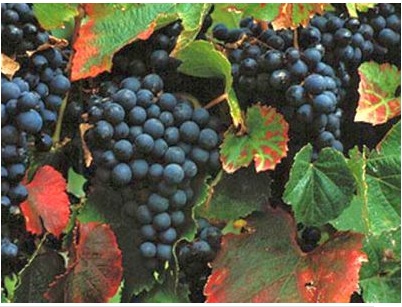
As average wine consumers here wise up and start expanding their scope of international wines, look for wines that offer tremendous fruit on the nose, ripeness, and a satisfying full-mouth feel to be popular. Malbec's already are popular, but expect their price points to go up - buoyed by the recent nod to Achaval-Ferre Finca Altamira Malbec 2006 by Wine Spectator with a rating of 96. The bottle is $116. It's the philosophy that a rising tide raises all boats. Yeah, but is it really worth it?
ACTUALLY WATCHING 30 ROCK
Everyone loves 30 Rock and has nothing but great things to say about it. But who watches it?? I'm determined now - from my heightened respect for Tina Fey and the show's Emmy sweeps - to start paying more attention and watch the episodes on Surf The Channel. Same goes for Mad Men. Expect a wave of interest in November for 30 Rock because of the election and the fact that Oprah and Jennifer Aniston will appear on the show.
SEXY LIPS
Enough lipgloss. Lips are sexy and should be cherished and flaunted in exaggerated ways. Deep red and intense gothic black hues are in, although Dita von Teese always seemed to know.
NISSAN VERSA
The 2009 Nissan Versa is now the cheapest car in the States, priced at $9,990. This subcompact is obviously fuel efficient, and I'm sure it's a functional car, but I can't seem to think that the 1.8L, 122 horsepower engine is powerful enough. It does come loaded with interesting optional features though, including a CVT, six-cd changer, and bluetooth.
