
Thanks to Nick for blogging in my absence - my 601 has been more work in the last week than I expected.
I wanted to put up a code of conduct for myself for my future in marketing, something which I can refer to throughout my career. It's a list of things I believe now and strive to follow. Periodically I look back on the blog and try to find nuggets of insights (amid a lot of the dreck!) which I still think are valuable. I'm also now reading a great book, Adland, and its quotes from Bernbach, Ogilvy, Wells, and Rubicam have got me really inspired. Years from now, I'd like to look back on this list and proudly say that these things mattered to be at a time when consumer marketing was experiencing an identity crisis.
ONE:
Marketing’s future will be defined by the ability for consumers to own an experience and the ability for marketers to correctly identify those consumers.
The consumer experience implies that owning a product is not as satisfying as using a product or experiencing the transformative benefits. Marketers must capture the experience, in situ, of the consumer and the brand.
TWO:
CRM must be at the centre of an integrated marketing solution.
Customer relationship management (or experience, conversation, or value management) imply a rational identitification of a marketer's customers and channels to create consistent marketing communications. Makes sense, right? What's different now is that CRM isn't tossed aside to act as a Skunkworks for future strategy. It's smack in the middle receiving input and guiding all channel strategies so that customers are spoken to in a unified way with measureable goals.
THREE:
Reject as false anything except that which can be learned from your customers.
Remember that there's a reason customers buy from you. It's not because they owe you or they are short of options. It's because of some unique value proposition they relate to. Customer insights matter and the insights from your customers should be the only immediate truths.
FOUR:
As a consumer, demand only the best from marketers.
Passive response from consumers is a marketer's nightmare. It means that nothing was relevant or interesting. Complacent marketers who don't deliver the best solutions should no longer be allowed access to the customer conversation.
FIVE:
As an agency, be perceived as risk-taking.
The key word here is 'perceived'. Don't take risks. Rather, take perceived risks. The ready, fire, aim strategy is amateurish and unsustainable. Agencies which take calculated risks manage their opportunities and image better than those that take risky risks.
SIX:
Love the fact that not everything can be measured in life.
Your customers are many things. But they are not simply an equation for value based on complex activity and demographic variables. They're people. Chaotic people. Much of marketing is scientific but there's a human element to creating a spark of action where previously there was none. This is more the product of art than analysis.
So these are just a few of my mantras. I'll add my others in the future. I hope this becomes like Oprah's Book List and I start seeing these phrases show up in assignments at school.
Thursday, February 5, 2009
Max's mantras


Tuesday, October 7, 2008
Meme is the word: social marketing for Gen Y trends
Inspired by Sunday night’s Family Guy episode – after which everyone started proclaiming that ‘bird is the word’ on their Facebook status updates – this post is about modern marketing memes.
Memes are “ideas or behaviors that can pass from one person to another by learning or imitation. Examples include thoughts, ideas, theories, gestures, practices, fashions, habits, songs, and dances. Memes propagate themselves and can move through the cultural sociosphere in a manner similar to the contagious behavior of a virus.” (Wikipedia)
Right now I’m sitting in class and thinking about all the behaviors that we’ve individually learned from each other. It’s a weird dynamic here at Schulich because with so many diverse backgrounds and experiences, it’s hard to not take best practices, ideas, or perspectives from others and co-opt them as your own.
We’ve all seen examples of a meme in our classes. Look at the one student in the class who seems to know what they’re doing when it comes to writing a case or an assignment. Doesn’t everyone go to that person and ask them questions about how they completed it so that you can mirror their work? In this vein it’s social Darwinism at work: rapid social adoption of the ‘best herd practice’, or at least the practice seen to be most popular by the other members of the herd.
So memes are odd – it’s not always the best practice, not always the most popular idea. Instead, it’s an idea that has catalytic value and is able to be communicated and adopted easily by others. Consider these modern marketing memes:
- "Oh my god, my business needs a website because everyone else has one!"
- "It’s about relevance, not volume"
- "Brands are dying, consumers are only loyal to themselves now"
As a card-carrying Gen Y, I love memes. Why? Cause like most Gen Ys, I’m social but independent, extroverted and networked yet individualistic, and brought up by parents who encouraged free and creative thinking. Sharing and contributing to social discourse is therefore only part of the game. Consider these Gen Y memes:
- Talking politics when you enter college– especially if you go to an arts school, not a business school!
- Wholesome pop (the packaged reaction to the late 90s trollop pop), including the Jonas Brothers, High School Musical, Tokio Hotel, Hannah Montana
- No-barriers sharing. One’s whole life, friends, pictures, secrets, ideas, and interests are on your Facebook page
- Lolcatz, pwns, fails, YTMND
I don’t pretend to be a social anthropologist or expert semioticist, but I can analyze content and culture. It pays to keep your ear to the ground and understand memes for their power to influence people and, in turn, be shaped by people. Memes are particularly germane to contemporary marketing because of their importance in the lives of Gen Y consumers. Creating value with young consumers is a two-way street and necessitates an honest and fun approach to relationship building.
In theory, memes could act as jetpacks for brands or people to attach themselves to to quickly reach key influencers and adopters. Ok good, but how about being a meme yourself? Why mimic when you can lead?
Friday, September 12, 2008
Fresh insights from Max's brain
Some days I get reflective about my own consumer behavior. Deep from my cortex, here are some certified 'Max Billings Thoughts on Marketing'.
Thought #1:
In one of my recent classes we were asked to consider our mental schemas in relation to a certain brand and form associations between that brand and certain concepts, things, or people. The great thing about free-market capitalism is that social values or individual perceptions have no bearing in the decision making process unless those values have a direct influence on profit. So if I believe that Starbucks is a brand known for environmental stewardship, terrible service, and high comfort in-store, who’s to say that I’m wrong? If I’ve forged those associations in my head, I own that unique mental schema and it’s the responsibility of Starbucks to make sure that it meets my expectations.
Thought #2:
Another strange thing occurred to me, spurred by a comment in class. By its nature, marketing excludes people. It’s about understanding who has the greatest likelihood of responding and opting-in to a certain message and then appealing to that fractioned audience with a communication that resonates. If the marketer is lucky, then the communication will be well-received and a mutual dialogue is created. So then a whole bunch of people are excluded because marketers have deemed them tot not be valuable for the strategic objectives. If the client’s business is stagnating and it’s obvious that younger customers need to be attracted, then does it make sense to craft a marcom campaign that appeals to old men? Targeted marketing ignores people. It’s not about being fair or politically-correct. There are some people (suspects, not prospects) who were never meant to receive the message because they’re not a valuable potential audience to the brand.
Thought #3:
Consumers in general have a very poor understanding of their purchasing patterns and susceptibility to marketing messages. Germane to this is a limited awareness of how incredibly personalized and relevant most forms of marketing are made for them. It’s mass-media that gets a lot of the attention because it’s superficial and so painfully shilling unwanted/unnecessary product, but what about the targeted ads you receive online? What about the DM inserts that come into magazines you subscribe to? Plenty of campaigns happen that we don’t even realize. Don Draper, my fictitious hero from Mad Men, said that effective advertising is that which we’re not even aware of but still does its job.
Thought #4:
I’m scared by how willingly my peers in class accept that a viable strategy to marketing communications is to shout louder at consumers. Consumers are willing to listen but only to brands which speak to them with words that are relevant. Consumers tune out and become disaffected and unresponsive with marketing strategies meant on drilling some message deep into your brain. Enough already with the Rogers Wireless commercials with the texting teenagers – it misses the mark! Marketers must never make the mistake that the objective of doing marketing is “to be heard”. Rather, the objective of doing marketing must always be “to be relevant”. Increasingly it’s experiences that supersede messages as the primary mechanism to drive relevance to consumer.
Thought #5:
This is unrelated to marketing, but it just popped into my brain. Be the change you want to see in others. Leadership by example is a great strategy and one I’m trying in all aspects of the agency here. It’s challenging, but rewarding when you see substantive positive growth in employees.
Thought #6:
If I’m serious about being an agency head, then I’ve got to continue to do everything I can to cut my teeth on creative development, brand building, and copy-writing. These are the central facets of agency operations. If I can’t excel at these functions, than what use am I in a marketing capacity…?
Since returning to school, I feel like I’ve been paved into the ground with a bulldozer piling work on me. Thank God for four-day weekends.
Wednesday, July 23, 2008
The best Nike commercial ever
I’m an emotional guy and I like my share of sad movies, but it’s not very often that a commercial gets me weepy and gives me the chills.
It’s the 20th anniversary of Nike’s ‘Just do it’ campaign and their AOR, Portland’s Wieden + Kennedy, developed this 60 sec spot:
Chills. Watch it again.
More chills.
The perfect syncopation of the tenor of the images to the rhythm of ‘All these things that I’ve done’ by the Killers, the raw emotion immortalized in the footage of international Olympians and athletes, and the simplicity of the message really converge in a perfect storm.
How about the fact that with the exception of the campaign url, nike.com/courage, there is no voiceover and only nine words of text appear throughout the entire sixty seconds?
How about that in a series of probably 200 images, no Nike logo, shoe, or apparel item is conspicuously displayed? The logo flashes on some athletes but only for a few milliseconds each time.
Advertising Age has done a terrific job of explaining the strategy behind Nike’s Just do it anniversary and the relevance of brand strategy to this commercial. So I’m not going to be a bad blogger and rehash content, you can read the original on their site.
Overall, my reflections are that this spot successfully conveys Nike as a brand for the lives of all people. It deepens Nike’s accessibility to its customers in a highly human and emotional way.
The director is Ralf Schmerberg. Way. To. Go.
Friday, June 6, 2008
Place your bets!
It’s good to feel threatened and anxious at times. I was reading the latest Strategy magazine in the subway today and all of these up and coming ad-types are featured. Junior creative directors, interactive strategists, ‘visioners’, etc.
I’m not going to say it put the fear of God into me, but it caused me to think hard about how I will craft a career for myself and acquire the building blocks that I’ll need to get there. It made me consider my role in marketing ten years from now and the strategy that will get me there.
Ten years from now, marketing will be more conversation-oriented. Technology and data sophistication already enables marketers to speak one on one with prospects and acknowledge each person’s unique complement of values, motivations, and aversions. Tony Chapman comments that advertising “has gone from mass to my”, underscoring the important shift away from the one-size-fits-all approach to a more communicative, interpersonal style. This isn’t news to marketers, and it certainly isn’t that groundbreaking if explained to consumers (who, if prompted, would assert that their minds are free from suggestion and that they’re not swayed by mal-intentioned marketers!).
But what about twenty years from now?
In one generation, will marketing be represented by a new ideology and paradigm? If mass becomes conversation, what will the consumer evolve into?
The Nihilist

“I am a nihilist. Just as Raskolnikov, in Crime and Punishment, cast aside socially imposed moral norms and justified the murder of two old women on a purely materialistic and utilitarian basis, so will consumers reject marketers' attempt to attach emotional and moral values to products, Consumers will only purchase on the basis of their physical needs. For marketers, this grim future may imply a total rejection by me, the consumer, of all slogans, brands, promos, messages, and offers because it’s just not wanted anymore. As a consumer, I make my own decisions and I have become acutely sensitive to both shills and subtlety in ads. Brands will cease to have power over my buying habits because I feel that by rejecting brands and being unresponsive to marketing, I’m acting rationally and achieving a practical, consumerism Nirvana.”
The Concerned Global Citizen

“I am a concerned global citizen. More and more pressure is being felt by companies to adopt sustainable business practices and a 3Ps bottom line. Marketers recognize my progressive concern and provide realistic, measurable incentives that allow me to feel that through purchasing, I have made a difference. A passive difference. I respond only to marketing executed using solar-powered servers and recycled rice paper printed with soy-based ink. I respond to messages that are meaningful to me and which have incentive models set up for consumers to respond because more trees will be planted for each time that I clickthrough on the company’s e-newsletter.”
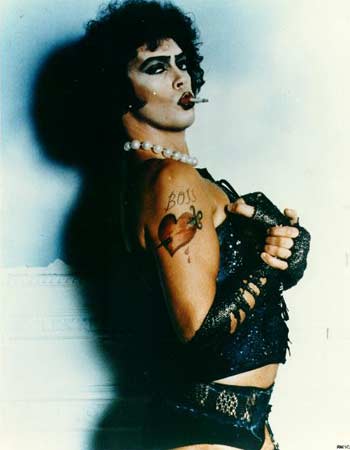
The Whore
So as I read Strategy on the subway, as anxious as I felt to launch my career and start competing with other junior marketers for a ticket to the Cannes Lion Advertising Awards, I felt emboldened by the sense that I am riding a wave of emerging technology and communication that has allowed “marketing” to take forms previously never imagined. Who would have anticipated the role that social media or Google searches play in our lives?
No matter what archetype the consumer evolves into, conversation marketing will still be appropriate to convey relevance, value, and uniqueness to each consumer.
