Showing posts with label email. Show all posts

Saturday, December 20, 2008

Marketing best practices


Killing two birds with one stone is great isn't it?

I'm writing an appendix about advertising channel marketing strategy right now for a report as part of my 601 project and I thought about posting the analysis up to the blog!

I love original content!!!

It's really abbreviated, but it's a quick comparison of old and new best practices of various online and offline advertising channels. I've tried to be comprehensive and unbiased here (although I personally think that untargeted advertising can go to Hell....) but it's a good synopsis of the different benefits and recommendations for effectiveness for each channel.

You'll see that throughout this chart I'm really in support of integrated campaigns. That means marketing communications that simultaneously leverage the other active channels. It's the newspaper ad that tells you to go online and try virtually test drive the new model car, it's the radio spot that tells you to look for Count Chocula sampling this Saturday at Metro stores in the GTA.

God, how I wish there was a product sampling of Count Chocula....but I digress.

Oh, and BBAs, plagiarize away! Just don't expect to develop unoriginal, uncited analysis and hand it to me to give to one of our clients.

Advertising channel

Channel description

Old best practices

New best practices

Website development

Includes website design, management, analysis, promotional microsite development.

Important channel for speaking directly to tech-savvy, younger consumers.

Clear site navigation and shallow site structure with few deep levels.

Integrate web metrics tracking for site optimization and online marketing.

Promotion in offline marketing communications as a source of extra information about a brand.

Site users have the opportunity to create content and interact bilaterally with the site.

Important to integrate websites with offline communications including print and television (often these drive consumers to the website).

Provide relevant brand and product information in multiple formats, allowing consumers an opportunity to take content with them or send to their friends off the site.

Promoted in offline communications as a destination in itself and a place to go as part of Web 2.0 consumer interactivity.

Email

Includes email design, deployment, analysis, and potential integration with database segmentation.

Important channel for direct marketing and establishing brand relevance.

Use an attention grabbing subject line.

Display the best content “above the fold” of the screen.

Do not be too copy-heavy, leverage text and pictures.

Communicate exclusive offers, promotions, and deals to “our best customers”.

Perform active segmentation and response analysis on house list to determine most optimal messages/content to be included in targeted email to consumers.

Must be easy for consumers to unsubscribe or change their email settings. Position as nonintrusive consumer touchpoint that is relevant to you.

Email is highly useful to create a curriculum or education campaign for new consumers or a multi-wave campaign.

Social media

Includes brand promotion through social media public relations, viral content development and distribution, network ‘seeding’, and identity development on social network profile sites.

Important channel for brand identity building through online affiliations and new project promotion.

Note, because this is such a new channel, best practices are being developed as part of an ongoing mutation of the medium.

Social media is too young to have any “old” best practices, because marketers are still trying to understand how to use it effectively.

Pay attention to emerging consumer memes and viral trends online. Ride these.

Create a clear identity that allows users to comment, rate, or interact with the brand’s social media presence.

Use social media PR sparingly and only to announce exciting brand developments or significant launches.

“Feedback 3.0” is the act of brands actively responding to and commenting back to their commentators in online forums. (TrendWatching.com)

In-store retail promotion

Includes design of product packaging and printed promotional materials, development of coupons and offers.

Also includes total management of promotional projects and events, including multiple-party promotions.

Eye-popping visuals and unique creative execution.

Display in preferred locations in retail environments (end of aisle, eye level, front of store and produce area).

Promotions are used to highlight exciting new product launches or as a boost to seasonally low sales.

Retail promotions are immediately relevant to the consumer (because they are physically interacting with the product and have opted-in). Therefore how are promotions used by brands to develop long-term positive relationships with their consumers?

Promotions must be thought of like big impressions for brand building and used for activating new brand strategy.

Strong integration of promotions with other non-tangible brand communications.

Experiential

Includes the planning, execution, and management of in-person demonstrations, sampling, physical product interactions, sensory advertising, and other impression-based advertising experiences.

Create innovative and original experiences – make the consumer say “wow, I’ve never seen this before”.

High traffic locations are effective to reach as many people as possible.

Eye-catching or permits prolonged or repeat impressions.

Demonstrate measurability and big impact on sales by using experiential techniques. Cannot simply generate a ‘big splash’.

Use experiential advertising projects as opportunities to also establish customer listening posts and gain valuable primary research about brand perceptions and usage.

Direct mail

Includes the design, writing, segmentation, deployment, analysis, and management of print advertising, flyers, brochures, offers, product samples, and house-list magazines that are targeted to specific consumers (not mass mail).

‘Test and learn’ – perform frequent empirically controlled tests to different consumer segments to understand what is the optimal form of creative and offer to generate higher response.

Personalize direct mail and provide a compelling reason to open it (similar to an email subject line)

Integrated use of direct mail with CRM database for clients. Understand customer behavior across response channels (direct mail, web, email, SMS).

Like in-store retail promotion, direct mail establishes an intimate connection between the brand and consumer because it is highly interactive and tangible.

Clear announcement of purpose and call to action so that customer understands role of direct mail in context of all other interactions they have with the brand.

Out-of-home

Includes the design, deployment, and management of all messaging that appears on outdoor ‘surfaces’ in high-traffic or visible areas.

Note, limited effectiveness of this channel at driving response and engagement from consumers. Highly passive engagement by prospects in this channel.

Like experiential and in-store retail promotion, out-of-home should be immediately understandable and capture interest.

Copy must be concise and non-informational. Strictly call-to-action.

A classic medium, the best practices have no changed significantly because of limited innovation potential of the platform.

Obvious integration of out-of-home advertising with existing in-market campaigns in other channels.

Mobile

Includes copywriting, segmentation, deployment, management, and analysis of text or multimedia messages distributes to mobile phone subscribers over a network.

Important channel for brand building and relationship development.

Note, because this is such a new channel, best practices are being developed as part of an ongoing mutation of the medium.

Mobile technology is also rapidly evolving and permits unique applications like proximity sensitive out-of-home marketing (billboards that activate when a consumer walks by) and geo-targeted messages direct to the consumer.

Must be an opt-in house list and must permit easy unsubscribe for recipients.

SMS marketing is highly invasive (it’s marketing that vibrates in your pocket). Therefore the message should be targeted, relevant, and actionable by the consumer.

Therefore, SMS is not optimal for informational campaigns. Instead, use for direct response or experiential purposes (e.g. respond now).

Television

Includes the design, production, media buying, and management of television commercials or infomercials.

Important channel for broad awareness of brand strategy to consumers. This sets the tone of an integrated campaign with multiple channel strategies.

A great ‘hook’ to immediately capture attention.

Clear link between story and brand, story and message, and brand and message.

Clear call to action for viewers, or an understanding of what they are being made to believe.

Best practices somewhat unchanged for mass media.

Perhaps greater concern for how television commercials are able to change behavior among consumers. Is this really an advanced form of marketing that succeeds at building a relationship with consumers?

Call-to-action that is integrated with other marketing communications in market. Useful capstone to large campaigns which rely on a broad mix of mediums (out-of-home, online, promotional, print, and radio).

Radio

Includes the design, production, media buying, and management of radio commercials.

Memorable messages that listeners can associate to a brand with unaided prompting.

Local message optimization because of the ability to purchase large blocks of commercial time from radio station conglomerates that own stations in different markets.

Same as above.

Positive associate to highlight existing in-market or upcoming promotional campaigns for integrated marketing campaigns.

Mass print media

Includes the design, production, media buying, and management of printed advertisements in newspapers, magazines, flyers, and other non-targeted print media.

Classic principles apply here for copywriting and call-to-action development.

Same as above.

Considering existing volume of print media advertising that continues to be done, important to integrate this activity with marketing mix of online and offline channels.

Can be used as a traffic-driving source of consumers to online channel where more information can be found about brand.

Saturday, July 26, 2008

If the Rolling Stones were a form of marketing...

This is a post I've been writing for the last few days and it's taken some thought and reflection to get this right...I hope! I've been wanting to talk more about different marketing channels and begin to develop a holistic interpretation of how each marketing medium operates in a comprehensive portfolio of communication options.

But then I got really into the Stones again. Every time '
Wild Horses' or 'Sweet Virginia' comes on my iPod I crank up the volume and wail along with Mick.


So let's mash things up (e.g. Kelly Clarkson vs. The Eagles). Ask yourselves, '
if each of the main members of the Rolling Stones was a marketing channel, what would they be?'

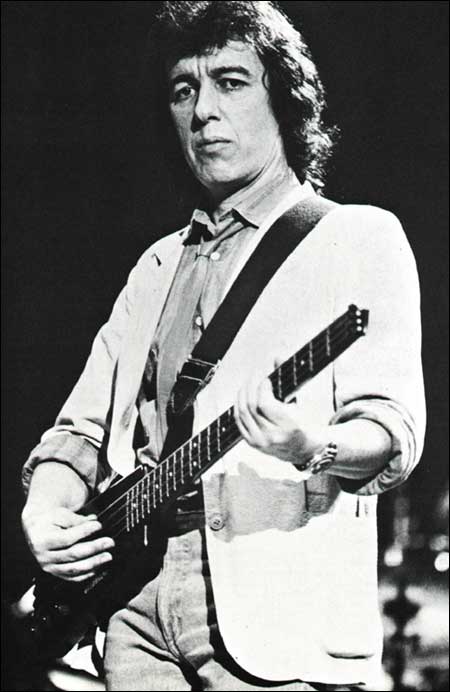
Bill Wyman - lead bassist, 1962 - 1993

I initially forgot Bill Wyman in this post, but was reminded that he should be included. Well, Wyman is not exactly top of mind among the Stones. Maybe it's his comparatively tame persona and characteristic level-headedness for the period during which he played with the band.

So i'm thinking that Bill Wyman should represent out-of-home advertising. Billboards, transit displays, and other forms of outdoor signage. Like Bill, out-of-home marketing is the oldest form of marketing. Although impactful, it's significance has waned in years as other, more tangible and interactive communication channels have captured a greater share of the consumer's attention.

While out-of-home ads can sometimes blend into the visual white noise of an urban landscape, highly eye-catching displays, usually in unconventional places, maintain the effectiveness of this communications channel at increasing brand awareness and driving customers. Think about urinal ads (NewAd) and the viewer's capivity. Or think about tunnel advertising in subways. Simple medium, with an innovative application.

Bill Wyman's contribution to the Stones was not overly perceptible, but his presence throughout the seminal years of their career gave a gravity and depth to the band's music. Like Bill Wyman, out-of-home advertising is always there, just sometimes you don't know it.


Keith Richards – lead guitarist, 1962 – present


Keith Richards is
experiential marketing.

This is also known as P2P (person to person) marketing because of its demonstrative and interactive potential. It's meant to establish a deep and tangible connection between a consumer and a brand. It's useful to communicate product launches where testing and usage is important as well as to refresh consumers with the brand.

Keith Richards is experiential marketing because without him, the Stones – the brand – would likely not have the appeal to fans that they do. His charisma and drug-addled charm is undeniable and fables about his character, including snorting his father's ashes cut with coke, only serve to deepen the relationship between you and the brand!

A highly visible frontman for highly tactile marketing. Keith rocks.


Charlie Watts – drummer, 1962 – present

Poor Charlie Watts. Sometimes he looks like death warmed up. Other times he looks quite stately and refined. He's got a real stoicism though which makes Charlie Watts like
print marketing.

Print. The printed word.

There's a timelessness to it that Charlie kinda embodies. It's tried and tested, dependable, and a good converter of consumers. Additionally, if your message cannot be easily explained on paper, then how can you explain it in a video commercial?

So what does this mean for Charlie Watts? Print, like the drummer who keeps the beat for the band, acts as the basic foundation of any campaign. The message is not embodied in the medium or the market. The message is the written values, the DNA of the ad.


Brian Jones – guitarist, 1962 – 1967


Brian Jones was influential and not without controversy. So it's only appropriate that he's
guerrilla marketing, the black sheep of the marketing family.

Brian Jones actually started the band with pianist Ian Stewart in 1962 and brought in Jagger and Richards. He strongly influenced the Stones early years and played on songs including Paint It Black, Under my Thumb, and Street Fighting Man. With Keith Richards, Jones developed the technique of guitar weaving with both guitarists playing simultaneous lead and rhythm roles. He was identifiable and outspoken, with a Carnaby Street style that so closely tied the Stones to the 60's British Invasion. But Jones burned himself out and died before his time, becoming a founding member of the 27 Club. In addition to Jones, this macabre tragedy has so far claimed Jimi Hendrix, Janis Joplin,
Jim Morrison, and Kurt Cobain, among others. I'm guessing Amy is next.

Jones was sloppy and innovative and experimented with different musical instruments and styles. It's appropriate to compare him to guerrilla marketing because despite the depth that he added to the Stones' sound, Jones wasn't essential. Guerrilla marketing is thought-provoking and highly visible, but it is also contentious and a somewhat unsustainable marketing medium.

The core of the Stones was the Jagger-Richards duocracy. Other members merely orbited this binary star.


Mick Taylor – guitarist, 1969 – 1974


Mick Taylor was a guitarist from 69-74, regarded as the Stones' most destructive and creative years. Great albums like Let it Bleed, Sticky Fingers, and Exile on Main St. attest to the musical juice running through the band at this time. Taylor was a highly skilled guitarist and brought a unique melodic sound to the Stones, influenced by his blues, latin, and jazz based musical schooling.

So reflecting on his short years with the band,
radio advertising seems to be an appropriate marketing medium to describe Taylor.

Like Taylor's role in the band, radio is often cast as a second-rate communications tool in favour of flashier, more high impact mediums. But radio is great for a local market, it's affordable, and it continues to be a competitive marketing medium even with the rise of newer technologies and alternative information sources.


Ronnie Wood – guitarist, 1975 – present


So, go with me on this one….Ronnie Wood is
online marketing (web and email).

Online. It's taken a while for online marketing to come into its own and shed its initial hype. Today, online represents a highly effective medium to target the right customers. Online ads are now standardized and have the opportunity to be more relevant to the consumer, while email has found a niche within the repertoire of other marketing mediums as a 'must–do' of any CRM program worth it's salt.

Ronnie Wood joined the Stones in 1975 from the Faces. He's grown considerably since and is now an integral member of the band. So like Ron Wood, let online marketing represent the timbre of good marketing meant to develop deeper relationships with consumers. The bass sets the tone of the song and online sets the tone for marketing with a brand's best consumers.


Mick Jagger – lead vocals, 1962 – present


What else could Mick Jagger possibly be aside from
television marketing?

Like tv, Mick is big, loud, and expensive. Like Mick, tv is mass, screaming, and ubiquitous. Just look at him, he's certainly not got an attractive face, but maybe it's the caricature of Mick that's so appealing. He really was made for television.

His on stage persona is obnoxious yet captivating and he's got tremendous energy for a sexagenarian (old guy). Superbowl commercials are a lot like Mick Jagger because they've got sizzle and are clever and get everyone talking.

For the perfect orgasm of Mick Jagger + Television, watch the Stones perform during the 2006 Superbowl Halftime Show. Go ahead and try not getting into it, it's impossible!


BTW, happy birthday Mick!

Saturday, July 12, 2008

Effective email marketing: Doing it right


Saturday is my day to go through the piles of email in my Gmail inbox from the week. I’m glad I did because it made me reflect on some of the best practices of email campaigns. To explain the importance of email marketing, please watch this video from Britney Spears:


(So poignant. Yeah, I couldn't stand to listen to it either...) On with the list of email best practices:

Recipients opt in
I really love email marketing, but for the future, it’s only going to be effective with house-list customers who are already familiar with and trusting of the brand. Purchased lists, unless they’re remarkably high quality leads, run the risk of not only being automatically filtered to spam if the email client is unfamiliar with the sender, but also being passed over and deleted by the recipient who sees it as an irrelevant message.

Key takeaway: Use email for relationship building, not acquisition. Don’t misconstrue ‘cheap’ for ‘effective’ as a driver of overall campaign value.

Test and learn
Campaigns represent opportunities to learn from your customers and solicit valuable data-based information. In addition to the substantial link and segmentation tracking that you’ll no doubt build into the campaign, why not throw in some differentiated layout or subject line testing for good measure! Copy testing is also useful, especially when you can learn whether your email recipients like punchy, ‘header-style’ copy or longer, ‘body-style’. Don’t forget to add another layer of testing and try landing page optimization with an A/B split of the inbound links from the email.
Key takeaway: Emails must always be refreshed and improved (optimized!) to make sure you stay relevant with your customers. Through testing, you’ll learn what works and what doesn’t.

Offers and giveaways
Response to consumer emails is enhanced by the offer of a special feature or free giveaway. Try a contest or promotion to launch a new product and remember to use this as another opportunity to collect consumer data. Analyze their responses. I like to think of these giveaways as the sizzle to an email. Remember to mention the free giveaway in the subject line – it will draw the greatest possible open rate of any subject line. Incentives work, use them.
Key takeaway: People like free stuff. Give it to them. Email is a perfect way to tell your customers that they are the select few to receive a special offer.

Content optimization
You’ll learn through testing and customer segmentation what content works for what groups of people, however you can’t go wrong by providing lots of information in an easy to digest form. Lists work well, as do quick specs. Ultimately however, your customers will tell you through their clicks what they find attractive and what your client has in the email as filler.
Key takeaway: Short and sweet. Focus the email on communicating information honestly and compellingly. Email is not a good medium in which to be coy or deceptive. You’ll be burned for it.

Channel integration
Email marketing satisfies one component of your overall CRM strategy. Since you’ll likely be using email in combination with other channels (e.g. direct mail, web, in-store, telephone, SMS), make sure that as far as your communication strategy goes, the left hand knows what the right is doing. A little vague I know, let me explain: you know how Aeroplan will send you an email with your updated account balance? Great. How about when American Eagle uses email to notify you of an upcoming online sale at their website? Super.
Key takeaway: Email marketing does not exist in a vacuum. It is an effective component of your overall marketing communication strategy. Effective emails have a high degree of verisimilitude to the consumer’s other experiences with the brand and their account.

So go ahead and call bullshit on all those Nostradamian gurus who question the effectiveness of email as a marketing medium and predict its demise as customers become more selective with their brands. The sophistication of email deployment technology now means that emails are modular and are unique to each recipient. A campaign can have a massive number of permutations depending on the desired segmentation, content inclusion, and testing. When done right, email is a highly cost-effective marketing channel that is perhaps the most poised of any communications media to convey relevance to the customer.

...btw, these were all Britney Spears' thoughts on email, not mine.