I'm in class right now, time to blog!
Someone just made a comment in class about how Obama's election isn't anything new, it's just the representation of American political sentiment at this moment. I'd seriously care to disagree, and Justin emphasized that 2M people in Washington is hardly evidence of the fact that Obama is no different than other presidents.
This all speaks to a larger cultural movement that's churning and frothing but still largely intangible.
Pepsi has relaunched its brand in an effort to ride this new cultural zeitgeist. It's now a fresher, edgier, more movement-focused brand. And it's coincided with the inauguration!
Here's their old look:
Here's their new look:
Familiar, but different. It's fun.
The centrepiece of the brand relaunch is the Refresh Campaign.
Check out the microsite: RefreshEverything.com. It's a social media site to aggregate the opinions and voices of normal citizens and Eva Longoria (among other celebrities).
It's been created to allow anyone to upload their own user-generated content that expresses their feelings of hope and optimism with the new President.
Even my current fascination, Lady GaGa, has gotten in on the action!
The Refresh campaign doesn't prominently feature any Pepsi products. I like this campaign because it's not about driving sales, it's about driving engagement (again, how does one actually value this?...is it even fair to value engagement by the classical measures of consumer value??)
The microsite is simply meant as an online interactive destination for their offline commercials. It's tied to a YouTube channel with Pepsi's new commercials and other related videos. The microsite doesn't have any search or folksonomy tagging capabilities so it's not too important for site visitors to find exact information on what people are saying, rather, it's meant to act as a speaker's corner for average voices to be heard.
So what's the point?
Two things:
Think of the optics: Pepsi is showing that they are a brand associated with change and youth (again). The TV commercial, courtesy of TBWA Chiat Day, was shown during key primetime spots (I saw it on AC 360 at 10:15pm, January 20) and captured the momentousness of the day. Check out the commercial. It's fresh and friendly.
Think of the non-quantifiable brand development: Tacitly, Pepsi's Refresh campaign is effectively sponsoring the Obama administration! It's piggybacking on a wave of interest in society in individualism, plurality, and self-expression. Pepsi is demonstrating that it understands the strong needs by consumers/voters for these things.
Pepsi is allowing consumers to be heard at a time when the urge to speak up has never been stronger.
To be fair, Coke is launching a big wave of new ads too. Analysts think the Colas Wars are going to begin again!
Great work by Pepsi and their agencies on this one, this is definitely a campaign i'd have loved to be involved in.
Excellent example of getting it done, creating a transparent and highly understanding brand personality, and emphasizing that Pepsi is a brand that unites and empowers people.
Way. To. Go.
Wednesday, January 21, 2009
Hitting it home: Pepsi's Refresh campaign


Saturday, January 10, 2009
Important marketing memes of 2009
And we're back!
Memes are important thought trends in contemporary culture. They are widely distributed, fresh, and organically generated concepts and ideas that emanate and circulate rapidly in a network of plugged-in people. At their worst, memes can propagate racism. At their best, memes can propagate lolcatz like Ceiling Cat!

So I should probably cover up.
Anyway, to start off the new year, it's relevant to think about memes that might matter in marketing in 2009. Let's talk about the concepts, trends, and practices of marketers that will become more commonplace and popular. Let's talk about the ideas that will quickly disseminate through agencies and client teams, mastered by the savvy group of consumers, and eventually expectorated back to the teeming masses of mainstream culture.
In other words, let's talk about what are relevant marketing trends for 2009:
THE 'EXPERIENCE IT' MEME
In the context of the rising tide of greater relevance in advertising, some lucky consumers will find themselves the subject of rare interactions with marketers that go deeper than the banal and shallow ad pitch. Without buying, a privileged few prospects will be invited to try a product, brand, or service. But what they're really trying is an experience.
Remember when you were invited to try Gmail when it was still in beta mode? (Remember how awesome that felt!?)
Testing experience with consumers firsthand is like playing in a sandbox. It's safe, controlled, and a great petri dish to catalyze learnings for experiential improvements. Furthermore, you want to actively segment an select prospects to participate in the experience who you know will then actively go out and spread word of mouth among their networks.
Seeding networks is nothing new, but in 2009 expect to see more seeding based on complete brand experiences rather than simple trial testing or free offers. It's the culmination of consumers' undeniable influence on social diffusion of brands and the demand by consumers for things which they can live, rather than things which they can simply wear, listen to, or eat.
THE COLLABORATION MEME
You know how individual consumers are encouraged to put their stamp of approval on something? They're able to personalize their brands either through participating in the product development and customization process, influence brand direction by vocalizing their needs in web forums and social media, and make the brand their own through non-traditional uses.
Now take the personalization to a broader scale. You and your network personalize your product. You and your friends personalize your brand experience.
Gen Ys are social creatures. We thrive on instant communications within our highly networked worlds (that's why we go mental when the DSL isn't working...). Digitally socializing is an intensive part of our lives and the impact of one's network on the things we associate with is immense.
So why would a marketer allow your network to collaborate with you when developing your personal brand relationship with them? Because it's a direct acknowledgment by the marketer of the things that matter to the consumer: their friends. It's an invitation by the marketer for you to show your network that they are influencers.
Look for this style of meme to pop up with everything from iPod playlists to fashion to media content.
THE INTEGRATED MARKETING MIX MEME
This one is big. Integrated marketing communications refers to the choreography among different ad channels, all targeting the prospects with related messages, calls-to-action, and incentives. It's not merely enough anymore to pair a TV spot with a website. It's insufficient to have a radio play in the same market as targeted magazine drops.
Integrated marketing is a mix of advertising channels that are optimal to distribute the message YET still convey relevance to the end consumer. This is critical. Furthermore, this does not underscore an increase in the overall number of message impressions received by the prospect consumer. Instead, it speaks to two things: 1) a curriculum style that gradually educated prospect consumers about a product/service/brand that they would respond to; 2) a coordinated effort by a marketer to demonstrate relevance to consumers across multiple platforms.
What is still unexplained is whether marketers will contract out their entire marcom budget to a single agency that is capable of doing all things (integrated), or whether marketers will act as directors and fragment their marcom budget out to a variety of specialized agencies.
It's hard for me to call this one a meme because I believe this is a sea change in marketing towards relevance-based integrated campaign development. Perhaps it's meme-like insofar that there will be rapid awareness in 2009 and some traditional marketers will make nascet inroads to developing a more balanced communications strategy.
BTW, when I was thinking about an element to include for the word 'choreography', the Indian version of 'Thriller immediately came to mind...!


Thursday, December 11, 2008
Admit it Gen Y, you love Atlas Shrugged
In between trips to the sensory deprivation tank and group meetings for 601 that I’ll have during the few short weeks this holiday season, I’d like to get back into regular reading.
During school semesters, I find myself mostly reading blogs, online news, the Economist, and a few random magazines like AdBusters, Vanity Fair, Wine Spectator, and Travel & Leisure. I love reading, but can’t really find time to devote to sitting down, turning off the laptop, and reading a book. But that’s one of the great things about the holidays – you finally have no excuse for procrastination.
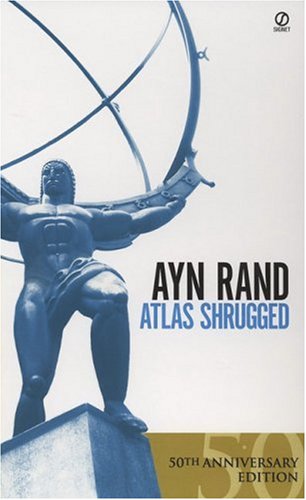
I’m going to finish reading ‘Atlas Shrugged’, Ayn Rand’s seminal tome of objectivism and free-market capitalism. And it’s a bizarre time to be reading about laissez-faire economics given the economic crisis that somehow necessitates government nationalization of key industries, bailouts, and a general rejection of the idea that individuals acting in their own self-interest will create an optimal economic outcome.
I’m at page 593 of Atlas Shrugged. The book is 1063 pages and has a font size of 8. It’s ridiculous. But still I persevere. The story is interesting, if not a bit pithy and needlessly arcing.
But what really makes me keep flipping the page is the survivalist philosophy espoused by the protagonists. Ideas like fairness is irrelevant in an argument (because who is to say what’s really fair?) or that individuals have no obligation but to themselves. As a book it is a testament to self-interest and competition. It wholly defends rationality and discredits the concept of intrinsic value or subjective interpretation. This is known as objectivism.
For example, an apple is an apple. Reality is exactly what things are, not some perceptual cloak that society has elaborately created to shape our understanding of the world.
Things are what they are, therefore what grounds do we have to question reality? If all we know of reality is what we can see, sense, and experience, then there is no rational basis upon which we can claim that it's manufactured or false.
The plot of Atlas Shrugged is set in the context of a decaying industrialist society whose government and leaders believe that nothing is absolute and refuse to believe that labour productivity actually contributes to personal well-being. Citizens become pessimistic and willfully commit themselves to a collectivist mentality, believing that society’s best interests supercede their own.
In a utopia (or Marxist state) this philosophy might work, however with no one accepting individual responsibility, the world collapses. Trains stop running, electricity shuts off, people go hungry.
Now I’m hardly suggesting that this will happen with an Obama administration – but it’s interesting to study Atlas Shrugged as an analogy to what’s happening now. The same sense of free-market individualism that Ayn Rand supports can be thought to have catalyzed the overleverage that crashed our economy.
I think for Gen Ys, Atlas Shrugged really is the perfect literary guilty pleasure. We’re not willing to accept Rand’s hard-as-nails rationality about charity or welfare, but we’re salivating over the affirmation that individuals must have personal ownership and accountability to contribute to a healthy and functioning society.
The film adaptation is scheduled for a 2009 release, and if you needed another reason to hate Angelina Jolie (although I actually love her) she’s apparently going to be the lead.